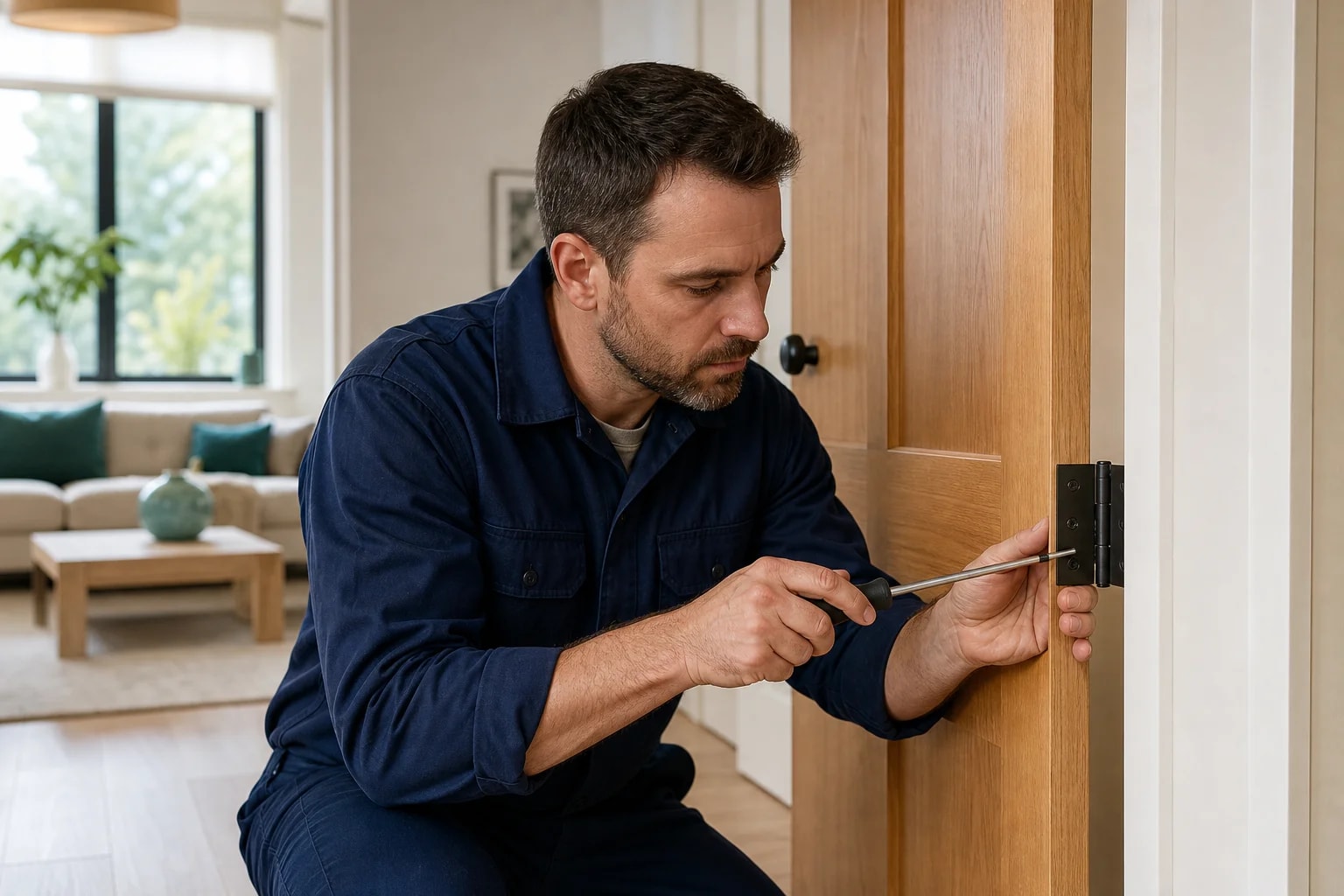
Doors and cabinets take more use than almost anything else in a house, and they drift: a bedroom door that rubs the frame, a front door that will not latch without a shove, a kitchen cabinet door that hangs crooked or swings open on its own, a drawer that sticks or has come off its slide.
Most of these are quick jobs for a handyman with the right hardware in the truck. This guide covers what the visit usually includes, what moves the scope from a fifteen-minute adjustment to a half-day job, what to look at and note before anyone comes, and what to expect on cost.
What you notice
- Rehanging or adjusting an interior door that rubs, sticks or will not latch, including tightening or replacing hinges and shimming the frame.
- Adjusting a strike plate or latch so a door closes and locks without force.
- Planing or trimming a door edge that swells in humid weather, and sealing the raw edge afterward.
- Replacing a broken knob, lever, deadbolt or privacy lock, and fixing a loose or spinning handle.
- Adjusting, realigning or replacing cabinet hinges, including swapping worn European hinges so doors sit square and stay closed.
- Repairing or replacing drawer slides and glides, and refastening a drawer front that has come loose.
- Installing or replacing door sweeps, weatherstripping and door stops on exterior doors.
- Patching a stripped screw hole so a hinge or catch holds again.
Likely causes
How many doors or cabinets are on the list
One rubbing door is a short visit. A whole kitchen of cabinet doors that need realigning after a move, or every interior door in an older house, is a different booking. Count them before you request.
Adjustment versus replacement
Tightening hinges, moving a strike plate or adjusting a European cabinet hinge needs no parts. A split door, a broken slide, a cracked cabinet frame or a dead deadbolt needs hardware, and matching an existing finish can add a parts run.
Whether the house has shifted
A door that suddenly rubs at the top corner, cracks above the frame, or several doors drifting at once can point to settling or a moisture problem. A handyman can still make the door work, but will tell you when the cause is bigger than the door.
Exterior versus interior
Exterior doors carry weatherstripping, thresholds, deadbolts and sometimes a storm door. They take longer and the parts matter more, especially if the door is letting in water or air.
The age and material of the cabinets
Particleboard cabinets with stripped screw holes need filling or a different fastener. Older face-frame cabinets with surface hinges are simpler, but replacement hinges may need to match a style that is no longer sold.
Whether you already have the parts
If you have bought the new knob, lock or hinges, the visit is labor only. If not, the handyman either brings standard hardware or adds a supply-store trip to the job.
Safe things to check before anyone comes out
- Open and close each door a few times and note exactly where it rubs or catches: top, bottom, latch side or hinge side.
- Look at the gap around the door. An even gap that closes at one corner usually means a hinge; a gap that changes with the seasons usually means swelling.
- Look at the hinge screws from the room side. Screws backing out or a hinge pulling away from the frame are common and quick to fix.
- For a door that will not latch, look at the strike plate on the frame for shiny wear marks that show where the latch is hitting.
- For cabinets, open the door and look at the hinge. If the door is crooked but the hinge is firmly attached, it most likely just needs adjusting.
- Pull a sticking drawer out partway and look at the slides for a bent rail, a missing roller or debris.
- Note the door material (hollow, solid wood, metal) and whether the cabinets are painted, stained or laminate, so the right hardware can be brought.
- Take a photo of each problem door or cabinet and one of the hardware up close.
When to stop and call
- An exterior door will not lock or close, leaving the house unsecured. That is a same-day job.
- A door has come off its hinges or a heavy cabinet door is hanging by one hinge where it could fall on someone.
- A door is stuck shut with someone or a pet inside the room.
- You see fresh cracks spreading from the top corners of several door frames at once, or a door that rubbed yesterday will not open today. That can mean movement in the structure and is worth a look sooner rather than later.
- A cabinet is pulling away from the wall. Empty it and keep people clear until it is refastened.
What the technician does
- Walks through the list with you, checks each door and cabinet, and confirms what is an adjustment and what needs parts.
- Tightens or replaces hinge screws, using longer screws or filled holes where the old ones have stripped.
- Adjusts hinges, strike plates and latches so each door closes, latches and locks without force.
- Planes or sands a swollen edge if needed and seals it so it does not swell again.
- Realigns cabinet doors with the hinge adjustment screws, replaces worn hinges or slides, and refastens loose drawer fronts and handles.
- Installs or replaces knobs, locks, sweeps and weatherstripping on exterior doors and checks the seal.
- Tests every door and drawer, cleans up, and tells you if anything suggests a larger problem such as settling or moisture.
What it usually costs
Most door and cabinet work is billed by the hour or as a minimum visit charge, often in the low hundreds of dollars for the first hour or two, with hardware added at cost. Replacing a door, a lockset or a full set of cabinet hinges costs more because of parts and time. Many handymen offer a better rate when several small jobs are done in one visit. The estimate should be explained before any work starts.
What moves the estimate
- The number of doors and cabinets on the list.
- Adjustment only versus new hinges, slides, locks or a whole door.
- Interior versus exterior doors, and whether weatherstripping or a threshold is involved.
- Whether you have the parts or the handyman needs to source and match them.
- Travel and minimum visit charges, and any same-day premium.
Keeping it from coming back
- Tighten hinge and handle screws once a year with a hand screwdriver before they strip the holes.
- Keep painted doors from being painted shut by wiping the edges before the paint dries, and have swollen edges sealed when they are planed.
- Do not let cabinet doors slam or hang open with weight on them; soft-close hinges are a cheap upgrade the handyman can add.
- Keep humidity steady in the house if interior doors stick every summer.
- Replace worn weatherstripping and door sweeps every few years so exterior doors keep closing cleanly.
- Put everything that needs attention on one list and book them together.
Questions people ask
Can a handyman replace a whole door?
Usually, yes. Replacing a slab in an existing frame is routine; a prehung exterior door with a new frame is a larger job and some handymen will refer it to a carpenter. Describe what you have and ask.
Does this include locks and deadbolts?
Standard knob and deadbolt replacement is common handyman work. Rekeying, smart locks and commercial hardware vary by provider; mention what you want installed when you request.
My cabinet doors all went crooked after a move. Is that a big job?
Probably not. Most modern cabinet hinges have adjustment screws, and realigning a full kitchen is an hour or two. Stripped screw holes or broken hinges add parts but are still routine.
Will the repair match my existing finish?
Adjustments do not touch the finish. Replacement hinges, knobs and slides can usually be matched in style and color; an exact match for discontinued hardware is not always possible, so send a close photo.