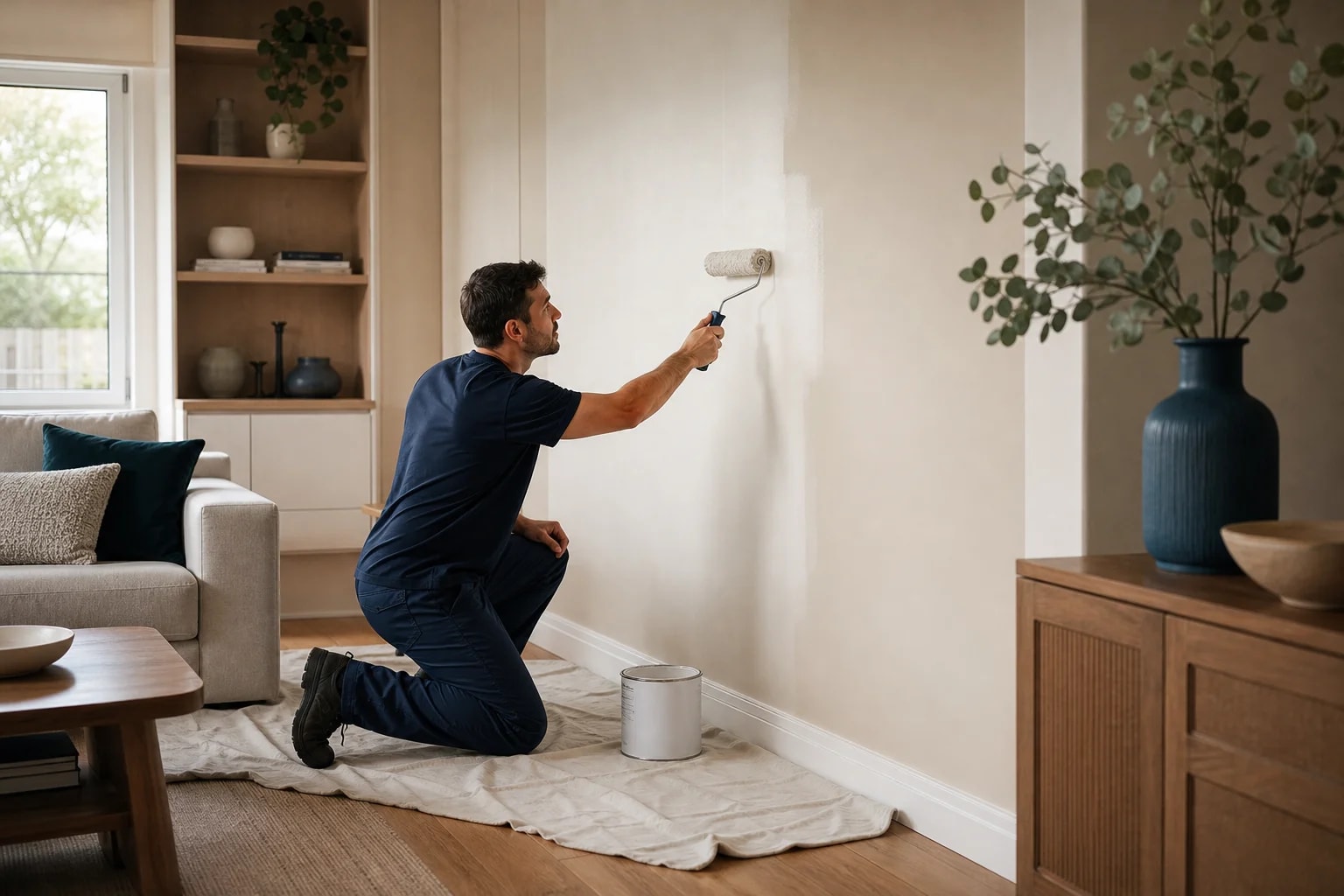
Interior painting is the home project most people have tried once and then decided to hire out the second time. The painting itself is the easy part. The work is in the prep: moving and covering everything, filling and sanding, caulking, priming, cutting clean lines at the ceiling and trim, and doing it all without drips, lap marks or paint on the floor.
This guide explains what a professional job includes, what you can note about the rooms before anyone comes out, the health and safety points to ask about, and what interior painting typically costs.
What you notice
- Walls are scuffed, faded or a color you no longer like.
- Paint is peeling, flaking or chalking, especially in a bathroom or kitchen.
- There are nail holes, dents, cracks or old repairs that show through the current paint.
- Trim, doors or cabinets are yellowed or chipped.
- Water stains or smoke stains bleed through each time the wall is painted.
- You are preparing a home for sale or moving into one.
Likely causes
Normal wear and age
Paint dulls, scuffs and collects marks over years. Flat finishes in hallways and kids’ rooms show it first. Repainting is cosmetic here and the prep is light.
Moisture
Bathrooms, kitchens and laundry rooms peel when steam gets behind the paint. A bathroom fan that is missing, undersized or never used is the usual story. Painting over it without fixing the moisture guarantees a repeat.
Poor prep on the last job
Paint applied over dust, grease, glossy trim or unprimed patches lets go in sheets. The fix is sanding or stripping back to a sound surface before new paint goes on.
Stains that bleed through
Water, smoke, crayon, marker and tannins from wood bleed through ordinary paint. They need a stain-blocking primer first. If a water stain is still active, the leak has to be fixed before painting.
Damaged drywall or plaster
Cracks that keep reopening, nail pops and soft spots are repair work, not paint work. A painter will include patching in the scope or recommend a drywall repair first.
Lead paint in older homes
Homes built before 1978 may have lead-based paint under newer layers. Sanding or scraping it releases lead dust. Federal rules require contractors disturbing that paint to be certified and to use lead-safe practices.
Safe things to check before anyone comes out
- Count the rooms and note ceiling height, and whether ceilings, trim, doors and closets are included in what you want painted.
- Look at the walls in daylight for peeling, cracks, holes and stains, and note any that are recent or recurring.
- Note the current sheen: flat, eggshell, satin or gloss. Glossy surfaces need more prep for new paint to stick.
- Note the year the home was built. Anything before 1978 should be mentioned so lead-safe practices are planned.
- Decide whether you will choose colors yourself or want help, and whether you want low-odor or low-VOC paint for bedrooms and nurseries.
- Note who will move furniture, take down curtains and remove wall art, and whether anyone in the home is sensitive to fumes.
When to stop and call
- Peeling paint in a pre-1978 home where children or a pregnant person live, or any sign of a child eating paint chips. Contact your doctor and a certified lead professional before anyone sands or scrapes.
- A water stain that is wet, growing or dripping. The leak has to be found and fixed first; painting over it hides the problem.
- Black or green growth on walls that keeps coming back, or a musty smell. Mold needs its moisture source fixed before paint.
- A ceiling that is sagging, cracked in a spreading pattern or bowing. That is structural, not cosmetic.
- Someone in the home has breathing problems or headaches around paint fumes. Plan ventilation and low-VOC products before work starts.
What the technician does
- Walks the rooms with you, measures, checks the surfaces for problems, and writes a scope that lists what is included: walls, ceilings, trim, doors, repairs, coats and the products.
- Moves and covers furniture and floors, removes or masks hardware and plates, and protects the rest of the house from dust.
- Cleans, scrapes loose paint, fills holes and cracks, sands, and caulks gaps at trim; in older homes, follows lead-safe containment and cleanup rules.
- Spot-primes repairs and stains, or primes whole walls when the color change is large or the surface is glossy or bare.
- Cuts in edges by hand and rolls walls in two coats, then paints trim and doors, usually with a different, harder-wearing finish.
- Removes masking, reinstalls hardware, cleans up, walks the job with you for touch-ups and leaves labeled leftover paint for later.
What it usually costs
Painting a typical bedroom or living room with walls only is usually a few hundred dollars per room in labor plus paint, and adding ceilings, trim and doors raises it. A whole-home interior commonly runs into the low to mid thousands depending on size, condition and height. Heavy prep, stain blocking, wallpaper removal and lead-safe work add to it. The estimate should be explained before any work starts and should list exactly what is and is not included.
What moves the estimate
- Square footage of wall and ceiling, and ceiling height.
- Condition: light prep versus peeling, repairs, stains or glossy trim.
- What is included: walls only, or ceilings, trim, doors, closets and cabinets too.
- Number of colors and coats, and the quality of paint chosen.
- Furniture moving, access, occupied versus empty home, and lead-safe requirements.
Keeping it from coming back
- Run bathroom fans during and after showers, and fix any plumbing or roof leaks before painting.
- Keep leftover paint labeled by room so touch-ups match.
- Use a washable finish in hallways, kitchens, bathrooms and kids’ rooms.
- Dust and wipe walls occasionally; grime is what makes paint look old before it is.
- Fix nail pops and small cracks as they appear so they do not grow into bigger repairs.
Questions people ask
How long does it take?
A single room is usually a day, including prep. A whole-home interior commonly takes several days to a week or more, depending on size and condition. The painter should give you a schedule with the estimate.
Should I buy the paint myself?
You can, but most painters prefer to supply it so they can vouch for the product, buy at trade prices and handle quantities. If you have a specific brand or color, say so up front.
What about fumes?
Water-based paints have much lower emissions than older oil paints, and low-VOC and zero-VOC products are widely available. Ventilate during and after the job, and plan for sensitive people, pets and infants to stay out of freshly painted rooms for a while.
My home was built before 1978. What changes?
Any work that disturbs more than a small area of old paint must follow federal lead-safe rules: a certified firm, containment, no dry sanding or open-flame removal, and careful cleanup. Ask to see the certification.
Sources
- Sherwin-Williams: How to prep walls for painting www.sherwin-williams.com
- U.S. EPA: Volatile organic compounds and indoor air quality www.epa.gov
- U.S. EPA: Reduce the risk of lead exposure at home www.epa.gov
- U.S. EPA: Lead Renovation, Repair and Painting Program www.epa.gov