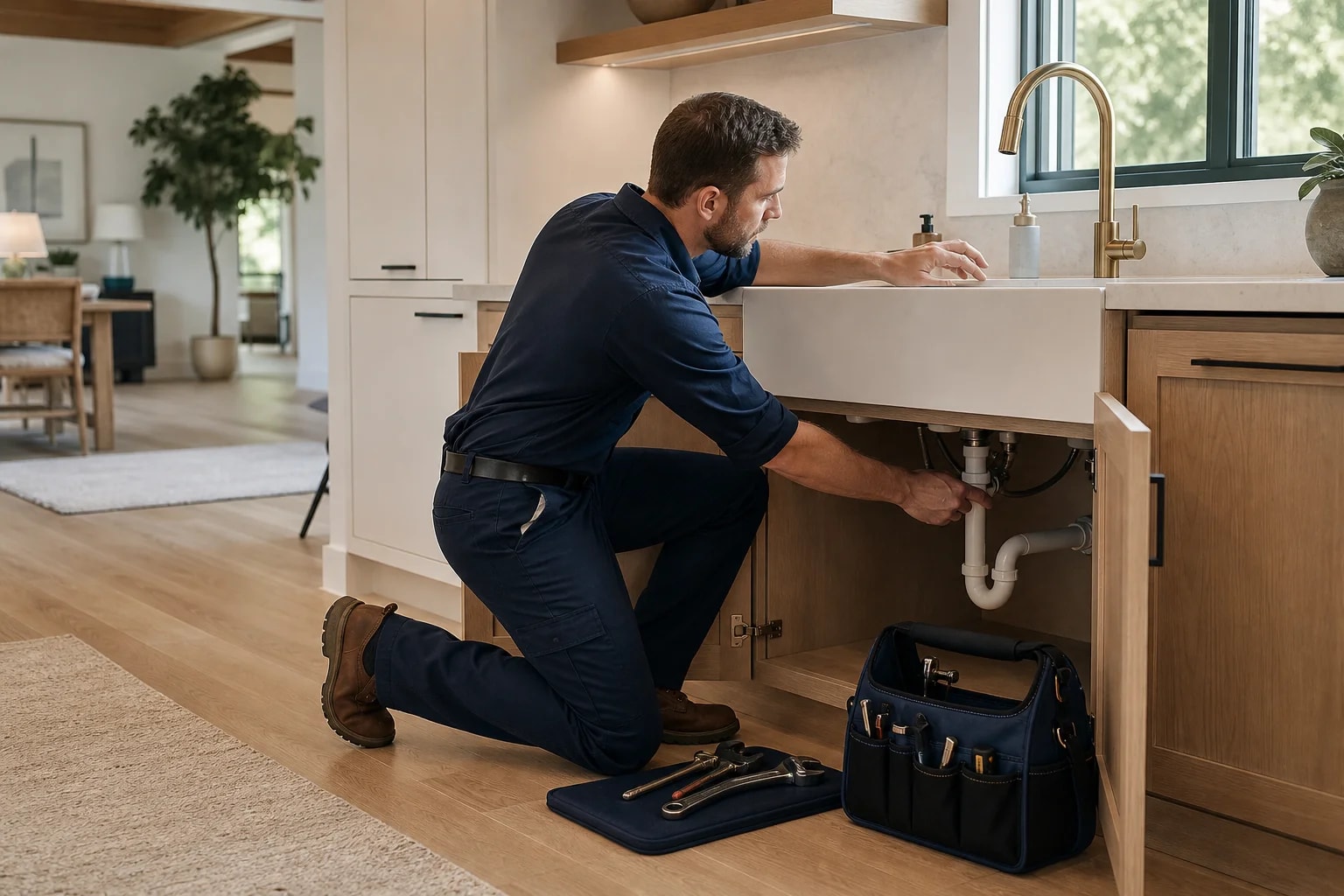
A clogged drain is the most common plumbing call there is. Most of the time it is a single fixture: the kitchen sink after a big cooking weekend, a bathroom sink that has been getting slower for months, or a shower that now leaves you standing in water.
This guide covers what usually causes it, what you can look at safely before anyone comes out, the signs that mean it is bigger than one drain, and what a plumber actually does when they arrive.
What you notice
- Water drains slowly from one sink, tub or shower and leaves a ring behind.
- Water stands in the basin and only goes down after a long wait.
- Gurgling from the drain when water runs elsewhere, or bubbles rising when you drain the sink.
- A sour or rotten smell from the drain even when nothing is running.
- Water backs up into a different fixture, for example the tub fills when the toilet flushes.
Likely causes
Hair and soap in a bathroom drain
The most common bathroom clog. Hair binds with soap and skin oils just below the stopper, so the sink or shower slows down over weeks rather than overnight.
Grease, fat and food in the kitchen line
Cooking fat goes down warm and liquid, cools in the pipe, and hardens into a lining that catches coffee grounds, rice and peelings. Kitchen clogs often sit a few feet down the line, past the trap.
A blocked P-trap
The U-shaped pipe under a sink is designed to hold water and catch debris. A ring, a toothpaste cap or a wad of dental floss can sit there and block most of the opening.
Wipes, paper towels and hygiene products
Products marketed as flushable do not break down like toilet paper. They catch on any rough joint and build a plug, especially in older cast-iron drain lines.
A problem further down the line
If more than one fixture is slow, or the lowest drain in the house backs up, the blockage is in a shared branch or the main sewer line. Tree roots, a sagging section of pipe or a collapsed clay line are the usual causes.
A venting problem
Drains need air to flow. A blocked plumbing vent on the roof (leaves, a bird nest, ice) makes drains gurgle and run slowly even when the pipe itself is clear.
Safe things to check before anyone comes out
- Run water in a second fixture nearby. If the tub gurgles when the bathroom sink drains, the clog is shared and likely past both traps.
- Lift a pop-up sink stopper if it comes out by hand and look for hair wrapped around it. Pull it off with a tissue; no tools needed.
- Check whether the lowest drain in the home (a basement floor drain, a ground-floor tub) is also slow. If it is, treat it as a main-line problem.
- Note when it started and whether anything unusual went down: a cooking session, a renovation, a new household product.
- Look under the sink for drips or a damp cabinet floor. A leaking trap and a clogged trap are often fixed in the same visit.
When to stop and call
- Sewage or dark water is coming up through a tub, shower or floor drain. Stop using water and call the same day.
- More than one fixture is backing up at once, or the toilet overflows when the washing machine drains.
- You already poured a chemical drain cleaner in and it did not work. Tell the plumber before they open the trap; the standing liquid can burn skin and eyes.
- Water is pooling near outlets, a water heater or any electrical equipment.
- A smell of sewer gas inside the house that does not clear with ventilation.
What the technician does
- Asks which fixtures are affected and runs water to confirm whether the clog is local or shared.
- Removes and clears the P-trap under a sink, which solves many bathroom and kitchen clogs in minutes.
- Runs a drain auger (a cable machine) from the fixture, a cleanout or the roof vent to break up and pull back whatever is further down.
- For recurring or main-line problems, runs a camera through the line to see roots, breaks or sags, and shows you the footage.
- Hydro-jets a greasy kitchen line or a root-filled sewer when a cable alone would only punch a hole through the blockage.
- Refits the trap, checks for leaks, runs every affected fixture, and explains what caused it and how to keep it from coming back.
What it usually costs
Clearing a single clogged fixture is usually a flat or hourly charge in the low hundreds of dollars. A main sewer line, a camera inspection or hydro-jetting costs more because of the equipment and time involved. The estimate should be explained before any work starts, including any diagnostic or trip fee.
What moves the estimate
- Where the clog is: a trap under the sink is quick, a main line reached through a cleanout or the roof takes longer.
- Whether a camera inspection is needed to find roots, a break or a sag.
- Access: a cleanout outside the house versus pulling a toilet to reach the line.
- Time of day and urgency. Same-day and after-hours visits usually carry a higher rate.
- Whether the pipe itself needs repair after it is cleared.
Keeping it from coming back
- Put a hair catcher in every shower and tub drain and empty it weekly.
- Wipe cooled grease into the trash and scrape plates before rinsing. Grease, rice and coffee grounds are the big three for kitchen lines.
- Flush nothing but toilet paper. Wipes go in the bin even when the pack says flushable.
- Run hot water for a minute after using the kitchen sink to move soft residue along.
- If the home has older clay or cast-iron lines, ask for a camera inspection every few years so roots are cut before they block the line.
Questions people ask
Should I try a chemical drain cleaner first?
Most plumbers advise against it. Caustic cleaners can damage older pipes and seals, rarely clear a solid hair or grease plug, and leave a hazardous liquid sitting in the trap that someone then has to open. A plunger or removing the stopper is a safer first step.
Why does my drain clog again a few weeks after it was cleared?
A cable punches a path through the blockage but may leave grease or scale on the pipe walls, so new debris catches quickly. If a clog keeps coming back, ask about hydro-jetting or a camera inspection to find the cause.
Is a slow drain an emergency?
Usually not. One slow fixture can wait for a normal appointment. Sewage backing up, several fixtures affected at once, or water near electrical equipment should be treated as urgent.
Can the plumber tell me what caused it?
Often, yes. What comes back on the cable, where the clog sat, and a camera inspection all point to a cause. Ask: the fix for grease is different from the fix for roots.