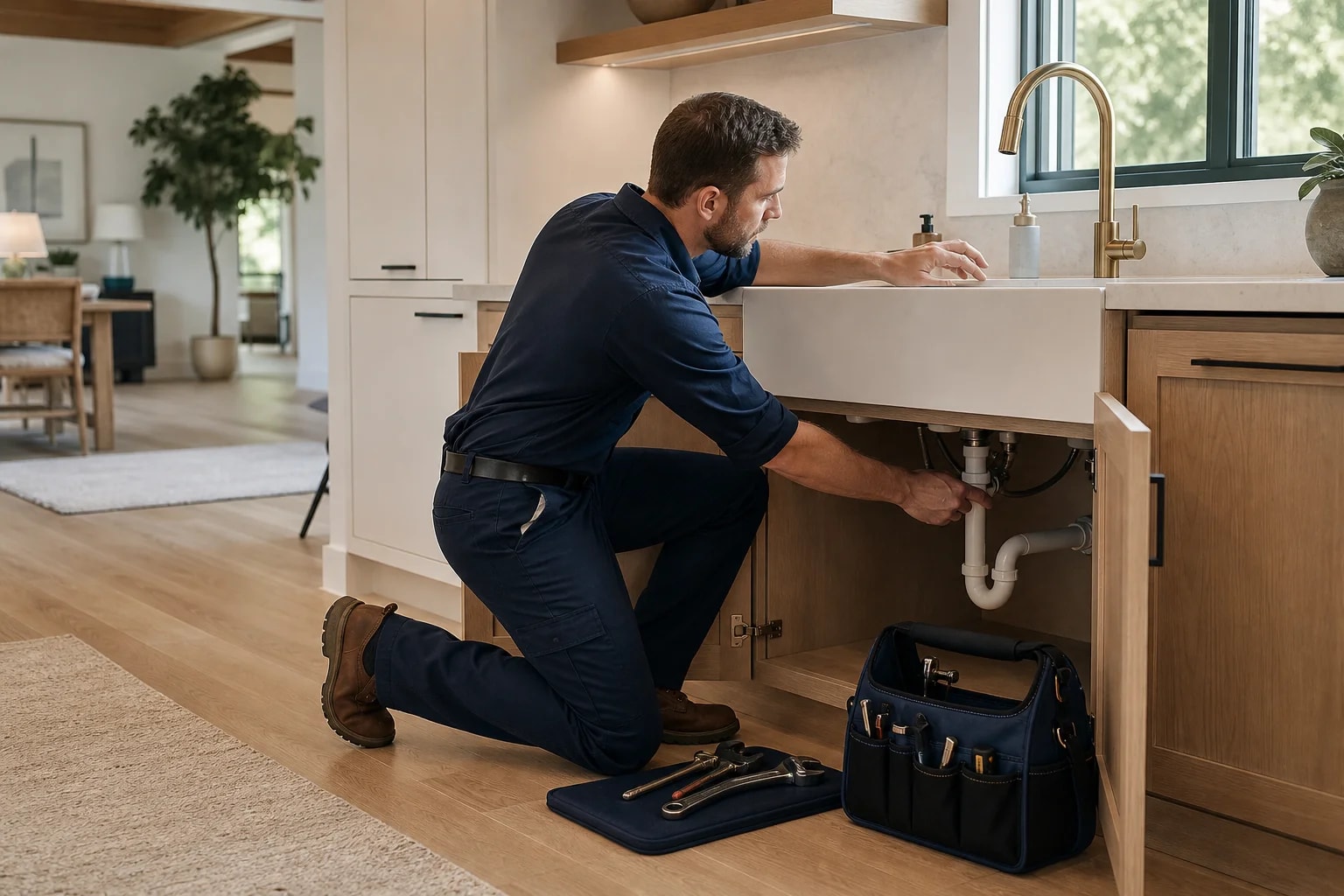
A leak is rarely dramatic at first. It is a faucet that drips after you shut it off, a damp spot under the kitchen sink, a stain spreading across a ceiling, or a water bill that climbed for no reason you can name. Small leaks waste a surprising amount of water and, left alone, they rot cabinets, stain drywall and feed mold.
This guide explains what usually causes a faucet or pipe to leak, how to narrow down where the water is coming from without taking anything apart, which leaks need someone today, and what a plumber does when they arrive.
What you notice
- A faucet keeps dripping from the spout after it is turned off, or water seeps from around the handle or the base.
- A damp or warped cabinet floor under a sink, sometimes with a musty smell.
- A brown or yellow stain on a ceiling or wall, often below a bathroom.
- The sound of running water when nothing is on, or a water meter that keeps moving.
- A puddle near the water heater, washing machine, toilet base or an outdoor spigot.
- A water bill that is noticeably higher than the same month last year.
Likely causes
Worn faucet cartridge, washer or seal
Inside every faucet is a small part that opens and closes the flow. Rubber washers, O-rings and ceramic or plastic cartridges wear with use and hard water. The result is the classic drip from the spout or a seep around the handle.
Loose or failed supply connection
The flexible lines under a sink or toilet connect to shutoff valves with compression fittings. Over time the nut loosens, the washer hardens or a braided line fails, and water drips at the joint. This is the most common cause of a wet cabinet.
A leaking drain trap or tailpiece
If the cabinet is only wet after you run the sink, the leak is usually on the drain side: a slip nut that has backed off, a cracked trap or a worn gasket. The supply side leaks all the time; the drain side leaks only when water goes down.
Corroded or pinholed pipe
Older galvanized steel rusts from the inside, and copper develops pinholes where water chemistry or stray current eats the wall. These leaks start as a weep and grow. They often show up as a stain on the ceiling below.
Frozen or burst pipe
Water expands as it freezes and splits pipe or joints in unheated spaces: crawl spaces, garages, exterior walls and outdoor spigots. The leak appears when things thaw.
High water pressure or water hammer
Pressure well above what fixtures are rated for stresses every seal in the house. Faucets drip, toilet fill valves hiss, and supply lines fail early. A failed pressure-reducing valve is a frequent hidden cause of repeat leaks.
Safe things to check before anyone comes out
- Dry the area with a towel, then watch where the first new drop forms. Note whether it appears all the time or only when a fixture is used.
- Under a sink, look at the two supply lines and the drain trap without touching anything. A white or green crust on a fitting marks a slow leak.
- Look at the handle, spout base and spout tip of a dripping faucet to see which one is wet. A plumber fixes each differently.
- If your home has a water meter you can see, note the reading, avoid using water for an hour, and check it again. Movement means water is going somewhere.
- Walk the ceiling below any bathroom or laundry and look for stains, bubbling paint or a sag. Do not press on a sagging ceiling.
- Note the age of the home and whether the pipes you can see are copper, plastic or gray steel. That helps the plumber plan the visit.
When to stop and call
- Water is touching an outlet, light fixture, panel or any electrical equipment, or you smell gas. Leave the area and call your utility or emergency service first.
- Water is flowing and you cannot find or turn a shutoff valve. Call right away; a burst pipe can release hundreds of gallons in an hour.
- A ceiling is sagging or bulging. Keep people out of the room; the drywall can fail suddenly.
- The leak is from a water heater tank itself rather than a fitting. Tanks do not get repaired, and the leak will only get worse.
- Leaking water is hot, discolored or smells like sewage.
What the technician does
- Asks where and when you see water, then confirms the source with the fixture running and shut off.
- Closes the shutoff valve for that fixture, or the main valve if the leak is in a pipe, so the repair can be done dry.
- For a faucet, removes the handle and replaces the cartridge, washers or O-rings, or recommends a new faucet if the body is corroded or parts are no longer made.
- For a supply connection, replaces the washer, line or shutoff valve, which are inexpensive and quick to swap.
- For a pipe, opens the wall or ceiling only as far as needed, cuts out the damaged section and joins new pipe with soldered, push-fit or crimped fittings.
- Checks household water pressure, tests every repaired joint under full pressure, and explains what caused the leak and whether anything else looks close to failing.
What it usually costs
Replacing a faucet cartridge, a supply line or a shutoff valve is usually a short visit billed at a flat or hourly rate in the low hundreds of dollars, plus the part. Repairing a pipe inside a wall or ceiling costs more because of access and the patching that follows. Replacing a whole faucet depends mostly on the faucet you choose. The estimate should be explained before any work starts, including any trip or diagnostic fee.
What moves the estimate
- Whether the leak is at an exposed fitting or inside a wall, floor or ceiling.
- Faucet brand and age: common cartridges are stocked on the truck, unusual ones must be ordered.
- Pipe material. Old galvanized steel often needs a longer section replaced than the leak itself.
- Whether drywall, tile or cabinetry has to be opened and repaired afterward.
- Urgency. Same-day and after-hours visits usually carry a higher rate.
Keeping it from coming back
- Learn where the main water shutoff is and make sure it turns. Test it once a year so it is not stuck when you need it.
- Replace rubber washing machine hoses and old supply lines before they fail; braided stainless lines are inexpensive.
- Have the household water pressure checked if faucets drip repeatedly or fixtures bang when they shut off.
- Disconnect garden hoses before the first freeze and keep heat on in rooms with plumbing in exterior walls.
- Look under each sink every few months. Catching a weep early is the difference between a washer and a new cabinet.
Questions people ask
Can a dripping faucet wait?
Usually, yes, for a normal appointment. It wastes water and the drip tends to get worse, but it is not an emergency unless water is reaching something it should not. A leak at a pipe or fitting under pressure should be looked at sooner.
Should I turn the water off before the plumber arrives?
If water is actively leaking and you can reach a shutoff valve under the fixture or at the main, turning it clockwise by hand is sensible. If a valve will not turn, leave it; forcing a stuck valve can break it.
Repair the faucet or replace it?
A cartridge or washer swap is worth it on a faucet that is otherwise in good shape. If the body is corroded, parts are hard to find, or the finish is failing, a new faucet often costs little more once labor is counted.
Why does the leak only show up sometimes?
Drain-side leaks appear only when water runs. Supply-side leaks can be pressure-related, worse at night when pressure rises. Telling the plumber when you see water narrows the search.