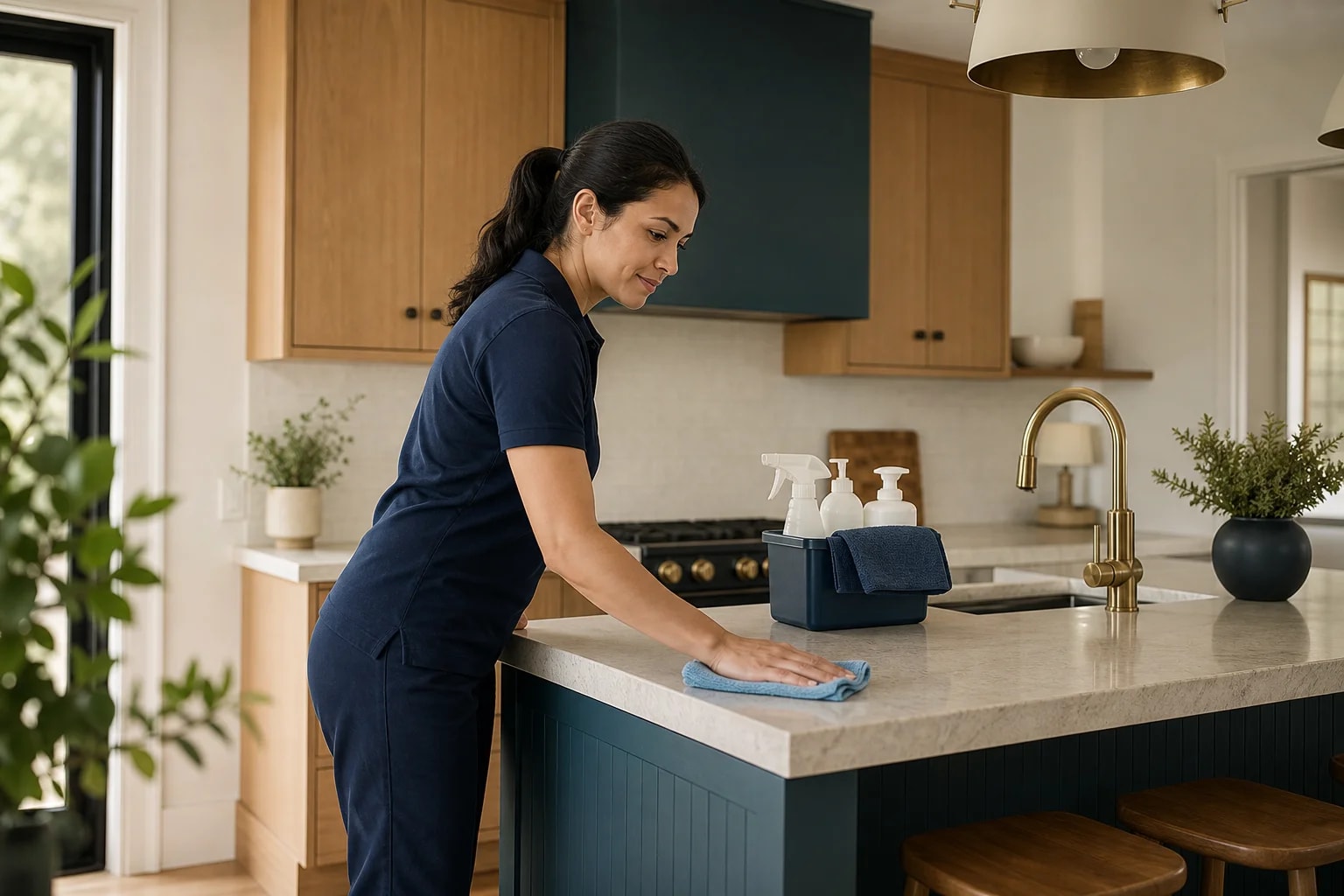
A deep clean is the thorough one: the visit that gets the grime a weekly clean never reaches. Baseboards, the tops of cabinets, grout lines, inside the oven, behind the toilet, the window tracks, the vent covers. It is the starting point for a recurring schedule, the spring reset, or the fix for a house that has gotten away from you.
This guide covers what a deep clean usually includes, what changes its scope and price, what to decide and prepare before the visit, and what to expect on cost. It also covers the few situations where a deep clean is the wrong tool and a specialist is needed first.
What you notice
- Everything in a regular cleaning, done more thoroughly, plus the items below.
- Kitchen: inside the oven and microwave, inside and on top of the fridge, cabinet fronts and handles scrubbed, backsplash, range hood exterior, under small appliances.
- Bathrooms: tile and grout scrubbed, shower glass and door tracks, behind and around the toilet, faucets and drains descaled, exhaust fan covers wiped.
- Throughout: baseboards, door frames, doors, light switches, outlet covers, ceiling fans and light fixtures within reach, window sills and tracks, interior glass, vent covers, under and behind movable furniture.
- Floors: edges and corners, grout on tile floors, and a careful vacuum of upholstery and under cushions.
- Usually quoted separately: carpet shampooing, exterior windows, walls washed top to bottom, inside closets and drawers, and organizing.
Likely causes
Starting condition
A home that has had regular cleaning and just needs the detail work is a half day. A home that has not been cleaned in months, or after an illness or a long absence, is a full day or more. Photos help the provider estimate.
Size and number of bathrooms
Bathrooms and kitchens are where the deep-clean hours go. Three bathrooms with tiled showers can take as long as the rest of the house.
Add-ons inside appliances and closets
The oven and fridge interiors are often included in a deep clean but not always. Cabinets and drawers emptied and wiped, closets, and the garage are usually extras.
Build-up that needs specific products
Hard-water scale on glass, heavy grease on the range hood, soap scum on tile, and mildew in grout each take a particular cleaner and dwell time. Mention them so the right products come.
Furniture that needs moving
Cleaning under beds and behind sofas is normal; moving heavy pieces, pianos or loaded bookcases is usually not. Decide what you want moved and clear it if you can.
Pets, smoke and allergens
Pet hair in upholstery, nicotine film on surfaces and dust from a renovation elsewhere in the house all add hours and sometimes extra equipment.
Safe things to check before anyone comes out
- Walk every room and write down the spots that bother you most: the shower glass, the oven, the baseboards behind the sofa. Those become the priorities.
- Open the oven and fridge and decide whether their interiors are part of the job.
- Look at grout, shower glass and faucets for scale, mildew and soap scum so the provider knows what products to bring.
- Note any surface that needs care: natural stone, unsealed wood, brass fixtures, delicate finishes.
- Clear counters, floors and the tops of dressers so the time goes into cleaning rather than moving things.
- Decide which furniture you want moved and empty what you can, such as the shelf under the bathroom sink.
- Check for anything that is a repair rather than a cleaning job: a stain that has soaked through, a cracked tile, peeling caulk. A cleaner will point it out but cannot fix it.
- Plan for the house to be busy for several hours and arrange for pets to be out of the way.
When to stop and call
- There is visible mold larger than a small patch, a musty smell with no obvious source, or water damage. Mold and moisture need to be assessed and fixed first; cleaning alone will not solve it.
- There has been a sewage backup, a flood, or rodent droppings in living areas. Those need remediation or pest control and safe handling, not a standard deep clean.
- The home is being prepared for someone with a serious illness or a compromised immune system and surfaces must be disinfected, not just cleaned. Say so, so the right products and contact times are used.
- A deep clean is needed by a fixed date, such as a sale listing, an inspection or a move. Book early; these visits take longer and need a full slot.
What the technician does
- Walks through the home with you, confirms the room list and the priorities, and agrees on the add-ons and anything excluded.
- Starts with the kitchen and bathrooms, applying degreasers and scale removers first so they can work while other rooms are cleaned.
- Dusts and wipes from the top down: fans, fixtures, tops of cabinets and doors, then walls where needed, trim, baseboards and sills.
- Scrubs tile, grout, glass and fixtures, cleans inside the oven, microwave and fridge if included, and wipes cabinet fronts and handles.
- Moves light furniture, vacuums and mops edges, corners and under pieces, and vacuums upholstery and under cushions.
- Cleans interior glass, vent covers, switch plates and door hardware, and resets each room.
- Does a final walk-through with you, notes anything that could not be fully restored, and suggests a sensible recurring schedule if you want one.
What it usually costs
A deep clean is priced by the size and condition of the home and usually comes to several times the cost of a regular visit, commonly in the mid hundreds of dollars for an average home and more for a large house, a neglected one, or one with many add-ons. It is often billed by the hour with an estimated range. The scope and estimate should be explained before any work starts.
What moves the estimate
- Size, number of bathrooms and levels.
- Starting condition and how long since the last thorough clean.
- Inside appliances, cabinets and closets.
- Scale, grease, mildew and pet hair that need extra products and time.
- Furniture to be moved and access to the areas behind it.
Keeping it from coming back
- Follow a deep clean with a regular schedule; the detail work lasts much longer when the basics are maintained.
- Wipe the shower glass with a squeegee after use to keep scale from building.
- Run the range hood while cooking and wipe the backsplash and stovetop while they are warm.
- Rotate one deep-clean task into each regular visit: oven one month, fridge the next, baseboards after that.
- Vacuum upholstery and under cushions monthly if you have pets.
- Fix slow leaks, peeling caulk and poor bathroom ventilation; they create the mildew that a deep clean has to fight.
Questions people ask
How long does a deep clean take?
Most take half a day to a full day for a typical home, longer for large or neglected homes. A team of two or three cleaners shortens the clock time but not the total hours billed.
Does deep cleaning include carpet shampooing or windows outside?
Usually not. Carpet extraction, exterior windows and pressure washing are separate services with different equipment. Ask if the provider offers them or can refer someone.
Can a deep clean remove old stains or discoloration?
Often it improves them, but grout that has been stained for years, scratched glass, or a surface worn through its finish may not come back fully. The cleaner will say what to expect during the walk-through.
How often should a home be deep cleaned?
Once or twice a year is typical for a home on a regular schedule. Homes with pets, smokers or heavy cooking, and homes without regular cleaning, benefit from more frequent deep cleans.