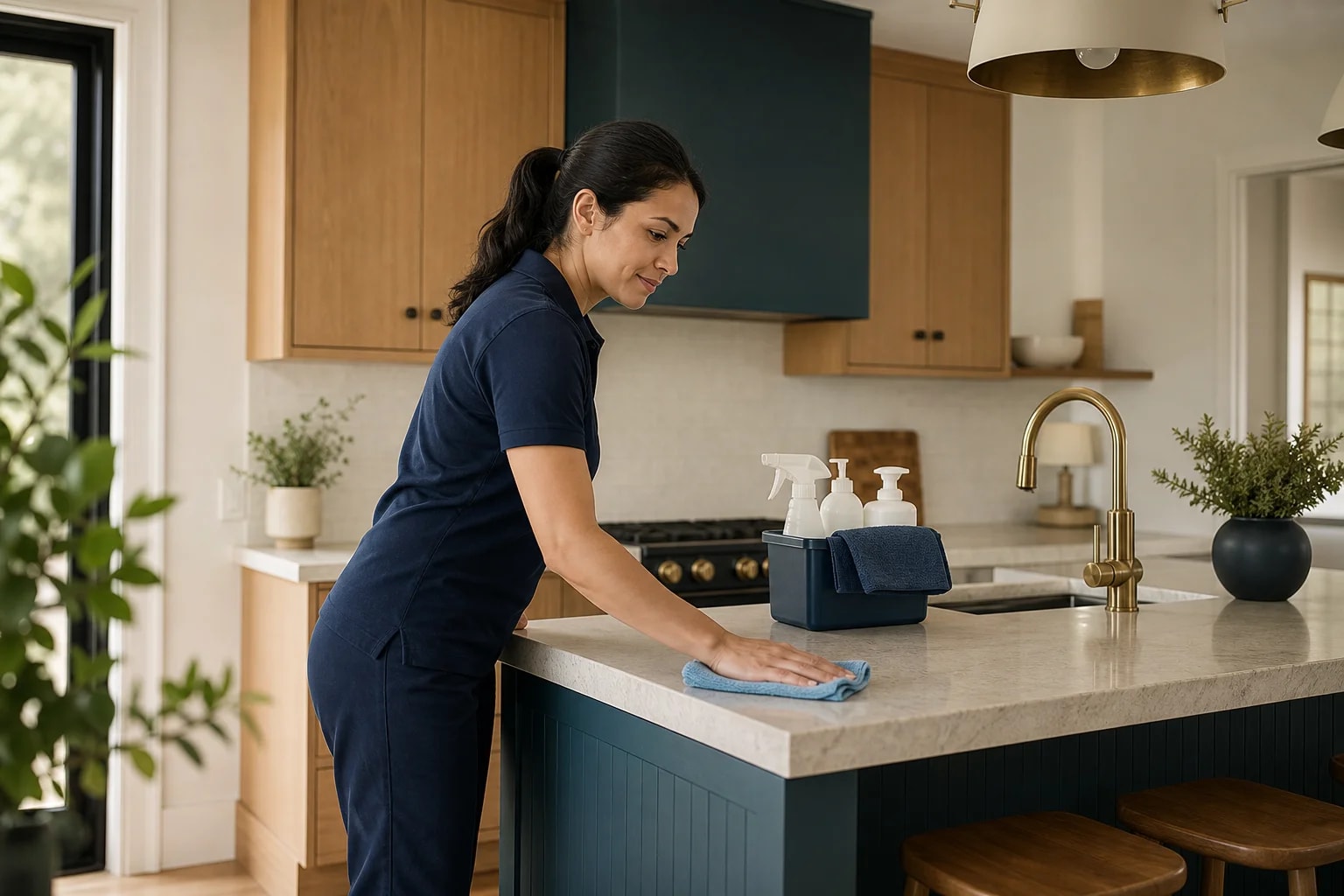
Move-out cleaning is the one with a deadline and often money attached: a security deposit, a lease inspection, a sale walk-through. Move-in cleaning is the other side of it, making a home that someone else just left feel like yours before the boxes come in. Both are done in an empty or nearly empty home, which changes what gets cleaned and how.
This guide covers what these cleanings usually include, what landlords, agents and buyers tend to check, what decides the scope and price, how to prepare, and what to expect on cost.
What you notice
- Everything in a deep clean, done in an empty home, with attention to the places furniture used to hide.
- Kitchen: inside and outside of all cabinets and drawers, inside the oven, fridge and dishwasher, range hood, sink and faucet descaled, counters and backsplash, under and behind appliances where they can be moved.
- Bathrooms: tile, grout, tub, shower, toilet inside and out, mirrors, medicine cabinets and vanity drawers, exhaust fan covers, floors to the corners.
- Rooms and closets: shelves, rods, walls spot-cleaned for marks and scuffs, doors and frames, switch plates, baseboards, window sills and tracks, interior glass, blinds dusted, light fixtures and ceiling fans within reach.
- Floors: vacuumed and mopped edge to edge, including under where appliances and furniture stood, with carpet shampooing often added for a move-out.
- Usually separate: patching nail holes, painting, carpet extraction, exterior windows, garage and balcony sweeping, and hauling anything left behind.
Likely causes
Whether the home is empty
A truly empty home cleans fastest and best. Boxes, furniture or items left behind slow the job and leave spots uncleaned. Schedule the cleaning after the movers.
What the lease or sale requires
Many leases list specific items: oven, fridge, blinds, carpet cleaning, even light bulbs. Read it and give the list to the provider so the clean matches what the inspection will check.
Condition and length of occupancy
A one-year rental in good shape is a different job from a ten-year family home. Pet hair, grease in the kitchen, scale in the bathrooms and marks on walls all add time.
Carpet and floors
Carpet extraction is often required by a lease and is a separate service with its own equipment. Hardwood and tile take longer when they have not been cleaned under furniture in years.
Appliances and whether they stay
If the fridge, oven and washer stay, their interiors are part of the job. If they are going with you, they are not, but the floor and walls behind them are.
Timing and access
Keys, a lock box, elevator reservations in a building, and a fixed inspection time all shape the schedule. Tight turnarounds between tenants are common and should be planned early.
Safe things to check before anyone comes out
- Read the lease or the sale agreement for a cleaning checklist and note each specific item.
- Walk the empty rooms and photograph anything that is damage rather than dirt: holes, stains that have set, broken blinds. Cleaning cannot fix those and it helps to know before an inspection.
- Open every cabinet, drawer and closet and empty them completely, including the bathroom vanity and the space above the fridge.
- Look under and behind the places appliances and furniture stood for dust, pet hair and dropped items.
- Check whether the utilities will be on for the cleaning day. Water and power are needed; hot water helps.
- Note the floor types and whether carpet cleaning is required or wanted.
- For a move-in, note anything the previous occupant left that needs hauling, and any smell such as smoke or pets that might need extra treatment.
- Confirm who will let the cleaners in and whether the inspection is the same day.
When to stop and call
- The lease inspection or closing is within a day or two and the home is not yet clean. Book immediately; these slots fill and a missed inspection can cost a deposit.
- There are rodent droppings, mold, or a sewage or water problem in the empty home. Those need pest control or remediation before anyone cleans.
- The previous occupant left heavy items, hazardous materials, or large amounts of trash. That is a haul-away job to arrange before the cleaning.
- A move-in home smells strongly of smoke or pets and the smell is not lifting after airing. Deep cleaning helps; sometimes painting or duct cleaning is also needed.
What the technician does
- Walks the empty home with you or with the checklist, confirms what the lease or sale requires, and notes anything that is damage rather than dirt.
- Starts in the kitchen and bathrooms with degreasers and scale removers so they can work while other rooms are cleaned.
- Cleans inside and outside every cabinet, drawer and closet, and inside the appliances that stay.
- Pulls out the fridge and range where they can be moved safely and cleans the floor and wall behind them.
- Cleans walls, trim, doors, switch plates, fixtures, sills, tracks and interior glass, spot-cleaning marks and scuffs.
- Vacuums and mops every floor edge to edge, and shampoos carpet if that was included or arranged.
- Does a final walk-through against the checklist, leaves the home ready for inspection or move-in, and points out anything that needs a repair rather than a clean.
What it usually costs
Move-in and move-out cleans are priced like a deep clean, often by the hour with an estimated range or as a flat rate by home size, commonly in the mid hundreds of dollars for an average home and more for a large or long-occupied one. Carpet cleaning, hauling and wall repair are usually quoted separately. The scope and estimate should be explained before any work starts.
What moves the estimate
- Size of the home and number of bathrooms.
- Condition and how long it was occupied.
- Which appliances stay and need their interiors cleaned.
- Carpet cleaning and whether it is required by the lease.
- Items left behind and any repair work that the lease also expects.
Keeping it from coming back
- Schedule the cleaning for after the movers and before the inspection, with a buffer day if you can.
- Keep the lease checklist from the day you move in so there are no surprises at the end.
- Clean the oven and fridge a few weeks before moving so the final clean is faster.
- Patch nail holes and touch up paint before the cleaning, not after; dust from patching lands on clean surfaces.
- For a move-in, clean before the boxes arrive; it is the only time the home is empty.
Questions people ask
Will a move-out clean get my deposit back?
It covers the cleaning part of most lease requirements. Deposits also depend on damage, paint and carpet condition, which cleaning does not fix. Match the clean to the lease checklist and keep the before and after photos.
Should the home be completely empty?
Yes, if at all possible. Cleaners work around boxes, but anything left in a cabinet or on a floor will not be cleaned under, and inspections notice.
Does the cleaning include the garage, balcony or patio?
Usually as an add-on. Sweeping and cobweb removal are common; pressure washing and oil stains are separate services.
Is move-in cleaning worth it if the seller or landlord cleaned?
Often, yes. Standards vary, and a move-in clean focuses on the places you care about most: inside cabinets, the fridge, the bathrooms and the floors, before your things cover them.