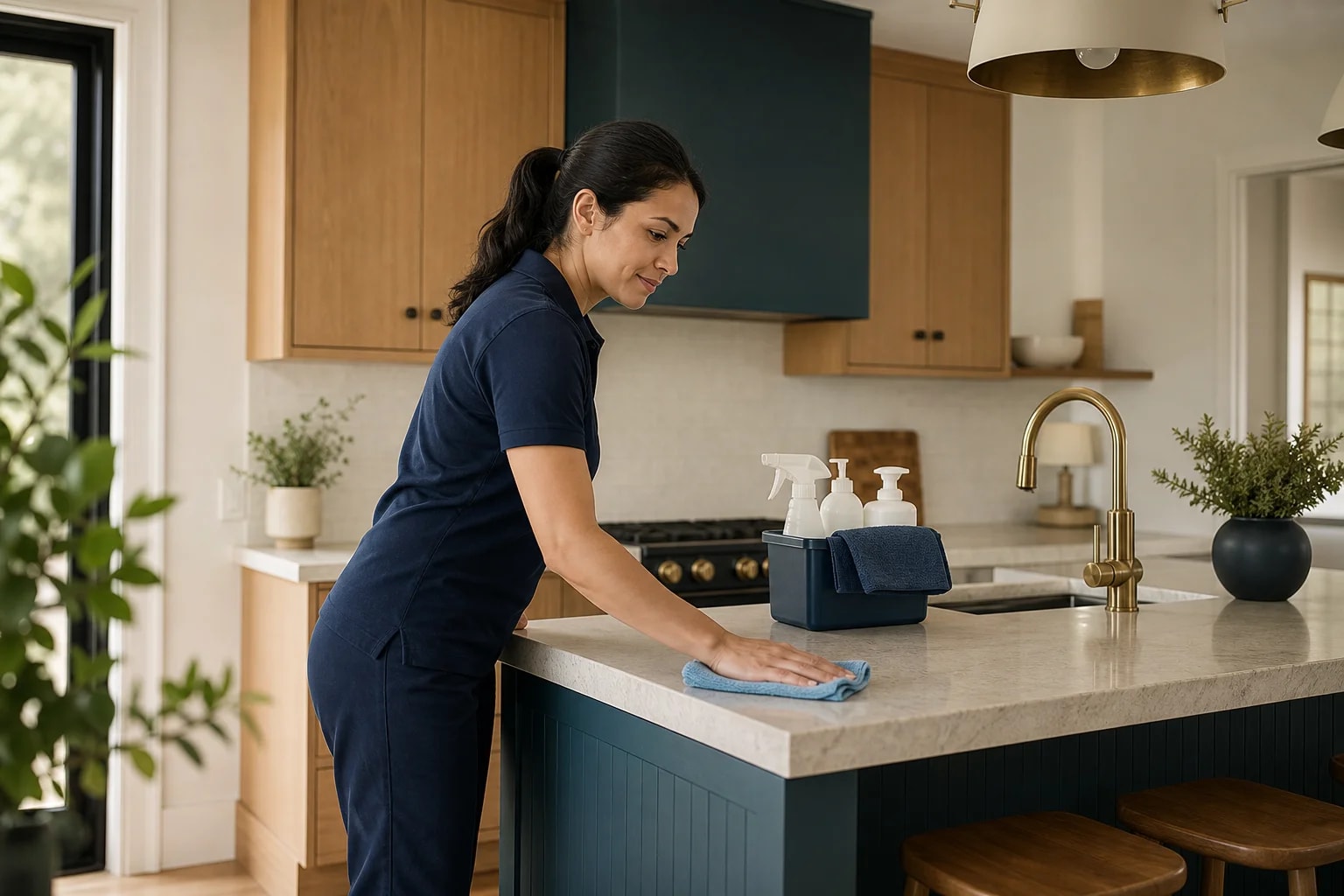
Renovation dust is its own category. Drywall, tile, wood and concrete dust is fine enough to pass through a standard vacuum, settle on every horizontal surface, and reappear a day after the first wipe. Add adhesive residue, paint overspray, stickers on new fixtures and the odd screw in the carpet, and a normal cleaning will not get a renovated home ready to live in.
This guide covers what a post-renovation clean usually includes, why it is done in stages, what decides its scope and price, what to sort out with the contractor first, and what to expect on cost.
What you notice
- A rough first pass: removing debris, packaging and stickers, and vacuuming the bulk of the dust from floors, sills and ledges with a filtered vacuum.
- A detailed pass, often a day or more later once the dust has settled again: walls, ceilings where reachable, trim, doors, cabinets inside and out, light fixtures, vents and switch plates wiped.
- Windows and glass inside, window tracks and frames, and removal of paint spots and adhesive from glass and fixtures where it can be done without damage.
- New kitchens and bathrooms: inside cabinets and drawers, countertops, tile and grout haze, fixtures and appliances cleaned and protective film removed.
- Floors: a careful vacuum followed by mopping, repeated as needed, with the right product for new hardwood, tile or stone.
- A final pass that catches the dust that settles after the first two, sometimes scheduled a few days later.
Likely causes
What was renovated and how dusty it was
A painted bedroom is a short job. A gutted kitchen, drywall sanding throughout, or tile cutting indoors spreads fine dust through every room and into cabinets and ducts. The type of work predicts the hours more than the square footage.
How much the contractor left
Most contracts include a broom-clean or rough clean. Some leave debris, drywall scraps and dust. Ask the contractor what they will do and share it with the cleaner.
Whether dust was contained
Plastic sheeting, sealed vents and a dust barrier keep the mess to one area. Without them the whole house needs cleaning, including rooms that were not part of the job.
New surfaces and their care
Freshly finished floors, new stone counters and unsealed grout need the right products and sometimes a waiting period before they can be cleaned. The cleaner needs to know what was installed.
Residue and overspray
Paint spots, caulk smears, adhesive from protective film and grout haze take time and specific products to remove safely, and some are better handled by the installer under warranty.
The age of the home
Renovation in a home built before 1978 can disturb lead paint, and cutting old plaster, tile or concrete can release silica dust. Cleanup after that work needs filtered vacuums and wet methods, and the contractor has obligations under federal rules.
Safe things to check before anyone comes out
- Confirm with the contractor that the work is finished and that no one will be sanding, cutting or painting after the cleaning.
- Ask the contractor what cleaning is in their contract and what they consider done.
- Walk the home and note where the dust went: rooms that were closed off, cabinets, closets and vents.
- List the new surfaces and materials, especially floors, counters and tile, so the right products can be used and anything that needs curing time is left alone.
- Look for paint spots, adhesive and film on glass, fixtures and appliances, and note anything that looks like it could be damaged by scrubbing.
- Check that the air filter in the heating and cooling system has been changed after the work, and ask whether the ducts were covered during construction.
- Note the year the house was built and whether old paint, plaster or tile was disturbed.
- Remove or cover anything of yours still in the work area so it is not cleaned with construction products.
When to stop and call
- The renovation disturbed paint in a home built before 1978 and there is dust everywhere. Keep children and pregnant people out of the area and ask the contractor about lead-safe cleanup; the cleanup should use wet methods and filtered vacuums.
- There is a strong solvent or chemical smell that is not clearing with ventilation, or anyone has headaches or breathing trouble in the home.
- Dust has filled the heating and cooling ducts and comes out of the vents when the system runs. The filter needs changing and the ducts may need cleaning before the house is lived in.
- There are exposed nails, screws, broken tile or glass on floors in a home with children or pets. That needs a rough clean right away.
What the technician does
- Walks the home, confirms what was renovated and which surfaces are new, and agrees on the stages and what the contractor should still handle.
- Removes remaining debris, packaging, stickers and protective film, and vacuums the bulk dust with a filtered vacuum from the top down.
- Wipes walls, trim, doors, cabinets inside and out, fixtures, vents and switch plates with damp cloths, changing them often so dust is removed rather than spread.
- Cleans glass, tracks and frames, removes paint spots and adhesive where safe, and cleans grout haze from new tile with the right product.
- Cleans the new kitchen and bathrooms in detail, including inside appliances and cabinets, and mops floors with products suited to the new finish.
- Returns for a final pass after the settled dust reappears, or schedules the second visit before leaving.
- Points out anything that is a construction defect rather than dirt, such as paint on hardware, haze that will not lift, or scratches, so it can go back to the contractor.
What it usually costs
Post-renovation cleaning is billed by the hour or by the job and is usually the most expensive type of home cleaning because of the number of passes and the detail work, commonly in the mid to high hundreds of dollars for a single renovated room and more for a whole-house project. Duct cleaning and carpet extraction are separate services. The scope and estimate should be explained before any work starts.
What moves the estimate
- The size of the renovation and how far the dust spread.
- How much debris and dust the contractor left.
- The number of passes needed and whether a return visit is scheduled.
- New surfaces that need specific products or curing time.
- Residue removal and any lead-safe or silica precautions.
Keeping it from coming back
- Ask the contractor to use dust barriers, seal vents and run air filtration during the work.
- Put a final clean in the construction contract or budget for it separately from the start.
- Change the heating and cooling filter when the work ends and again a month later.
- Keep protective film on new appliances and fixtures until the cleaning, then have it removed carefully.
- Schedule the detailed clean a day or two after the rough clean so the settled dust is caught.
- Have the contractor clean up their own paint spots and adhesive before sign-off; it is easier for them to do without damaging new finishes.
Questions people ask
Why does the dust come back after cleaning?
Fine construction dust stays suspended in the air and settles for days. The first pass removes the bulk, the second gets the detail, and a short third pass catches what settled afterward. That is why most providers plan more than one visit.
Can a regular cleaning service do this?
Some can, with the right equipment. Ask whether they have filtered vacuums and experience with construction dust, grout haze and adhesive removal. Standard vacuums blow fine dust back into the room.
Should the contractor clean up?
Most contracts include a rough clean. Few include a detailed one. Read the contract, and ask the contractor to handle their own paint spots, caulk smears and stickers before the final clean.
What about dust in the ducts?
If vents were not sealed during the work, dust is likely in the ducts and will keep coming out. Change the filter first; if dust still appears at the vents, duct cleaning is a separate service worth considering.