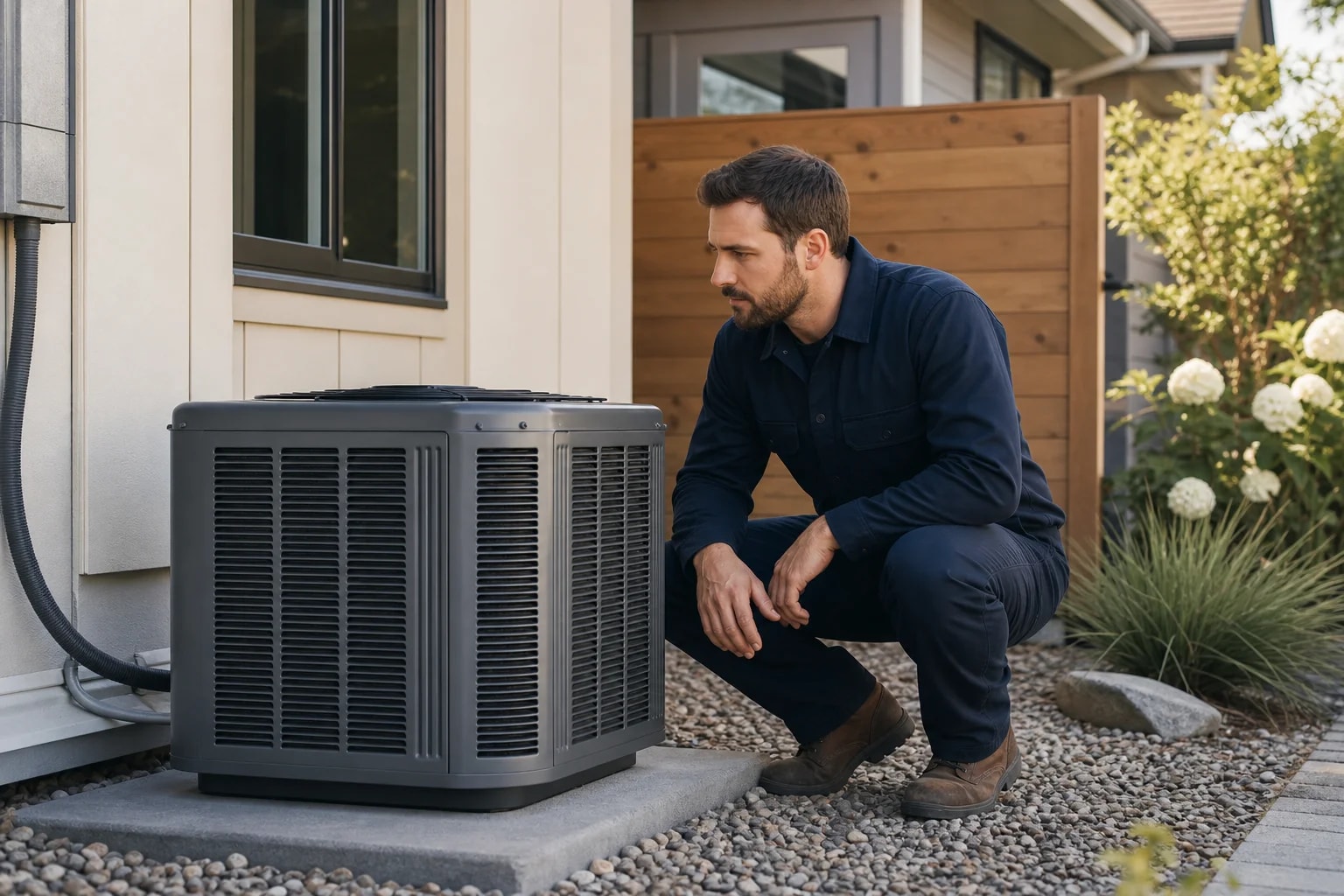
An air conditioner that runs but does not cool is the top summer service call. Sometimes the house is just a few degrees warmer than the thermostat asks for. Sometimes the air from the vents is room temperature, or the outdoor unit is silent while the indoor fan keeps blowing.
This guide covers the usual reasons a central system, heat pump or mini-split stops cooling, what you can look at safely from the thermostat and the vents, the signs that mean shut it off and call, and what a technician does once they arrive.
What you notice
- The system runs for long stretches but the house never reaches the set temperature.
- Air from the vents feels weak, warm or only slightly cool.
- The indoor fan runs but the outdoor unit is not running, or the outdoor fan runs but the air is not cold.
- Ice or frost on the copper lines at the outdoor unit or on the indoor coil cabinet.
- The system turns on and off every few minutes.
- Water around the indoor unit or a dripping ceiling below an attic air handler.
Likely causes
A clogged air filter
The most common and the cheapest. A loaded filter starves the indoor coil of air, so it gets too cold, ices over and stops transferring heat. Airflow drops, rooms warm up and the system runs constantly.
Low refrigerant from a leak
Refrigerant does not get used up; if it is low, it leaked. A low charge shows up as lukewarm air, ice on the lines and long run times. Adding refrigerant without finding the leak is a short-term patch that costs more each time.
A dirty or blocked outdoor coil
The outdoor unit dumps heat from the house into the outside air. Cottonwood fluff, grass clippings, dirt and shrubs grown tight against it keep that from happening, and the system loses capacity on the hottest days when you need it most.
A failed capacitor, contactor or fan motor outdoors
A capacitor gives the compressor and fan the jolt they need to start. When it fails, the outdoor fan may hum and not spin, or the compressor never starts, so the indoor fan blows air that has not been cooled.
A clogged condensate drain or tripped float switch
Cooling produces water. If the drain line clogs with algae, a safety switch shuts the system down to prevent an overflow. The thermostat looks normal but nothing runs.
Thermostat, wiring or breaker problems
A thermostat set to fan-only or heat, dead thermostat batteries, a tripped breaker for the outdoor unit, or a pulled disconnect after yard work all look like a broken air conditioner.
Safe things to check before anyone comes out
- Read the thermostat. Confirm it is set to cool, the set point is below the room temperature, and the display is not blank or showing a low-battery warning.
- Hold a hand at a supply vent. Note whether the air is cool, warm or barely moving, and whether all rooms feel the same.
- Step outside and look at the outdoor unit from a few feet away. Is the fan spinning? Is the cabinet buried in leaves or plants? Is there ice on the copper line where it enters the house?
- Look at the filter slot or return grille without removing anything. A filter that is visibly gray and loaded with dust is a likely culprit.
- Look for water around the indoor unit, in the drain pan if it is visible, or a wet ceiling below an attic unit.
- Note when the problem started, whether it followed a storm or a power flicker, and whether the system has been serviced in the last year.
When to stop and call
- There is smoke, a burning smell, a gas smell or a carbon monoxide alarm. Leave the area and call your utility or emergency service before anyone else.
- The outdoor unit is humming loudly and not spinning, or you hear a grinding or screeching noise. Turn the system off at the thermostat to avoid burning out the compressor.
- The copper lines or indoor coil are iced over. Turn cooling off and leave the fan on so it can thaw before the visit.
- Water is dripping through a ceiling or pooling near electrical equipment.
- Someone in the home is vulnerable to heat and the house is becoming unsafe. Ask for the soonest visit and plan a cooler place to be in the meantime.
What the technician does
- Confirms the thermostat call and checks that the indoor and outdoor units are getting power and that no safety switch has tripped.
- Inspects the filter, indoor coil and blower for dirt and ice, and clears the condensate drain if it is clogged.
- Measures refrigerant pressures and temperatures to tell a low charge from an airflow problem, which look similar from the house.
- Tests the capacitor, contactor and motors at the outdoor unit and replaces failed parts, which are often on the truck.
- Cleans the outdoor coil if it is dirty, and if refrigerant is low, finds the leak and repairs it before recharging, as federal rules require certified handling.
- Runs the system, verifies the temperature drop across the coil, and explains what was wrong, what was done and what to watch for.
What it usually costs
A diagnostic visit plus a common part such as a capacitor, contactor or a drain cleaning usually lands in the low to mid hundreds of dollars. Refrigerant leak repair, a fan motor or a coil cleaning cost more, and a compressor or coil replacement can run into the thousands, at which point replacing an older system is often discussed. The estimate should be explained before any work starts, including any diagnostic or trip fee.
What moves the estimate
- What failed: a filter or capacitor is quick, a leak search or a motor takes hours.
- Refrigerant type and quantity. Older refrigerants are expensive and some systems hold a lot.
- Age of the system. Parts for older units can be scarce, and repairs on a system near the end of its life may not be worth it.
- Access: an air handler in a tight attic or crawl space takes longer.
- Urgency. Peak-season, same-day and after-hours visits usually carry a higher rate.
Keeping it from coming back
- Change or clean the filter on the schedule the manufacturer suggests, more often with pets or during heavy use.
- Keep a couple of feet clear around the outdoor unit and rinse leaves and grass off the fins gently with a hose, never a pressure washer.
- Have the system tuned up before each cooling season so refrigerant, electrical parts and the drain are checked while it is cheap to fix.
- Keep supply and return vents open and unblocked by furniture or rugs.
- Set the thermostat fan to auto rather than on, so the coil can drain between cycles and the house does not get humid.
Questions people ask
Can I just add refrigerant?
Not without finding the leak. Refrigerant is a sealed charge; if it is low, it escaped somewhere. A technician certified under EPA rules has to handle it, and topping off a leaking system costs more every season than fixing the leak once.
Why is there ice on my AC?
Ice means the coil got colder than it should, usually from restricted airflow or low refrigerant. Running it iced can damage the compressor. Switch cooling off, let it thaw, and have it checked.
Is it the filter?
Often. If you cannot remember the last time the filter was changed and the air from the vents is weak, that is the first thing a technician will look at.
Repair or replace?
A simple part on a system within its expected life is worth repairing. A major component failure on an older system, especially one using a phased-out refrigerant, is usually the point where replacement makes more sense. Ask for both numbers.
Sources
- ENERGY STAR: Heat and cool efficiently www.energystar.gov
- ENERGY STAR: Heating and cooling maintenance checklist www.energystar.gov
- U.S. EPA: Stationary refrigeration and air conditioning (Section 608 refrigerant rules) www.epa.gov
- AHRI: HVACR and water heating maintenance tips for homeowners www.ahrinet.org