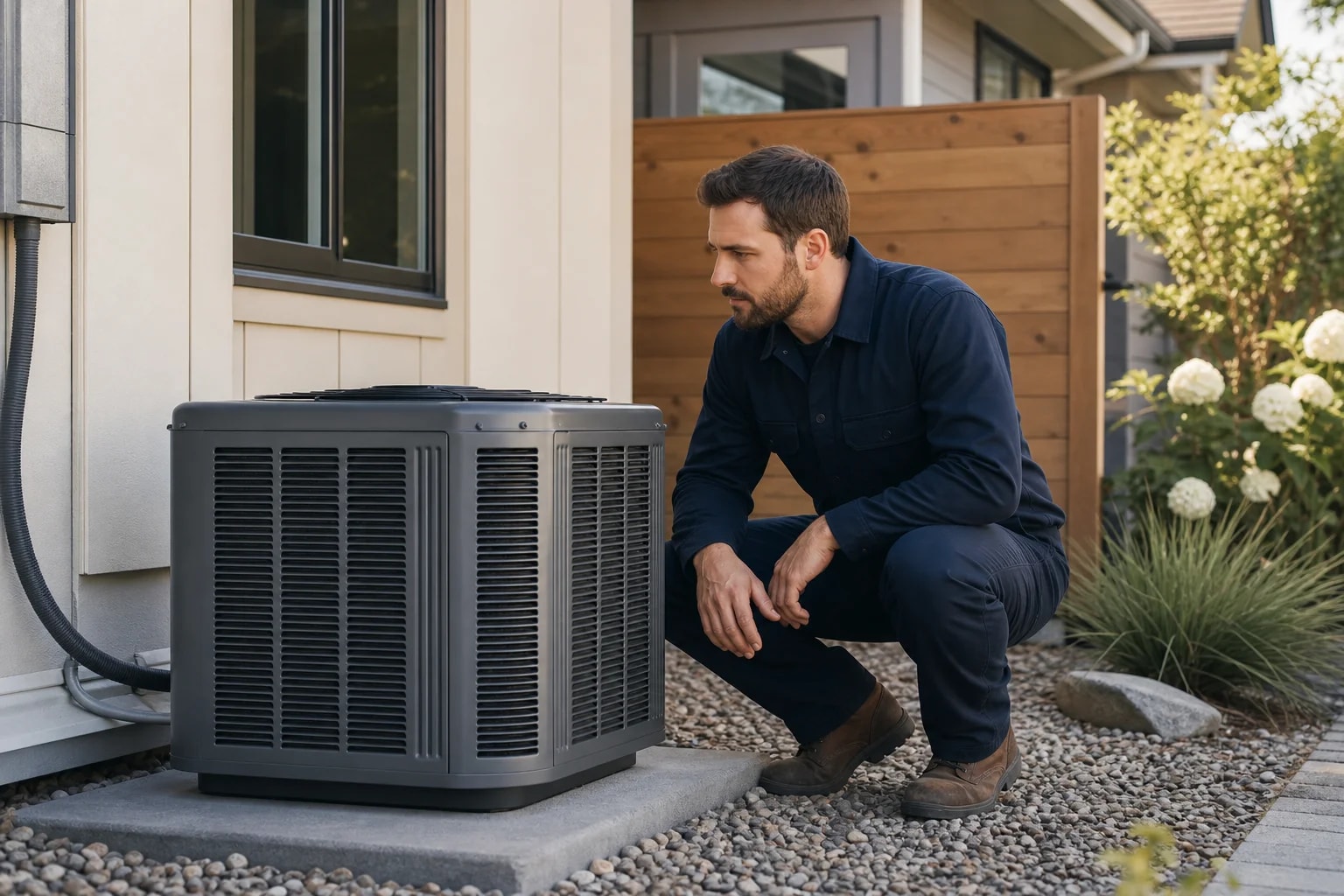
Heating and cooling equipment is the most expensive machinery in most homes, and it runs thousands of hours a year. A maintenance visit is the one appointment that is about preventing a breakdown rather than fixing one: catching a weak capacitor before a heat wave, a cracked igniter before a cold snap, or a slow refrigerant leak before it ruins a compressor.
This guide explains what a proper tune-up includes, what the small things you can do between visits are, the problems a maintenance visit tends to find, and what it typically costs.
What you notice
- It has been more than a year since anyone serviced the system, or you are not sure it has ever been serviced.
- Energy bills have crept up without a change in weather or habits.
- Some rooms are noticeably warmer or cooler than others.
- The system seems to run longer than it used to, or the house feels humid in summer.
- More dust than usual on surfaces and vents.
- You are buying or selling the home, or the manufacturer warranty requires documented service.
Likely causes
Dirt on coils, blower and burners
Dust and grime insulate the indoor coil and blower wheel and clog the outdoor coil fins. The system moves less air and transfers less heat, so it runs longer to do the same job. This is the single biggest efficiency loss a tune-up reverses.
Electrical parts weakening with age
Capacitors lose capacity gradually, contactor points pit, and wire connections loosen with heat cycles. A technician tests these against spec and replaces ones that are drifting before they strand you.
Refrigerant charge slightly off
A small leak lowers the charge a little each year. The system still cools, just less efficiently and with more strain. Measuring pressures and temperatures during maintenance catches it early.
Combustion and venting problems on gas equipment
Burners get dirty, flame sensors coat over, and heat exchangers can crack. These are safety issues as much as performance ones and are why an annual inspection of gas heating is widely recommended.
Condensate drain and pan buildup
Algae and sludge build in the drain line over a season. Clearing it during maintenance prevents the overflow or safety-switch shutdown that shows up on the hottest day of summer.
Duct leaks and airflow imbalance
Leaky or disconnected ducts lose conditioned air into attics and crawl spaces. A tune-up often spots an obvious leak or a closed damper that explains a hot room.
Safe things to check before anyone comes out
- Find the last service sticker, usually on the indoor unit cabinet, and note the date and company.
- Look at the filter slot or return grille and note the filter size printed on its edge if it is visible. Replacing filters is normal homeowner upkeep; everything beyond that belongs to the technician.
- Walk the house and note any rooms that never feel right and any vents that are closed or blocked by furniture.
- Look at the outdoor unit from a few feet away for leaves, grass, bent fins or plants crowding it.
- Look for water stains around the indoor unit or below an attic air handler.
- Gather the model information from the outside of the equipment labels if they are easy to read. Do not open any panel to find them.
When to stop and call
- There is smoke, a gas smell or a carbon monoxide alarm. That is not a maintenance call; leave the area and contact your utility or emergency service.
- The system is not heating or cooling at all. Book a repair visit rather than a tune-up so the right time and parts are planned.
- You see ice on refrigerant lines, water through a ceiling, or scorch marks on the equipment.
- A breaker for the system keeps tripping.
- You are about to leave the home for an extended time in extreme weather and the system has not been checked in years.
What the technician does
- Asks about any comfort complaints, noises or rising bills, then inspects the thermostat and checks the filter.
- Cleans the indoor coil, blower and drain, and tests the condensate pump and safety switch if present.
- Cleans the outdoor coil and straightens bent fins, then tests the capacitor, contactor and fan motor against manufacturer specifications.
- Measures refrigerant pressures and temperatures, the temperature drop or rise across the coil, and the blower amperage.
- On gas equipment, cleans burners and the flame sensor, checks the igniter, inspects the heat exchanger and venting, and tests for carbon monoxide.
- Tightens electrical connections, lubricates motors that need it, and leaves a written report of readings, anything replaced, and anything to watch.
What it usually costs
A single tune-up for one system is usually a flat fee in the low hundreds of dollars, often less per visit on an annual plan that covers both a cooling and a heating visit. Parts found worn during the visit are quoted separately and should be approved by you before they are replaced. The estimate should be explained before any work starts, including anything the plan does and does not include.
What moves the estimate
- Number of systems in the home and whether both heating and cooling are covered.
- Whether a plan includes filters, priority scheduling or a discount on repairs.
- Equipment type: a gas furnace with a combustion check takes longer than an electric air handler.
- Condition. A coil that has not been cleaned in years can be a separate deep-cleaning charge.
- Access to the equipment and the outdoor unit.
Keeping it from coming back
- Schedule cooling maintenance in spring and heating maintenance in fall, before the busy season when appointments are easiest to get.
- Change or clean filters on schedule and write the date on the filter frame.
- Keep the outdoor unit clear and gently rinse it in spring; never use a pressure washer on the fins.
- Keep vents open and furniture off returns so the system breathes the way it was designed to.
- Keep the service reports in one place. A history of readings makes it much easier to spot a slow decline.
Questions people ask
Is annual maintenance really necessary?
Government efficiency programs, manufacturers and trade associations all recommend an annual checkup, and many manufacturer warranties expect documented service. The visit is cheap compared with the repair it most often prevents.
What should the technician leave me with?
A written summary of what was checked, the key readings, anything cleaned or replaced, and anything they recommend watching. If you get a one-line receipt, ask for the details.
Will they try to sell me parts I do not need?
A good tune-up tests parts against the manufacturer specification and shows you the reading. Ask to see the measurement before approving a replacement, and ask whether it can wait.
Can I do any of this myself?
Filters, keeping vents clear and rinsing leaves off the outdoor unit are reasonable for anyone. Opening cabinets, cleaning coils, handling refrigerant and anything involving gas or wiring are the technician’s job.
Sources
- ENERGY STAR: Heating and cooling maintenance checklist www.energystar.gov
- ENERGY STAR: Heat and cool efficiently www.energystar.gov
- AHRI: HVACR and water heating maintenance tips for homeowners www.ahrinet.org
- U.S. Department of Energy: Home energy checklist www.energy.gov