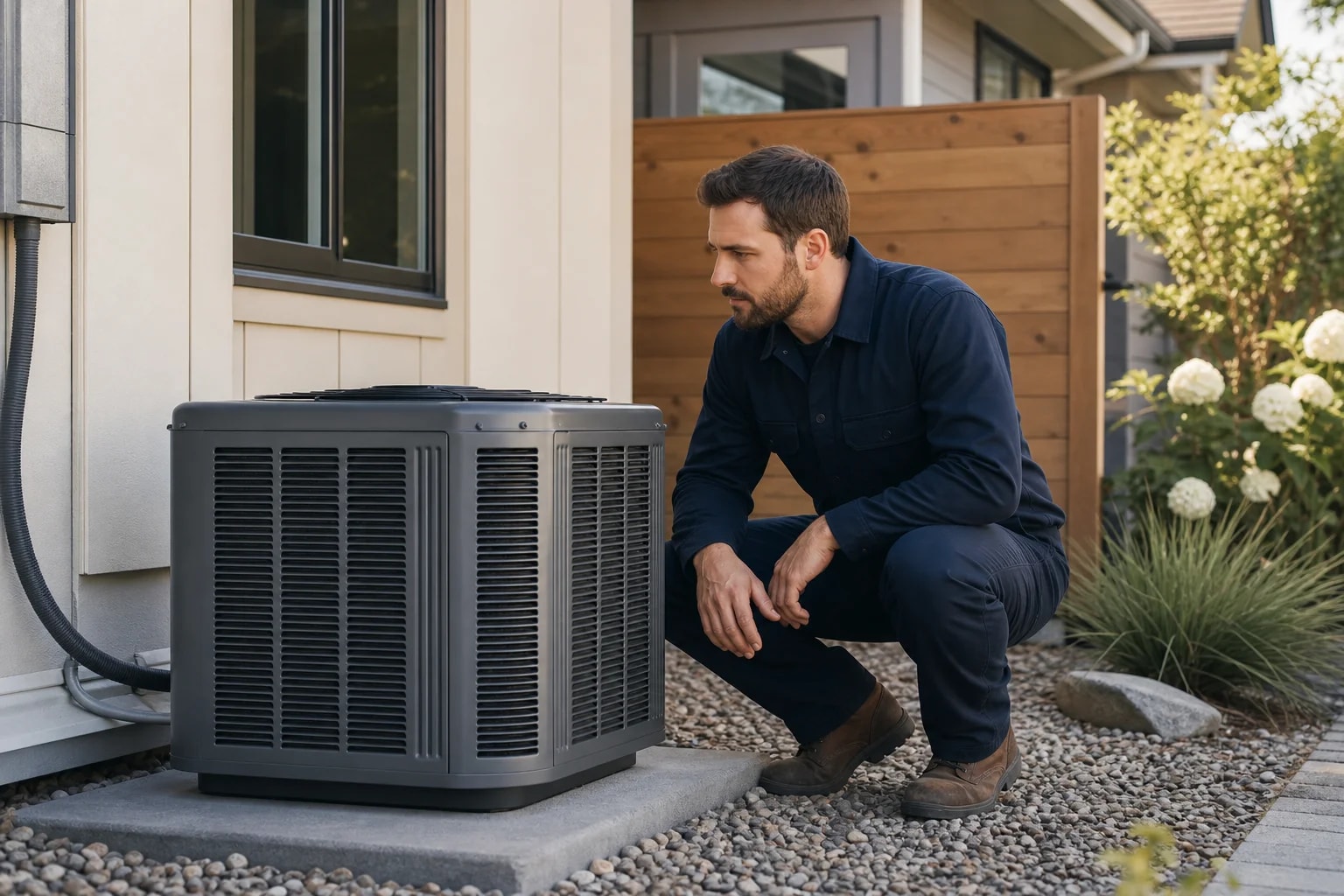
When the heat quits, the first question is whether anything is running at all. A furnace that clicks, hums and shuts off is a different problem from a thermostat that is blank or a heat pump that blows cool air. The cause also depends on the fuel: gas, oil, electric resistance or a heat pump.
This guide covers the common reasons heating stops, what you can look at safely without touching the equipment, the signs that mean leave the house and call your utility, and what a technician does to get the heat back.
What you notice
- The thermostat calls for heat but nothing turns on, or the display is blank.
- The furnace starts, runs briefly and shuts off, over and over.
- The blower runs but the air from the vents is cool or barely warm.
- A heat pump is blowing cool air or running constantly without warming the house.
- Radiators or baseboards are cold, or only some of them warm up.
- A burning smell at the first use of the season, or a persistent smell of something hot.
Likely causes
A clogged filter or blocked airflow
Furnaces shut themselves down on a high-limit switch when they overheat. A dirty filter or closed vents are the usual reason, and the symptom is a furnace that runs a few minutes, stops, and tries again.
Ignition or flame sensor failure on a gas furnace
Modern furnaces light with a hot-surface igniter and prove the flame with a sensor. A cracked igniter or a dirty flame sensor means the burners light and go out within seconds, or never light at all.
Thermostat, batteries or low-voltage wiring
A dead thermostat battery, a thermostat set to cool or off, or a broken low-voltage wire makes a working furnace look dead. It is one of the first things a technician rules out.
Tripped breaker, pulled switch or blown fuse
Furnaces have a wall switch nearby that looks like a light switch and is easy to turn off by accident. A tripped breaker or a blown fuse on the control board also stops everything.
Heat pump defrost, reversing valve or outdoor unit issues
A heat pump that is iced over, stuck in cooling mode or running on backup heat only will struggle in cold weather. Some cool air during defrost is normal; constant cool air is not.
Boiler problems: low water, air in the lines or a failed circulator pump
Hydronic systems need water, pressure and a pump. Air trapped in a loop leaves some radiators cold; a failed pump leaves them all cold while the boiler fires.
Safe things to check before anyone comes out
- Read the thermostat. Confirm it is set to heat, the set point is above the room temperature, and the screen is not blank or warning of low batteries.
- Listen near the furnace or air handler when the thermostat calls for heat. Note whether you hear clicking, a fan, a whoosh of burners, or nothing.
- Hold a hand at a supply vent. Note whether the air is warm, cool or not moving.
- Look at the filter slot or return grille without pulling anything out. A visibly loaded filter is a likely cause of short cycling.
- For a heat pump, look at the outdoor unit from a distance. A light frost that clears is normal; a solid block of ice is not.
- Note any smells. A faint dusty smell at the first use of the season is common; a gas smell, a hot electrical smell or smoke is not. Do not keep checking if you smell gas.
When to stop and call
- There is smoke, a gas smell or a carbon monoxide alarm. Get everyone out of the house, leave the doors open behind you, and call your gas utility or emergency service from outside. Do not operate the system.
- Anyone in the home has a headache, dizziness, nausea or confusion that improves outdoors. Treat it as carbon monoxide until proven otherwise.
- You see scorch marks, melted wiring or soot around the furnace or vent pipe.
- Outdoor temperatures are near or below freezing and the home has no heat. Pipes can freeze in a day; ask for the soonest visit.
- A breaker for the furnace or air handler trips again right after it is reset. Leave it off.
What the technician does
- Confirms the thermostat call and checks power to the furnace or air handler, the wall switch, breaker and control fuse.
- Watches an ignition sequence and reads the diagnostic light or code on the control board to see which step is failing.
- Cleans or replaces the flame sensor, igniter, pressure switch or other failed part, and clears a blocked condensate trap or intake on a high-efficiency furnace.
- Inspects the heat exchanger and venting on gas equipment and tests for carbon monoxide at the registers.
- On a heat pump, checks defrost operation, refrigerant charge and the reversing valve; on a boiler, checks water pressure, bleeds air and tests the circulator.
- Runs the system through a full cycle, verifies the temperature rise, and explains what failed and whether anything else is close to failing.
What it usually costs
A diagnostic visit plus a common part such as a flame sensor, igniter, capacitor or thermostat usually lands in the low to mid hundreds of dollars. A blower motor, inducer motor, control board or circulator pump costs more, and a cracked heat exchanger or failed compressor usually means weighing replacement of the whole unit. The estimate should be explained before any work starts, including any diagnostic or trip fee.
What moves the estimate
- Fuel and equipment type: gas furnace, oil furnace, electric furnace, heat pump or boiler each have different parts and labor.
- What failed. A sensor cleaning is minutes; a motor or board is hours plus the part.
- Age and condition. Parts for older equipment can be hard to source, and a major repair on an old unit may not be worth it.
- Access and venting changes required by current code.
- Urgency. Cold-snap, same-day and after-hours visits usually carry a higher rate.
Keeping it from coming back
- Have gas and oil heating equipment inspected every year before the heating season, including a carbon monoxide test.
- Change the filter on schedule and keep supply and return vents open.
- Install carbon monoxide alarms on every level and near bedrooms, and replace batteries and units on the schedule the manufacturer gives.
- Keep the furnace area clear of stored items, and keep outdoor intake and exhaust pipes free of snow, leaves and nests.
- Run the heat for a few minutes on a mild fall day so a problem shows up before the first cold night.
Questions people ask
My furnace keeps turning on and off. What is that?
Short cycling. The most common cause is overheating from a dirty filter or blocked vents, which trips a safety limit. A dirty flame sensor causes a similar pattern on gas furnaces. Both are quick fixes when caught early.
Is a burning smell normal at the first use of the season?
A faint dusty smell for the first few minutes is common as dust burns off the heat exchanger. A smell that persists, smells like hot plastic or electrical, or comes with smoke is not. Turn the system off and have it checked.
Why does my heat pump blow cool air?
Heat pump air is cooler than furnace air by design, and the unit runs briefly in cooling mode to defrost in cold weather. If the air is cool all the time and the house is not warming, something is wrong with the charge, the defrost control or the backup heat.
Should I reset the breaker?
If there are no warning signs, one reset is reasonable. If it trips again, leave it off and call. Repeated tripping means a short or a failing motor, and resetting it repeatedly can start a fire.
Sources
- U.S. CPSC: Carbon monoxide information center www.cpsc.gov
- U.S. CDC: Carbon monoxide poisoning basics www.cdc.gov
- NFPA: Safety with heating equipment www.nfpa.org
- ENERGY STAR: Heat and cool efficiently www.energystar.gov