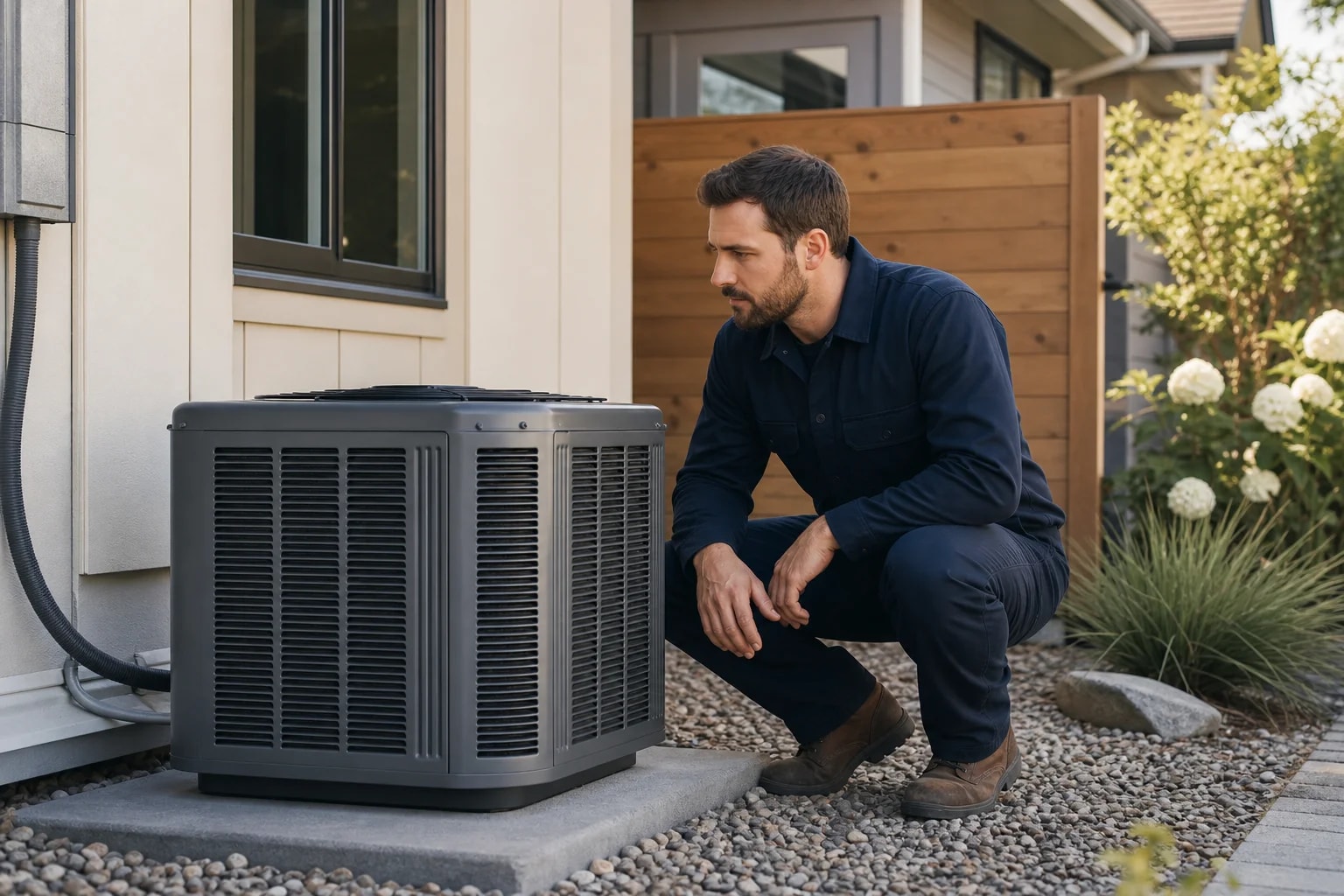
Heating and cooling equipment is never silent, but you learn its normal sounds quickly. A new noise is the system telling you something changed: a loose panel, a belt or bearing wearing out, a motor straining, or gas igniting late. Some noises are harmless. A few mean shut it off now.
This guide matches the common sounds to their usual causes, tells you what you can observe safely, which noises call for turning the system off until someone looks at it, and what a technician does to track a sound to its source.
What you notice
- Rattling or vibrating that comes and goes with the fan.
- A high-pitched squeal or screech when the system starts or runs.
- Grinding, scraping or metal-on-metal sounds from the indoor or outdoor unit.
- A loud buzz or hum from the outdoor unit, sometimes with the fan not turning.
- A bang or boom when a gas furnace lights, or clicking that goes on without the burners lighting.
- Banging, popping or ticking from ducts, radiators or baseboards as the system heats and cools.
Likely causes
Loose panels, screws or debris
Rattles are usually something loose: a cabinet panel, a screw, a stick or leaves inside the outdoor unit, or a filter rattling in its slot. Annoying, but rarely a safety issue.
Worn blower or fan motor bearings
Squealing and grinding from a motor means the bearings are failing. The motor still runs, hotter and harder, until it seizes. Older belt-driven blowers squeal when the belt slips or glazes.
Electrical parts failing outdoors
A loud hum with the fan not spinning usually means a failed capacitor; a buzzing contactor means the contacts are pitted. Both strain the compressor if the system keeps trying to start.
Delayed ignition on a gas furnace
If burners are dirty or misaligned, gas builds up for a moment before it lights and ignites with a bang. It is a flame-rollout risk and should be addressed promptly.
Duct expansion and metal ticking
Sheet-metal ducts pop and tick as they heat and cool, especially where they are undersized or lightly supported. Common, usually harmless, but it can point to airflow restriction when it gets worse.
Air or water problems in a boiler system
Banging or kettling in a boiler comes from scale on the heat exchanger or trapped air; gurgling radiators mean air in the loop. Water hammer in pipes points to pressure or pump problems.
Safe things to check before anyone comes out
- Note when the sound happens: at startup, during the run, at shutdown, or only when the outdoor unit is on.
- Note where it is loudest: indoor unit, outdoor unit, a vent, the ducts in the ceiling, or a radiator.
- Look at the outdoor unit from a few feet away. Is the fan turning? Is anything visibly loose, bent or lodged in the grille?
- Look at the filter slot and any cabinet panel for a cover that is clearly ajar or rattling. Do not remove or re-seat anything yourself.
- Try to describe the sound in a word a technician will recognize: rattle, squeal, grind, hum, buzz, click, bang, pop, gurgle.
- If the sound is a bang when the furnace lights, a grinding from a motor or a loud hum with the fan stopped, turn the system off at the thermostat and leave it off.
When to stop and call
- There is smoke, a gas smell or a carbon monoxide alarm along with the noise. Leave the house and call your utility or emergency service first.
- A bang or boom when the gas furnace lights. Turn the system off; delayed ignition can crack the heat exchanger or push flame outside the burner box.
- Grinding or screeching from a motor, or a loud hum from the outdoor unit with the fan not turning. Shut it off to protect the compressor and motor.
- A hissing or bubbling sound from refrigerant lines, often with ice forming.
- A new rhythmic banging from inside the ducts or cabinet after a strong wind or storm, which can mean something has broken loose.
What the technician does
- Listens to the system start and run with you, then isolates the sound to the blower, outdoor unit, burners, ducts or piping.
- Opens the cabinets, tightens or secures loose panels and parts, and removes any debris from fans and coils.
- Checks motor bearings, belts and fan blades, and replaces a motor or belt that is failing before it seizes.
- Tests the capacitor and contactor at the outdoor unit and replaces failed electrical parts.
- Cleans and aligns burners on a gas furnace to stop delayed ignition, and inspects the heat exchanger while there.
- Bleeds air or checks pressure on a boiler, then runs the system through a full cycle to confirm the noise is gone and explains what caused it.
What it usually costs
Finding and fixing a rattle, a loose panel or debris is usually a diagnostic visit with little or no added parts cost, in the low hundreds of dollars. A capacitor, contactor or belt is a modest add. A blower or condenser fan motor costs more, and compressor noise on an older system can lead to a replacement conversation. The estimate should be explained before any work starts, including any diagnostic or trip fee.
What moves the estimate
- Whether the fix is tightening and cleaning or replacing a motor or electrical part.
- Motor type: variable-speed and ECM blower motors cost more than standard ones.
- Whether the noise exposed a bigger problem, such as a cracked heat exchanger or a failing compressor.
- Access to the equipment and ductwork.
- Urgency. Same-day and after-hours visits usually carry a higher rate.
Keeping it from coming back
- Have the system tuned up each year so bearings, belts, capacitors and burners are checked before they get loud.
- Keep the outdoor unit clear of sticks, leaves and grass, and keep plants trimmed back from it.
- Change the filter on schedule; a starved blower works harder and wears faster.
- Mention any new sound at the next service visit even if it went away. Intermittent noises are easier to diagnose with a history.
- Keep heavy items off ductwork in basements and attics so it does not get pinched or loosened.
Questions people ask
My ducts pop when the system starts. Is that bad?
Usually not. Sheet metal expands and contracts with temperature and pops where it is lightly supported. If the popping is new and much louder, or the airflow has dropped, a technician can check for a restriction or a loose section.
The outdoor unit hums but the fan is not spinning. Can I spin it to start it?
No. Keep your hands away from the fan and turn the system off at the thermostat. That symptom is usually a failed capacitor, a quick part for a technician, and the compressor can be damaged if the unit keeps trying to start.
Can a noisy furnace be dangerous?
A bang at ignition or a sustained burning smell can be. Most other noises are mechanical wear and are a cost problem rather than a safety one, but a failing motor can overheat, so it is still worth a prompt visit.
Will the technician know what the noise is if it does not happen during the visit?
Often, yes, from your description plus a look at the usual suspects. A short phone video of the sound, taken from a safe distance, helps a lot.
Sources
- ENERGY STAR: When is it time to replace heating and cooling equipment? www.energystar.gov
- ENERGY STAR: Heating and cooling maintenance checklist www.energystar.gov
- AHRI: HVACR and water heating maintenance tips for homeowners www.ahrinet.org
- NFPA: Safety with heating equipment www.nfpa.org