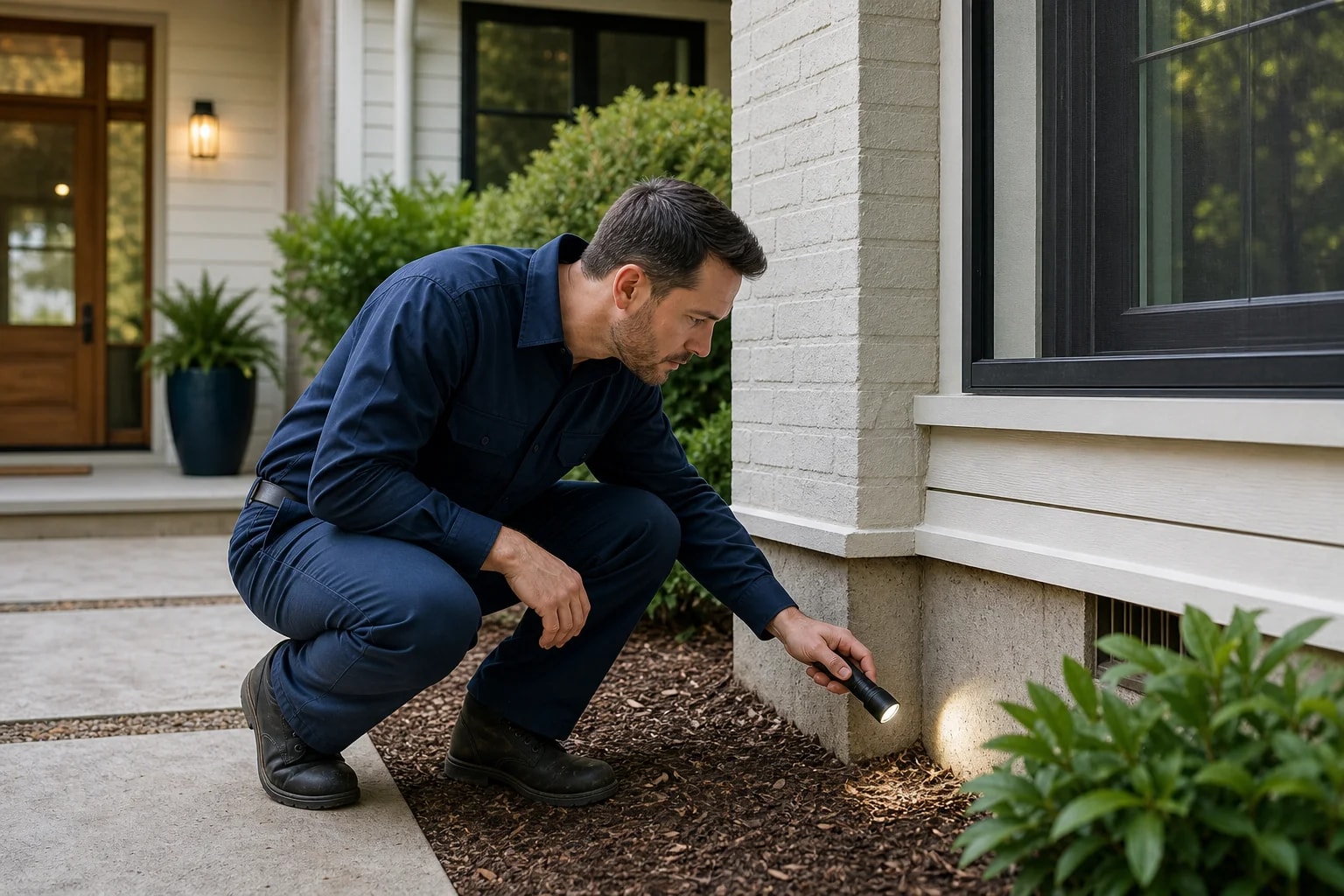
Ants are the most common insect complaint in American homes, and the trail across the kitchen counter is only the visible part. The colony is outside, in a wall, or under a slab, and the workers you see are scouts and foragers following a scent trail to food or water.
This guide covers why ants and similar insects come inside, what you can observe without sprays or chemicals, when a sighting means something more serious such as carpenter ants or termites, and what a pest professional does on a visit. It does not ask you to apply any pesticide.
What you notice
- A line of small ants running along a counter, baseboard, window sill or pet bowl.
- Ants appearing in the kitchen or bathroom every morning, or after rain.
- Large black or reddish ants indoors, sometimes with wings, especially in spring.
- Small piles of fine sawdust near window frames, door frames or beams.
- Ants coming from an outlet, a crack in the grout or a gap at the edge of the floor.
- Other insects in numbers: silverfish in a bathroom, earwigs near a door, beetles in the pantry.
Likely causes
Food and water
Crumbs, a sticky jar, pet food left out, a dripping faucet. Sugar ants and Argentine ants need very little, and a scout that finds it lays a trail the rest of the colony follows.
Weather
Heavy rain floods outdoor nests and heat and drought dry them out. Both push ants indoors in waves, which is why some homes see ants only for a week or two each season.
Gaps in the shell of the house
Cracks around pipes, windows, door thresholds and the slab edge. Ants use the same routes every day, so the entry point is usually near where the trail starts.
Plants, mulch and moisture against the house
Branches touching the roof, mulch piled against siding and damp soil at the foundation all put nests within a short walk of the kitchen.
Carpenter ants in damp wood
Large ants that tunnel in wood softened by a leak. They do not eat the wood but they weaken it, and they often point to a moisture problem around a window, a deck or a bathroom.
Not ants at all
Winged ants and termite swarmers look alike at a glance. Termites have straight antennae, a thick waist and two pairs of equal wings. A professional can tell them apart from a photo or a sample.
Safe things to check before anyone comes out
- Follow the trail with your eyes, not a spray can. Where does it start and where does it end? Note the entry point so the technician can seal or treat it.
- Look at what they are heading for: the trash, the pet bowl, a spill under the toaster, a damp spot under the sink.
- Note the size and color. Small and all one size suggests common house ants; large with different sizes in the same trail suggests carpenter ants.
- Check window sills and door frames for fine sawdust or dead winged insects. Keep a few in a sealed bag or take a close photo for identification.
- Walk around the outside at ground level and note mulch, firewood or branches touching the house.
- Note any recent change: rain, a new puppy, a renovation, a leak you already know about.
When to stop and call
- Winged insects are swarming indoors from a wall, floor or window frame. It may be termites, and the sooner it is identified the smaller the repair.
- Large ants with sawdust piles near wood. Carpenter ants mean damp wood somewhere, and the damage grows while you wait.
- Someone in the home has had an allergic reaction to a sting or bite, or fire ants have been found in the yard where children or pets play.
- Ants are coming from an electrical outlet, a light switch or an appliance. Some species nest in electrical boxes and chew insulation.
- A store-bought spray was used and the ants scattered into new rooms. Tell the technician what was applied and where before treatment begins.
What the technician does
- Identifies the species, which decides the treatment. Baits that work on one ant can be ignored by another.
- Finds the trails, the entry points and, where possible, the nest or nests, inside and out.
- Places gel or granular baits where ants are foraging so the workers carry the product back to the colony. Baiting takes days to work but reaches the queen, which sprays do not.
- Treats entry points and the foundation perimeter with a targeted product where the label and the situation call for it, and explains what was used and where.
- For carpenter ants, locates the damp wood and recommends the moisture repair that will stop them coming back.
- Explains sanitation and sealing steps, and schedules a follow-up if the infestation is established.
What it usually costs
A one-time ant treatment for a typical home is usually in the low hundreds of dollars, with a follow-up included or priced separately. Carpenter ant work costs more because of the inspection and any wood or moisture repair. Many companies offer quarterly plans that cost less per visit. The scope, the products and any follow-up should be explained before you approve treatment.
What moves the estimate
- The species: common house ants versus carpenter ants or fire ants.
- How established the colony is and how many nests or entry points there are.
- Home size and whether the yard and foundation perimeter are treated as well.
- One-time treatment versus a recurring plan.
- Moisture or wood repairs uncovered during the inspection.
Keeping it from coming back
- Wipe counters, sweep floors and keep sugar, honey and pet food in sealed containers. Ants follow food, and a clean kitchen breaks the trail.
- Fix drips and dry out damp cabinets. Many ants come in for water as much as food.
- Keep mulch, firewood and plants a short distance from the foundation and trim branches off the roof.
- Seal obvious gaps around pipes, windows and doors, or ask the technician to point out which ones matter.
- Do not spray trails with household insecticide. It kills a few workers, scatters the rest and can make baiting harder for the professional.
Questions people ask
Why did the ants come back after I sprayed?
Sprays kill the workers you can see. The colony and the queen are elsewhere and simply send more. Baits that the ants carry home are slower but reach the source, which is why professionals rely on them.
Is one visit enough?
Often for a seasonal invasion of common ants. Established colonies, multiple nests and carpenter ants usually need a follow-up. The technician should say which before you approve anything.
Are the products safe around children and pets?
Professionals use baits in enclosed stations or small placements out of reach and follow the product label, which is the law. Tell the technician about pets, infants and anyone with health concerns so placements can be planned.
How do I know if it is ants or termites?
Ants have a pinched waist, bent antennae and front wings longer than the back wings. Termite swarmers have a straight body, straight antennae and four equal wings. A photo or a sample in a bag settles it quickly.
Sources
- UC IPM Pest Notes: Ants ipm.ucanr.edu
- U.S. EPA: Got pests? Control them safely www.epa.gov
- National Pest Management Association (PestWorld): Ants www.pestworld.org