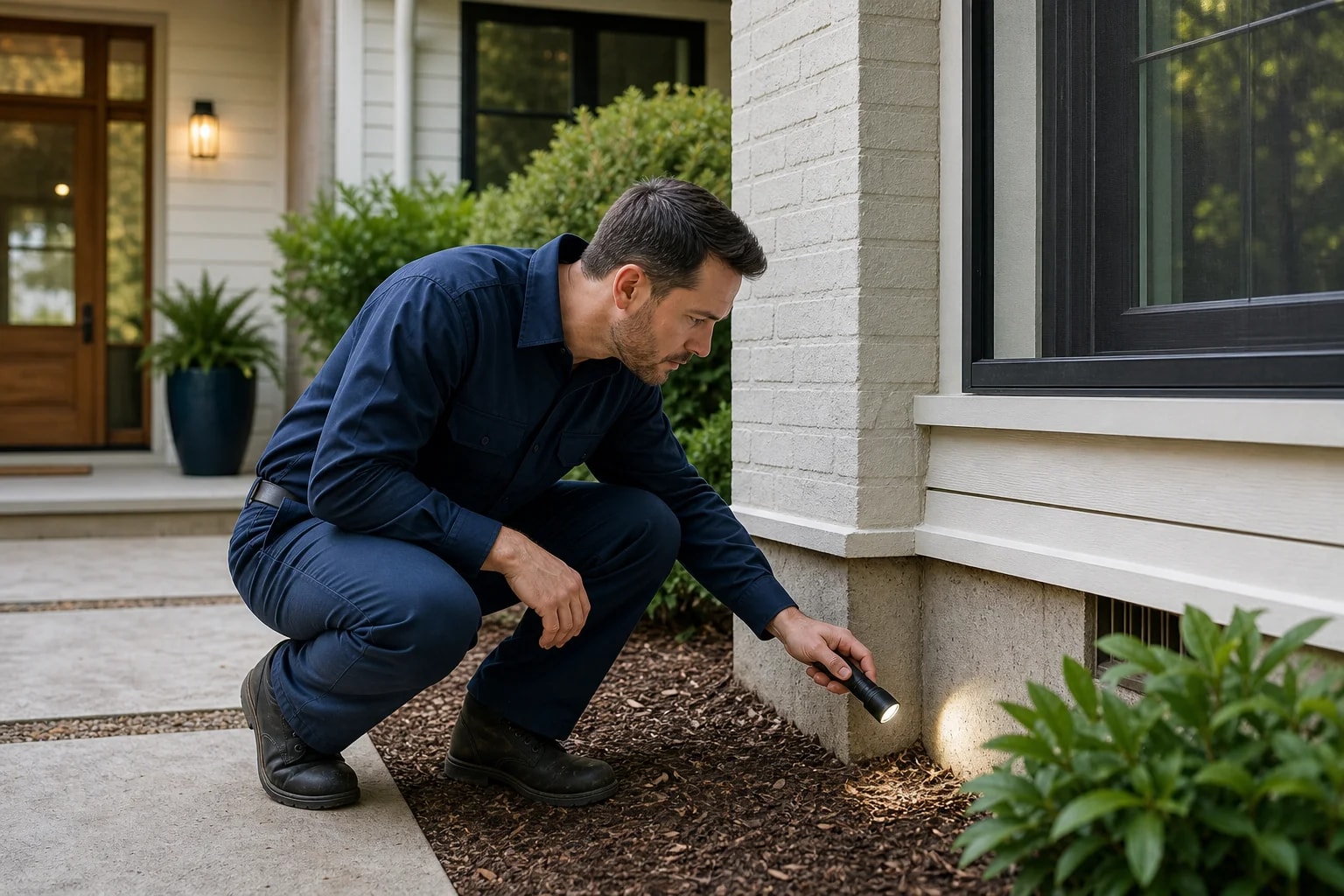
Termites are the one pest that can quietly damage the structure of a house. Subterranean termites live in the soil and build mud tubes up to the wood; drywood termites live inside the wood itself. Neither is visible day to day, which is why most people find out from a spring swarm, a contractor opening a wall, or an inspection during a home sale.
This guide covers the signs you can see from inside and at ground level outside, how a termite inspection works, the main treatment types, and what moves the price. It does not ask you to open walls, probe wood or treat anything yourself; termite control products are restricted and the work is licensed in every state.
What you notice
- A swarm of winged insects indoors or near the foundation, usually in spring or after rain, and piles of discarded wings on sills.
- Pencil-width mud tubes running up a foundation wall, a pier, a crawl space post or inside a garage wall.
- Wood that sounds hollow when tapped, or paint that bubbles or looks water-damaged with no leak.
- Small piles of tiny, hard, sand-like pellets below a beam, window frame or furniture (drywood termites).
- Doors or windows that have become hard to open, or a floor that feels soft in one spot.
- Tiny holes in drywall or a tunnel pattern visible when a piece of trim is removed during other work.
Likely causes
Wood touching soil
Deck posts, fence posts against the house, siding below grade, firewood stacked on the ground. Subterranean termites reach the house through any wood that touches earth.
Moisture at the foundation
Leaking hose bibs, downspouts that empty against the wall, sprinklers hitting siding, poor grading. Damp soil next to the house is what termites look for.
Gaps in the slab or foundation
Termites follow cracks, expansion joints and the gaps around plumbing through a slab. Homes with slab foundations often show the first signs at a bathroom wall.
Mulch, stumps and buried wood
Mulch piled against the house, old tree stumps and construction scrap buried in the yard feed colonies within reach of the structure.
Drywood termites arriving on their own
In warm coastal and southern climates, drywood swarmers fly in and start colonies in attic framing, window frames or furniture with no soil contact at all.
An old or broken treatment
A soil barrier from a previous owner wears out or is broken by landscaping or an addition. Bait stations that were never serviced stop protecting the house.
Safe things to check before anyone comes out
- Walk the outside at ground level and look at the foundation for mud tubes, especially where the wall meets the soil, around pipes and under the siding edge. Do not break them open.
- Look at any wood that touches the ground: deck posts, fence posts, a wooden step, siding buried in mulch.
- Indoors, look at window sills and the floor near doors for discarded wings or small piles of hard pellets.
- Note any paint that is bubbling or a wall that looks water-damaged where there is no plumbing.
- If you saw a swarm, keep a few insects in a sealed bag or take a close photo. Straight antennae, thick waist and four equal wings mean termites, not ants.
- Find any paperwork from a previous termite treatment or a bait-station contract. The technician will want to know what was done and when.
When to stop and call
- A swarm has come out of a wall, floor or ceiling inside the house. The colony is in or under the structure.
- A floor, stair or deck feels soft or springy, or a beam shows visible tunnels. Keep weight off it until it is inspected.
- Mud tubes are active, which a technician can confirm by whether they are rebuilt after being disturbed. Active tubes mean live termites in the wall today.
- You are buying or selling a home and need a wood-destroying insect inspection. Lenders often require one and the timing is tight.
- A contractor opened a wall for other work and found damage. Stopping the work to inspect now is cheaper than closing the wall again.
What the technician does
- Inspects the whole structure: the foundation outside, the crawl space or slab edge, the garage, the attic and the interior walls most at risk, probing accessible wood and checking moisture.
- Identifies the termite type, which determines the treatment. Subterranean and drywood termites are controlled in completely different ways.
- For subterranean termites, proposes either a liquid soil treatment around the foundation or a bait station system around the house, or both, and explains the difference.
- For drywood termites, proposes local treatment of the infested wood or, for widespread activity, structural fumigation.
- Points out the conditions that invited termites, such as wood-to-soil contact and moisture, and what to change.
- Provides a written inspection report, a treatment proposal, and the terms of any warranty or annual renewal.
What it usually costs
A termite inspection is often free when a company hopes to treat, or a modest fee for a written report during a home sale. Treatment is a bigger number: a liquid soil treatment or a bait system for a typical house usually runs from several hundred into the low thousands of dollars, and whole-house fumigation for drywood termites is more. Repairs to damaged wood are separate. Every proposal should spell out the method, the area treated, the warranty and what the annual renewal covers before you approve it.
What moves the estimate
- Termite type: subterranean, drywood or both.
- The size and footprint of the house and how the foundation is built.
- Liquid barrier versus bait stations versus fumigation.
- Whether a warranty with annual inspections is included and what it costs to renew.
- Structural repairs, which are a contractor job, not part of pest control.
Keeping it from coming back
- Keep wood off the soil: raise firewood, replace buried siding edges and set fence and deck posts on footings.
- Keep mulch a few inches below the siding line and away from the foundation.
- Direct downspouts and sprinklers away from the house and fix leaks at hose bibs and air conditioning drain lines.
- Have an inspection every year or two in termite-prone regions, and keep any bait or barrier warranty renewed.
- Remove old stumps and buried construction wood from the yard when you find them.
Questions people ask
Are these flying ants or termites?
Termites have a straight, thick body, straight antennae and two pairs of wings the same length. Flying ants have a pinched waist, bent antennae and front wings longer than the back. A sample in a bag or a clear photo is enough for a professional to tell.
Is termite damage covered by homeowners insurance?
Usually not, because it is considered gradual and preventable. That is why regular inspections and a treatment warranty matter.
Liquid treatment or bait stations?
Both work when done well. A liquid barrier acts quickly and lasts years; bait stations work more slowly but can eliminate the colony and are easier around wells, slabs and finished landscaping. Ask the technician why they recommend one for your house.
Can I treat termites myself?
Effective termite products are restricted to licensed applicators, and the work involves trenching, drilling slabs or fumigation. Over-the-counter sprays kill a few termites at the surface and leave the colony intact.
Sources
- U.S. EPA: Termites, how to identify and control them www.epa.gov
- UC IPM Pest Notes: Subterranean and other termites ipm.ucanr.edu
- National Pest Management Association (PestWorld): Termites www.pestworld.org