Mice and rats move in when the weather turns or when food and shelter are easy to find. A mouse fits through a gap the width of a pencil, a rat through one the size of a quarter, and both breed fast enough that a single sighting is rarely a single animal.
This guide explains the signs, the usual entry points, why rodent droppings and nests should not be swept or vacuumed, and what a pest professional does to remove the animals and keep them out. It covers what you can see and hear; it does not ask you to handle traps, bait or droppings.
What you notice
- Small dark droppings in a drawer, under the sink, along a wall or in the pantry.
- Scratching, scurrying or gnawing in the walls, ceiling or attic at night.
- Chewed food packaging, pet food bags or cardboard.
- Gnaw marks on wood, wiring, plastic or door corners.
- A musky or ammonia-like smell in a closet, cabinet or crawl space.
- Shredded paper, insulation or fabric gathered into a nest.
- Grease marks along baseboards where rodents run the same route, or a pet staring at one spot in the wall.
Likely causes
Gaps in the building
Around pipes under sinks, where utility lines enter, under garage doors with worn seals, through vents without screens, and at the roofline where soffits meet the wall. Roof rats enter high; Norway rats and mice enter low.
Food and water that is easy to reach
Pet food left out, bird seed in the garage, an unsealed pantry, fruit on the counter, a dripping outdoor tap. Rodents need very little and remember where they found it.
Shelter near the house
Woodpiles, dense ivy, cluttered sheds, tall grass and compost bins give rodents cover a short run from the foundation.
Cold weather or construction nearby
The first frost sends outdoor rodents indoors. Demolition or new building nearby displaces established colonies into neighboring homes.
Attic and crawl space access
Tree branches touching the roof and unscreened gable vents are a highway for roof rats and squirrels. Noise overhead at dusk and dawn usually points to the attic.
Safe things to check before anyone comes out
- Look for droppings in the places rodents like: under the kitchen sink, behind the stove, in the pantry corners, along the garage wall. Note how much and whether it looks fresh (dark, soft-looking) or old (gray, dry). Do not touch or sweep it.
- Listen at night for where the sounds are: walls, ceiling, under the floor. The location tells the technician where to look.
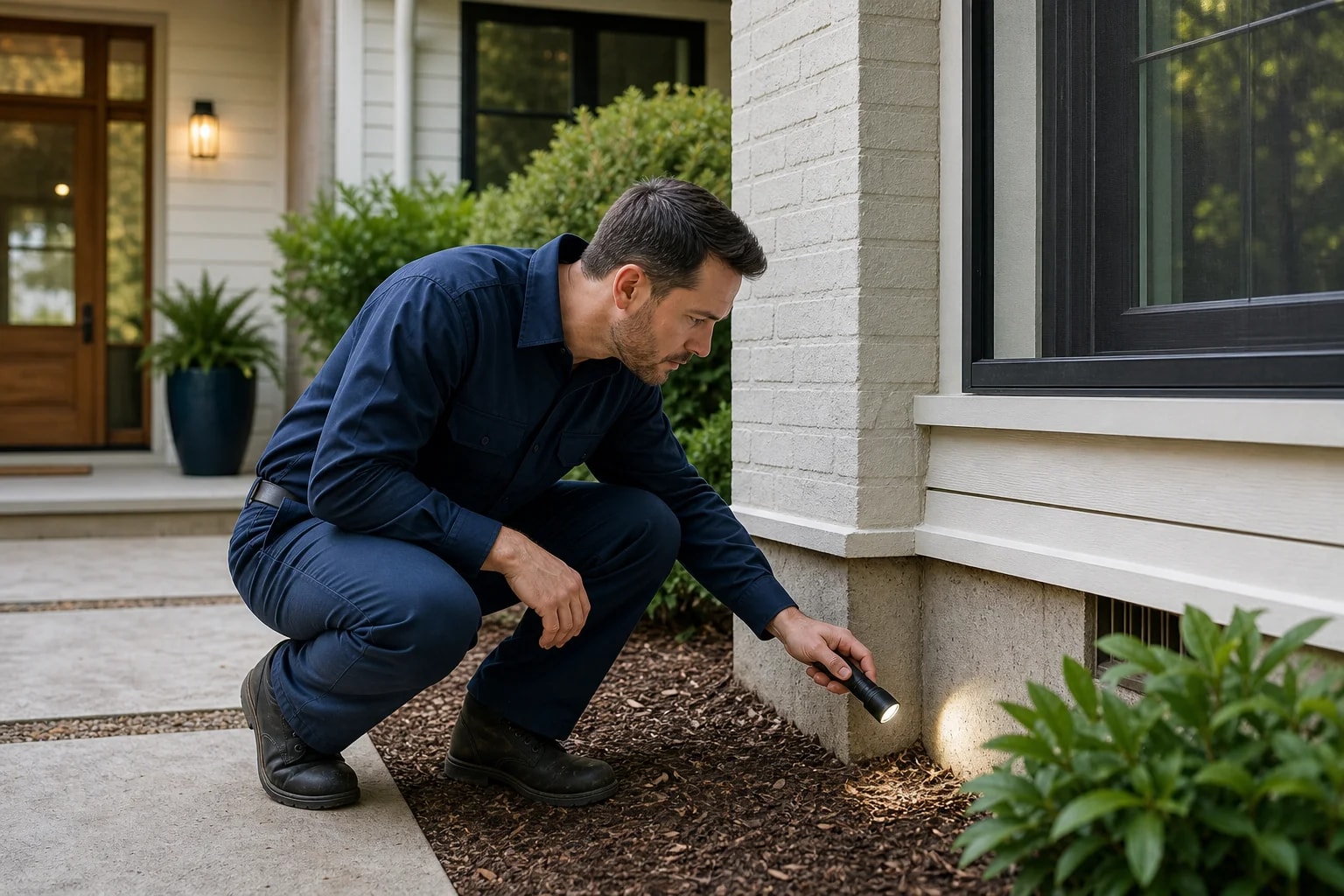
- Walk the outside of the house at ground level and look for gaps at pipe entries, worn garage door seals, chewed vent screens and holes at the foundation.
- Look at what is stored in the garage and pantry: bird seed, pet food, grass seed, anything in a bag.
- Note whether the droppings are small and pointed (mouse) or larger and blunt (rat). Photos from a distance are fine.
- Think about what changed: a new pet food bin, a neighbor renovating, a cold snap, a tree that now touches the roof.
When to stop and call
- You can smell a dead animal in a wall or ceiling, or droppings and urine have soaked into insulation. Cleanup should be done with protective equipment and a disinfectant, not a vacuum or a broom.
- Chewed wiring, or lights and outlets that have started acting up in an area with rodent signs. Gnawed wires are a fire risk.
- A rat or mouse was seen in a bedroom, a nursery or near a food preparation area, or someone in the home has been bitten.
- Rodent signs in a home where someone is pregnant, very young, elderly or has a weak immune system. Rodents carry diseases that spread through droppings and urine.
- Large numbers: several sightings in daylight, droppings in many rooms, or noise from more than one part of the house.
What the technician does
- Inspects inside and out to confirm the species, the activity level and every entry point, including the roofline and the attic.
- Seals the gaps with materials rodents cannot chew through, such as steel wool, hardware cloth, metal flashing and sealant. Exclusion is the part that keeps them out for good.
- Sets snap traps or enclosed stations along the runways rodents are using, placed out of reach of children and pets.
- Uses rodenticide bait only in tamper-resistant stations and only where it is appropriate and legal, and explains what was placed and where.
- Returns to check and remove traps, confirms activity has stopped, and advises on cleanup or does it as a separate service.
- Recommends the sanitation and yard changes that stop the next family moving in.
What it usually costs
An inspection with trapping for a light mouse problem is usually in the low hundreds of dollars. Full exclusion work, where every entry point is sealed, costs more because it is labor on the outside of the house and the attic, often several hundred dollars and more on a large or older home. Attic cleanup and insulation replacement are priced separately. The scope and any follow-up visits should be explained before you approve treatment.
What moves the estimate
- Mice versus rats, and how established the population is.
- How many entry points need sealing and how hard they are to reach.
- Attic or crawl space work, including removing contaminated insulation.
- Number of follow-up visits included.
- One-time service versus a monitoring plan.
Keeping it from coming back
- Store pet food, bird seed and dry goods in metal or heavy plastic containers with lids, and do not leave pet bowls out overnight.
- Keep the garage door seal in good shape and screen every vent.
- Move woodpiles, compost and dense plantings away from the foundation and trim branches off the roof.
- Have the exclusion checked yearly; sealant and screens wear and new gaps appear.
- If you see fresh droppings again, call early. A pair of mice becomes a colony in weeks.
Questions people ask
Is it mice or rats?
Mouse droppings are small with pointed ends. Rat droppings are larger and blunt. Mice gnaw small clean holes; rats leave larger rough ones and grease marks along their runs. A technician can usually tell from the signs in minutes.
Can I just put out poison?
Public health agencies advise against loose bait. Poisoned rodents die in walls and smell for weeks, pets and wildlife can eat the bait or the carcass, and it does nothing to close the entry points. Professionals use snap traps first and secured stations only where needed.
How should droppings be cleaned up?
Not with a broom or vacuum, which puts particles in the air. The CDC method is gloves, a disinfectant or bleach solution sprayed to soak the area, then wiping with paper towels and bagging the waste. Heavy contamination in an attic is a job for a professional with the right gear.
Will they come back?
If the entry points are sealed and the food is removed, usually not. If only traps are set, yes. Ask what exclusion work is included and whether it is guaranteed.
Sources
- CDC: Controlling wild rodent infestations www.cdc.gov
- CDC: How to seal up to prevent rodents www.cdc.gov
- U.S. EPA: Identify and prevent rodent infestations www.epa.gov
- UC IPM Pest Notes: House mouse ipm.ucanr.edu