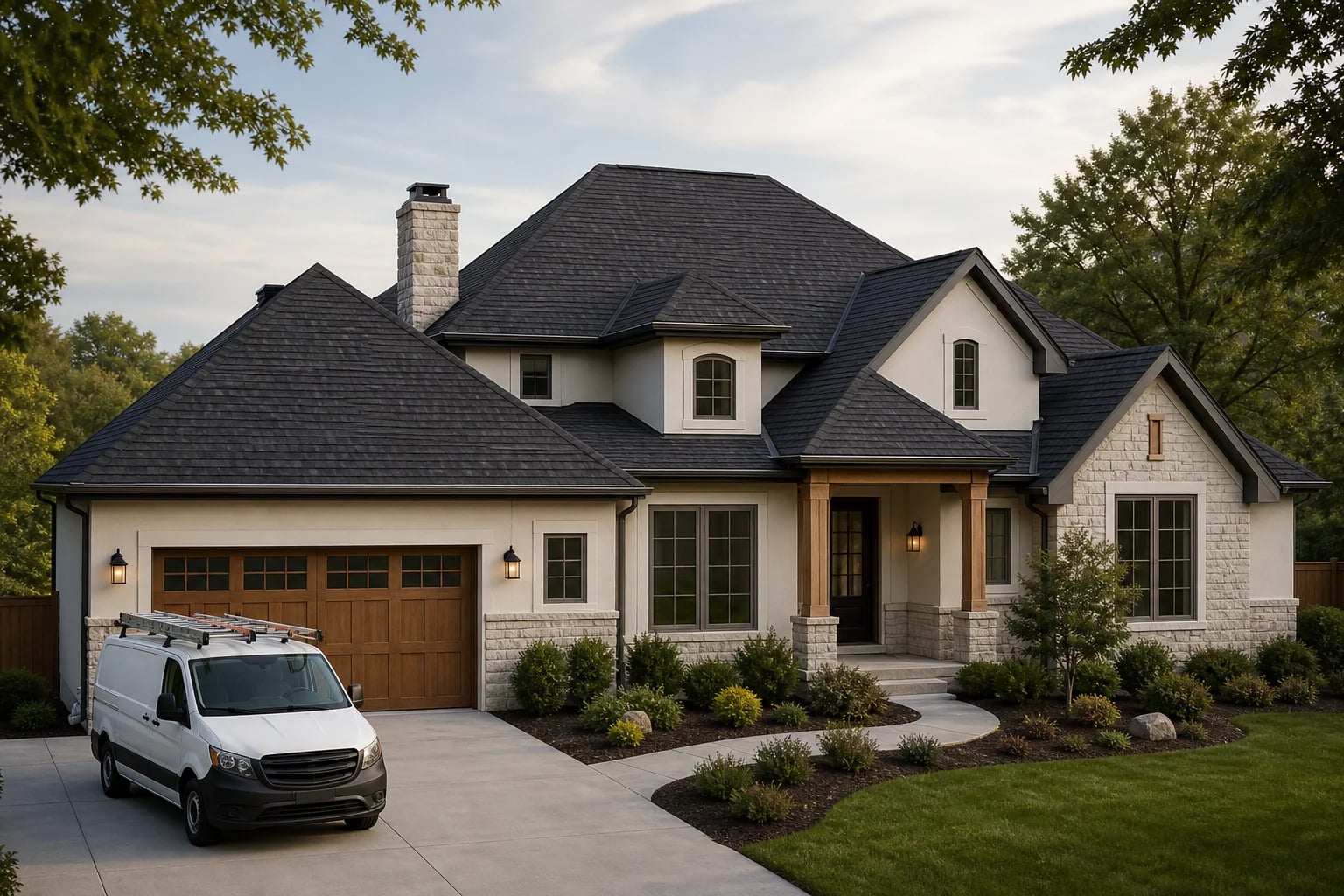
A roof is the most expensive single repair most homeowners will ever pay for, it is done by people you cannot supervise from the ground, and the failures show up years later as a stain on the ceiling. That combination attracts both excellent contractors and a steady supply of people who follow storms from town to town. Telling them apart is mostly a matter of paperwork and patience.
This guide covers the licenses and insurance a roofer should hold and how to check them, the questions to ask before anyone climbs a ladder, the warning signs that mark a storm chaser, how to compare bids on the same roof, and what the day of the work looks like.
Licenses, insurance and permits
State contractor license
Many states license roofing contractors specifically, either as a roofing specialty or under a general contractor license. Florida, for example, requires a state roofing contractor license from the Department of Business and Professional Regulation for roof repairs and replacements, and out-of-state contractors need a Florida license to work here. Other states leave it to counties or cities. Check your state’s rules, then look the license up in the public database rather than taking a number on a business card at face value.
General liability insurance
Roofing work can damage siding, landscaping, gutters, the attic and anything under a dropped bundle of shingles. Ask for a certificate of insurance issued to the roofing business with current dates, and call the agent to confirm it is active for the full duration of the job.
Workers’ compensation
Falls are the defining risk of this trade. If a crew member is hurt on your roof and the contractor has no workers’ compensation, the claim can land on you. Ask for the certificate, and be cautious of a contractor who says the crew are all subcontractors who carry their own.
Manufacturer certifications
Shingle and membrane manufacturers certify installers on their products and let certified contractors offer enhanced warranties. It does not replace the state license, but it means the material warranty is more likely to be honored. Ask which programs the contractor belongs to and confirm it on the manufacturer’s own site.
Permits
A roof replacement, and in many places a substantial repair, requires a building permit and an inspection. The contractor should pull it in the business name. A roofer who asks you to pull it as an owner-builder, or says one is not needed, is moving responsibility onto you.
Questions to ask
- What is your state license number, and is it in the roofing category?
- Can you send me certificates of liability insurance and workers’ compensation, and will both be in force for the whole job?
- Will you inspect the roof, including the attic if possible, and give me a written estimate before any work, listing materials, quantities, tear-off, underlayment, flashing and disposal?
- Who will be on my roof: your employees or a subcontracted crew, and who supervises them?
- Which manufacturer programs are you certified in, and what warranty does that let you offer on the materials and on your workmanship?
- Will you pull the permit in your business name and schedule the inspection?
- What is the payment schedule, and is the final payment due only after the inspection passes and I have walked the job?
Red flags
- Shows up at your door after a storm, often with an out-of-state plate, saying the crew is working nearby and can start today.
- No written estimate, or one that is a single number with no materials, quantities or scope.
- Asks for full payment or a very large deposit before any work has started, or wants cash, wire, payment app or gift card.
- Offers to waive or absorb your insurance deductible. In many states that is illegal, and it usually means the price has been inflated somewhere else.
- Asks you to sign an assignment of benefits or a contract before your insurer has inspected, or asks you to sign over the insurance check.
- Cannot produce a license number that matches the public database, or says a permit is not necessary.
Comparing quotes fairly
- Compare scope line by line: tear-off or overlay, number of squares, underlayment, ice-and-water barrier, drip edge, flashing, ventilation, disposal. Bids that differ by thousands often differ in what they include.
- Compare the materials by product name. "Architectural shingles" covers a wide price range; the written estimate should name the manufacturer and line.
- Look at the warranty in two parts: the manufacturer’s coverage on the materials and the contractor’s own coverage on the workmanship, in years. Ask what each one excludes.
- Weigh insurance, license and permit as part of the price. A low bid from an unlicensed crew with no workers’ compensation is not a low bid once the risk is counted.
- Be suspicious of the lowest bid if it arrived fastest with the least detail. A careful roofer measures, inspects and writes; a storm chaser quotes from the driveway.
On the day
- Confirm the written estimate, start date and crew size before the materials arrive, and make sure the permit is posted if your jurisdiction requires it.
- Move cars out of the driveway and clear the area around the house: patio furniture, grills, planters, anything under the eaves. Debris comes off a roof in every direction.
- Cover or move items stored in the attic; tear-off shakes dust and old nails down through the decking.
- Expect noise from early morning, and expect a magnet sweep of the yard for nails at the end of each day. Ask for it if you do not see it.
- Walk the job with the contractor when it is done, before the final payment: flashing, vents, gutters, cleanup, and the attic for daylight or debris. Keep the permit, inspection record, warranty papers and paid invoice together.
Questions people ask
Do I need a licensed roofer for a small repair?
In states that license roofing, usually yes, regardless of the size of the repair; check your state’s rules. Even where it is not required, a licensed roofer with insurance is the safer choice on anything involving flashing, penetrations or a leak that has already reached the ceiling.
Should I let a roofer talk to my insurance company?
A reputable contractor can meet the adjuster on site to point out damage, and that can help. Signing a contract or an assignment of benefits before the claim is approved, or signing the check over, is where people get hurt. Keep control of the claim and the money.
How much deposit is reasonable?
Practices vary, and some states cap deposits. A modest deposit when materials are ordered, progress payments tied to visible milestones if the job is large, and a final payment after inspection and walkthrough is the normal shape. Full payment in advance is not.
What if the roofer finds more damage after tear-off?
Rotten decking and failed flashing are common finds, and a good estimate says in advance how they will be priced. Ask for photos of the damage before it is covered, and a written change order before the extra work is done.
Sources
- National Roofing Contractors Association: Selecting a contractor nrca.net
- FEMA: Beware of fraudulent contractors www.fema.gov
- FTC consumer advice: How to avoid scams after weather emergencies and natural disasters consumer.ftc.gov
- Florida DBPR: License search (verify a roofing contractor license) www.myfloridalicense.com