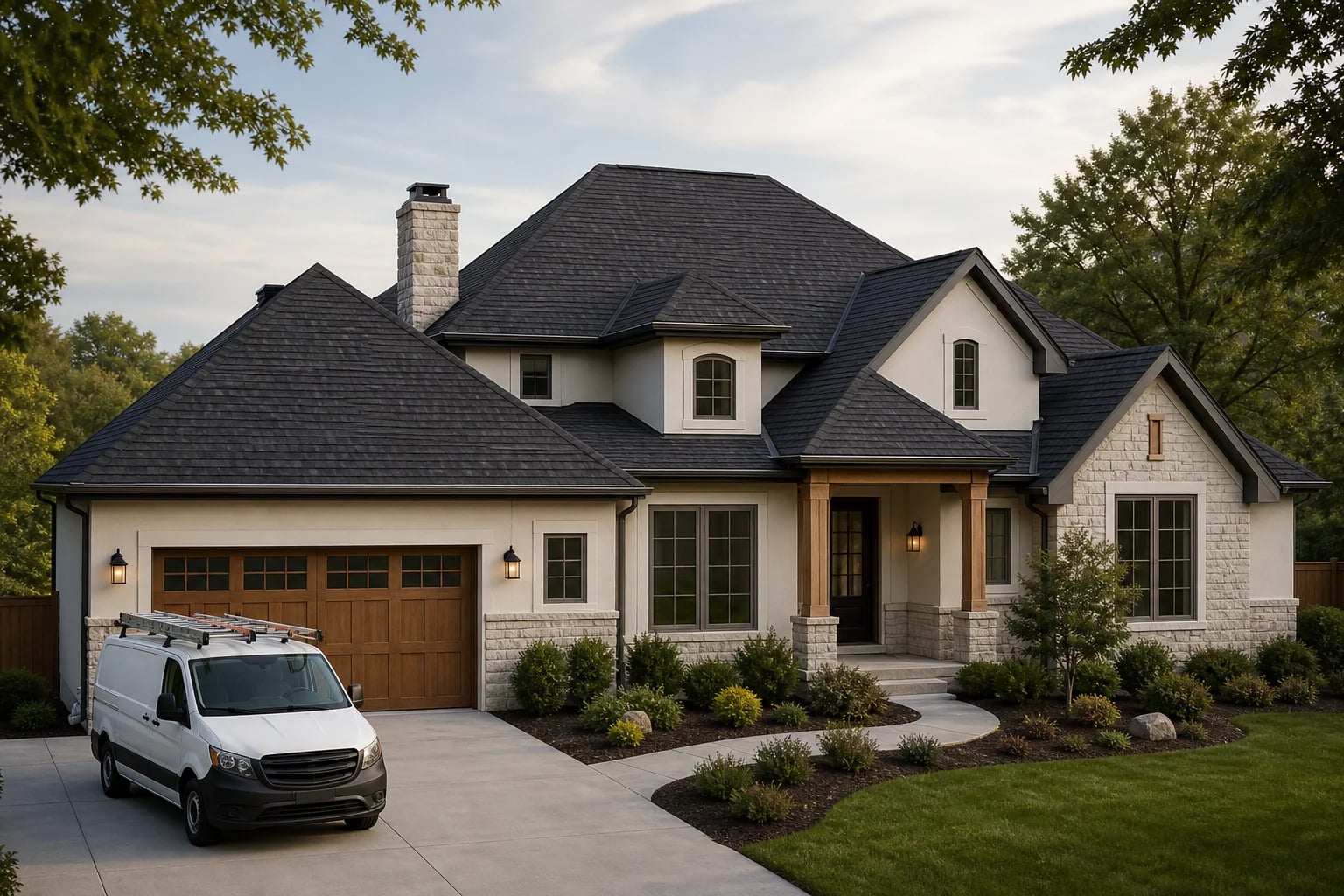
A roof is the most expensive thing on this list to replace, and the one where a bad call costs the most in both directions. Replace a roof that needed a flashing repair and you spend a great deal for nothing. Patch a roof that is at the end of its life and you pay for the patch, then the next leak, then the ceiling, then the roof anyway.
The good news is that the decision is usually clearer than it feels. A leak does not mean a roof is done. The National Roofing Contractors Association notes that leaks often come from flashing that has come loose or a section that was damaged, while a complete roof system failure is generally the result of age, poor installation or the wrong materials. Telling those apart is what a roofer’s inspection is for, and this article explains what that inspection and the estimate that follows should tell you.
Typical service life
Asphalt shingles, the most common residential roofing in the U.S., are sold by warranty grade rather than a published service life. A basic three-tab shingle is typically marketed as a twenty-year product; extension repair specifications use "20-year shingles" as the baseline. Thicker architectural shingles carry longer warranties. Real life depends on climate, ventilation, slope, sun exposure and installation quality, so treat the warranty term as a rough indication rather than a schedule.
Metal, tile and slate roofs generally outlast asphalt by a wide margin but cost more and are repaired differently. The age of the roof is usually on the home’s permit record or closing documents; failing that, an inspector can estimate from wear.
Repairs that are usually worth it
A roof that is inside its expected life, with damage confined to one area or one component, is a repair.
- Flashing at a chimney, vent pipe, skylight or wall junction that has lifted, cracked or rusted. The majority of leaks start here, not in the field of the roof.
- A handful of shingles blown off or cracked by wind, hail or a fallen branch, with the surrounding shingles still sound.
- A pipe boot (the rubber collar around a plumbing vent) that has split. Cheap and very common.
- A damaged ridge cap, a section of ridge vent, or nail pops letting water in.
- A localized soft spot in the decking from one leak, where the surrounding structure is dry and sound.
Conditions that usually mean replacement
When damage is widespread, or the roof is near the end of its life, a repair just delays the inevitable while adding to the final bill.
- Shingles curling, cupping, cracking or losing granules across the roof, not just in one spot. University of Georgia extension flags cracks, curling corners, buckling edges and granule loss as the signs of real wear.
- A roof at or past the age its shingles were rated for, with repeated leaks in different places.
- Daylight visible through the roof boards in the attic, or widespread staining and dampness on the underside of the decking.
- Sagging, which points at the structure beneath rather than the covering.
- Two layers of shingles already on the roof. Many codes limit roofs to two layers, so any further work means a tear-off; extension specifications require full removal when more than two layers exist.
- Storm damage across a large share of the roof surface.
The fifty-percent rule of thumb
The appliance version of the rule, repair cost against half the replacement cost, is less useful for roofs because almost no roof repair reaches that line; a roof replacement is large. The version roofers use instead is about extent and age: if the damage covers a large share of the roof, or the roof is in the last few years of its expected life, replacement usually makes more sense than repairing section by section. If the damage is isolated and the roof is young, repair.
The honest middle is a roof more than halfway through its life with a leak in one spot. Repairing is reasonable if the rest of the roof looks sound from above and below, and so is repairing now and planning a replacement in a few years rather than being forced into one by the next storm. Ask the roofer which they would do and why.
Insurance, energy and timing
Homeowner insurance typically covers sudden damage from wind, hail or a fallen tree, and typically does not cover wear, age or neglect. A storm-damaged roof is a claim; an old roof that has started leaking is not. NRCA advises checking for storm damage from the ground only and warns about unsolicited contractors who appear after storms. Document any storm damage with photos and dates before repairs begin.
Energy is a secondary factor. A new roof is a chance to improve attic ventilation and, in hot climates, to choose reflective shingles. Those are reasons to choose well when you replace, not reasons to replace early. Rebates for reflective roofing exist in some areas; check your utility.
What a roofer’s estimate should tell you
A roof estimate should be specific enough that two bids can be compared line by line.
- What the inspection found, with photos: where the leak enters, the condition of flashing, shingles, decking and attic ventilation, and how many layers are on the roof.
- For a repair: exactly what will be replaced, how the repair ties into the existing roof, and the warranty on the work.
- For a replacement: tear-off of all layers, underlayment and ice-and-water barrier, new drip edge, new metal flashing at every penetration (extension guidance says caulk or tar is not an acceptable substitute), shingle brand and grade, ventilation changes, decking replacement priced per sheet, disposal, permit and cleanup.
- Both the manufacturer’s material warranty and the contractor’s workmanship warranty, in writing.
- Proof of license where required, liability insurance and workers’ compensation. Extension guidance notes that using an unlicensed contractor can affect your own insurance coverage.
What to do while you decide
Contain the water first. Put a bucket under an active drip and, if a ceiling is bulging, pierce it at the lowest point so water drains into the bucket instead of bringing the drywall down. Do not go onto the roof; NRCA recommends inspecting only from the ground. A roofer can tarp the roof if rain is coming before the work can be scheduled. Photograph the leak, the ceiling and the roof from the ground, note the date, and if a storm caused it, call your insurer early. Then get at least two inspections and compare what they found, not just the prices.
Questions people ask
My roof leaks in one spot. Do I need a new roof?
Usually not. Most single leaks come from flashing, a pipe boot or a few damaged shingles and are repaired. A new roof becomes the answer when the shingles are worn across the whole surface or the roof is at the end of its rated life.
Can a new roof go over the old shingles?
Sometimes, if there is only one layer and the roof is flat and sound, though many roofers advise against it. With two layers already in place, codes generally require a tear-off.
Will insurance pay to replace my old roof?
Not for age or wear. Insurance typically covers sudden storm damage. If a storm damaged an old roof, the insurer may pay for the damaged portion or, in some cases, the whole roof; the policy terms and an adjuster decide.
How many estimates should I get?
At least two, three for a full replacement. Compare what each inspection found and what each estimate includes, not only the total. NRCA cautions against choosing on price alone.
Sources
- NRCA: Roof repairs after a storm (homeowner guidance) www.nrca.net
- NRCA: Roofing guidelines and consumer resources www.nrca.net
- University of Missouri Extension: Home repair inspection and specifications (roofing) extension.missouri.edu
- University of Georgia Extension: Clean shingles and signs of shingle wear fieldreport.caes.uga.edu