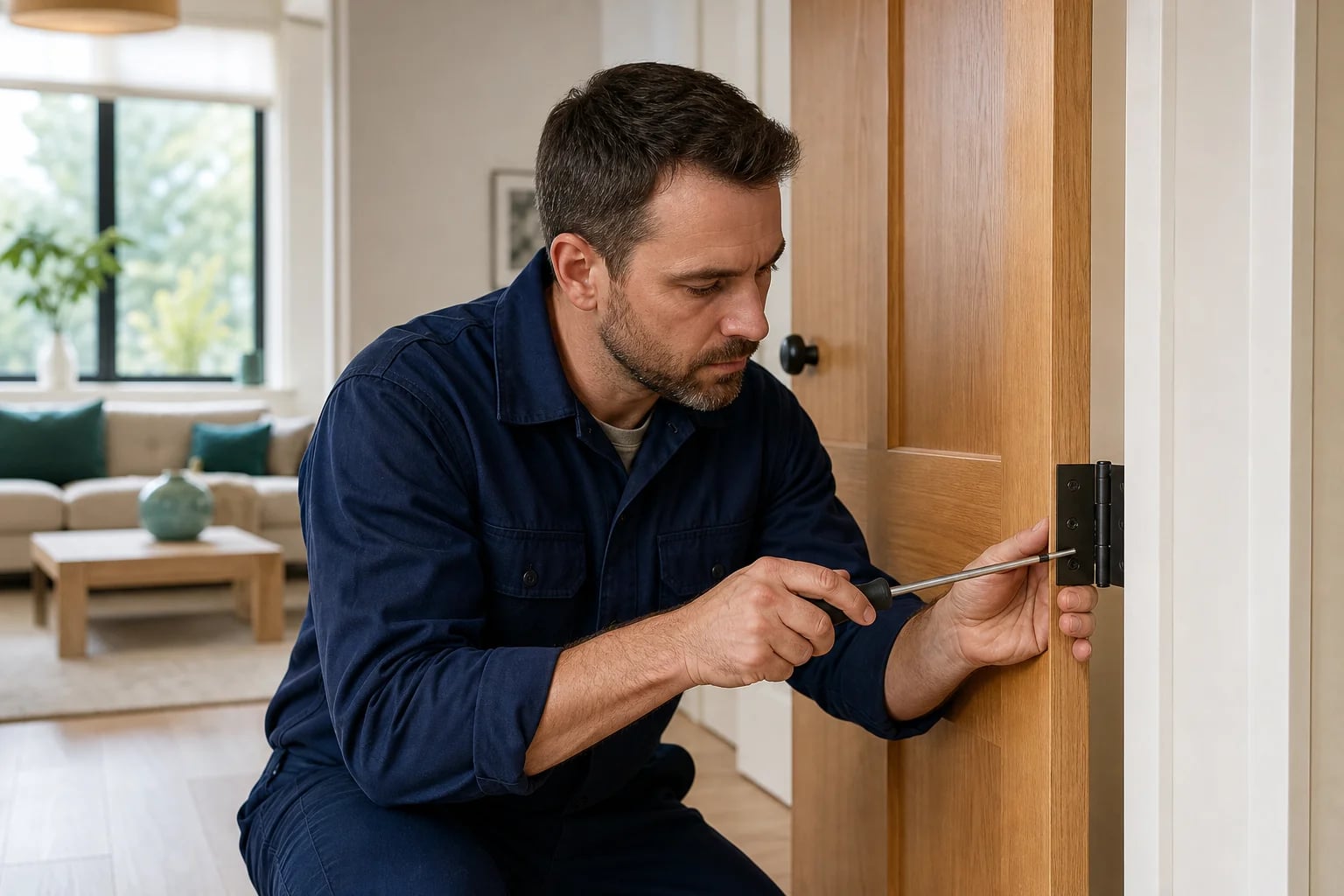
Handyman work is the catch-all for jobs too small for a specialist and too fiddly to keep putting off: a door that sticks, a TV that needs to go on the wall, a wobbly railing, a list of ten things that each take twenty minutes. Because the jobs vary so much, so does the pricing, and the same task can be quoted three different ways by three different people.
This guide explains how handymen usually charge, what common jobs tend to cost in broad terms, what pushes a quote up or down, and what a fair estimate looks like. Every figure is a typical U.S. range, not a price for your home. The handyman should explain the estimate, including any minimum charge, before any work starts.
The fee types you will see
Minimum charge
Most handymen have a minimum, often one or two hours of labor, because driving out for a single picture hook does not pay. If your job is small, the minimum is the price. Stacking a few tasks into one visit uses it well.
Hourly rate
The usual model for a list of mixed tasks. The rate covers labor and small consumables such as screws, anchors and caulk; anything bigger is billed as materials. Ask whether the clock starts at arrival and whether a helper is billed separately.
Flat rate per job
Common for well-defined tasks: mount this TV, assemble this dresser, replace this faucet. The handyman takes the risk of it running long. Flat rates assume normal access and a surface that behaves.
Half-day and full-day rates
For long lists, a block of time at a slightly lower effective hourly rate. You get as much of the list done as fits, so agree on priorities up front.
Estimate first
For exterior work, a wall of unknown construction or materials you have not bought yet, expect a look first. Some charge a small visit fee credited if you book; others quote from photos and confirm on arrival.
Common jobs and what they usually run
| Job | Typical range | What changes it |
|---|---|---|
| TV wall mount | Roughly $100 to $300 in labor | Depends on TV size, wall type (drywall with studs is quick, brick or a fireplace surround is not) and whether cables go inside the wall. A new outlet behind the TV may need an electrician. |
| Furniture assembly | Often one to three hours of labor per piece | A simple bookcase is under an hour; a wardrobe, bunk bed or a run of flat-pack cabinets is most of a day. |
| Shelf, curtain rod or mirror hanging | A few dozen to a couple of hundred dollars | Light items into drywall anchors are fast. Heavy floating shelves, large mirrors and anything on tile or plaster take longer and need the right anchors. |
| Sticking or misaligned door | Roughly $75 to $250 | Planing an edge, shimming hinges and adjusting a strike plate are quick. Replacing a slab or fitting a pre-hung door is a bigger job with a wider range. |
| Small drywall patch | Roughly $100 to $300 per patch | A doorknob hole is simple; a patch that needs texture and paint to blend takes two or three visits because compound has to dry between coats. |
| Caulking a tub or shower | Low hundreds of dollars | Removing old caulk, cleaning the joint and applying new silicone is a short visit, then a day to cure. Mold behind the old caulk can point to a bigger leak. |
| Weatherstripping and door sweeps | Roughly $50 to $150 per door plus materials | Quick work with a real payoff in drafts. A door that no longer closes square may need the hinges or threshold adjusted first. |
| Grab bars and furniture anchoring | Roughly $100 to $250 per bar; an hour or two to anchor a whole home | Bars must anchor into studs or blocking, not just tile. Anti-tip kits for dressers, bookcases and TVs are inexpensive and quick per item. |
What moves the estimate
- How many tasks are on the list and whether they are in one area or spread across the home. Walking between jobs and re-setting tools adds time.
- Whether you have the materials. A store run is billed time; handyman-supplied materials carry a markup.
- What the wall or surface is made of. Drywall over studs is fast. Plaster, brick, tile, concrete and metal studs need special anchors and more time.
- Access and height. Vaulted ceilings, stairwells and anything needing a tall ladder take longer and carry more risk.
- How well-defined the job is. Vague requests get padded estimates; a clear list with photos gets a tighter one.
- Whether the task edges into licensed trade work. Many states limit what an unlicensed handyman may do with wiring, gas and plumbing, and cap the value of a single job.
- Your area and urgency. Labor rates vary a lot by region, and same-day or weekend visits often carry a higher rate or a larger minimum.
Reading the estimate
- Ask how the job is billed: hourly with a minimum, flat per task, or a day rate. Then ask what happens if it runs long.
- A written estimate should list each task, the labor basis, any materials you are expected to supply, and what is excluded (painting a patch, disposing of old items, running new wiring).
- Ask what consumables are included. Anchors, screws, caulk and shims are usually part of the rate; a specialty mount, a door slab or hardware is not.
- Agree on the order of work and a stopping point, so the items that matter most are done first if time runs out.
- Ask before any task that opens a wall, touches wiring or plumbing, or changes a structural element. Those may need a licensed trade or a permit, and the handyman should say so.
- Change orders: if the handyman finds something unexpected, such as rot behind trim or no studs where you want a TV, ask for the added time or cost before they continue.
Honest ways to spend less
- Batch your list. One visit with six tasks almost always costs less than three visits with two each, because you pay the minimum and the travel once.
- Have materials on site and unpacked, in the right room. Missing parts waste billed time.
- Clear the work area before arrival. Moving furniture and emptying a cabinet are things you can do for free.
- Send photos with your request so the handyman brings the right anchors and quotes accurately.
- Compare the whole estimate, not the hourly rate. A faster, better-equipped handyman at a higher rate often finishes for less.
Questions people ask
Why is there a minimum charge for a ten-minute job?
The minimum covers travel, setup and the hour that visit takes out of the day, not just the ten minutes at your door. The best way to use it is to add a few other small tasks to the same visit.
Can a handyman do electrical or plumbing work?
It depends on your state and the job. Swapping a light fixture or a faucet is allowed in many places; new circuits, gas lines and anything behind a wall often require a licensed trade and sometimes a permit. A handyman should tell you when a task is outside what they may legally do.
Should I buy the materials myself?
For specific items, usually yes: you choose the fixture, shelf or mount and avoid a markup. For hardware and consumables, let the handyman supply them; they carry the right anchors and skip the trip.
Is a flat rate or an hourly rate better?
Flat rates suit well-defined single jobs. Hourly suits a mixed list where you want flexibility. Either way, the billing basis should be explained before work starts, and surprises should come with a stop-and-ask, not a bigger invoice.