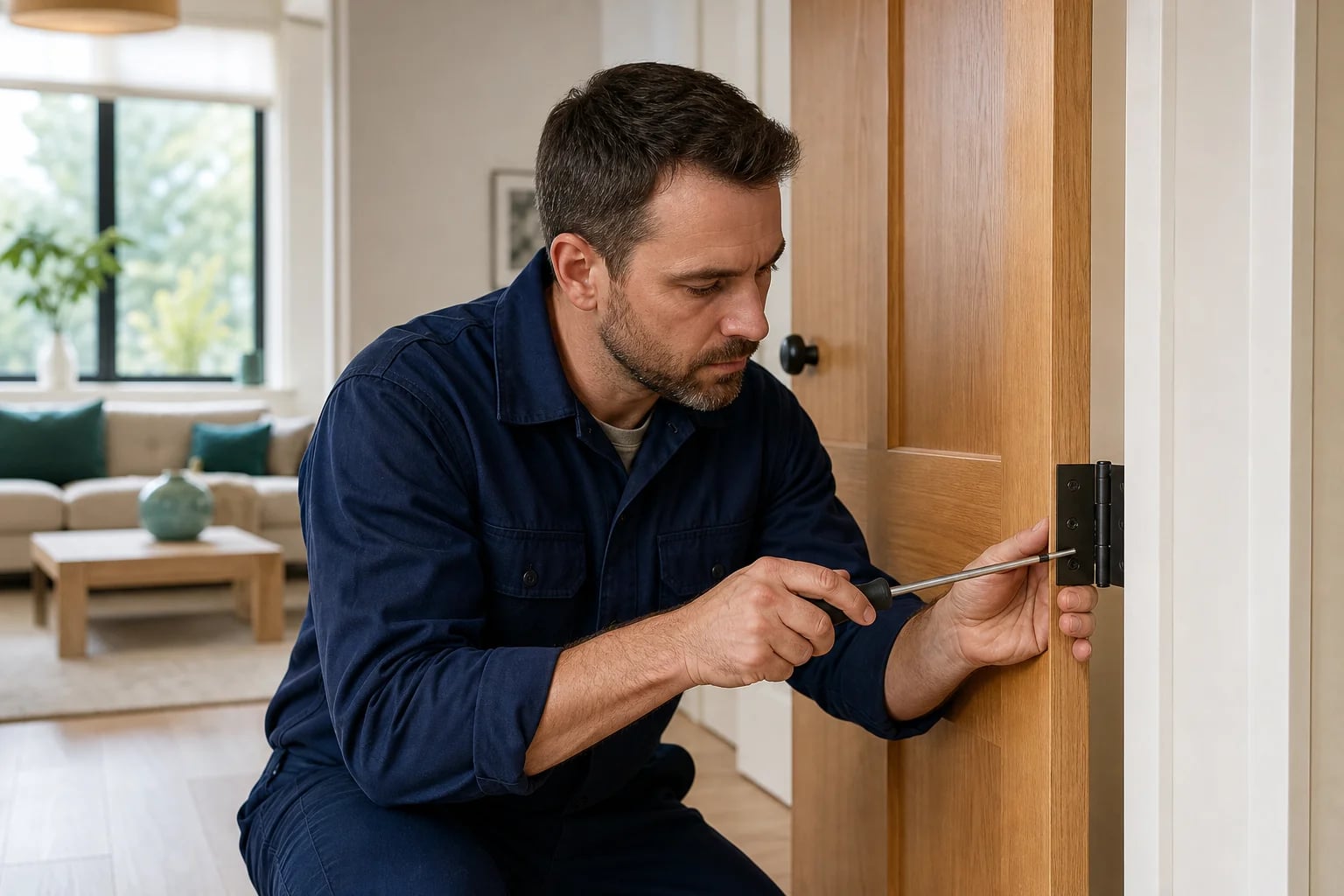
A handyman is the person you call for the list: the door that sticks, the towel bar that pulled out of the wall, the TV that needs mounting, the three things that have waited since spring. The work is small, varied and usually priced by the hour or by the task, which is exactly why it is easy to hire badly. There is no standard credential, the rules on what a handyman may do differ from state to state, and plenty of people with a truck and a drill use the name.
This guide explains which credentials actually exist for handyman work, the questions that separate a careful tradesperson from a guess, the red flags that should end the conversation, how to compare quotes without being fooled by the lowest number, and what to expect on the day.
Licenses, insurance and permits
State contractor licensing (and its limits)
Most states do not issue a handyman license. Instead they set a line, usually a dollar amount per job or a list of trades, below which no contractor license is needed. In Florida, for example, the Department of Business and Professional Regulation licenses construction contractors, and small jobs that do not touch structure, roofing, plumbing, electrical or mechanical systems generally fall outside that system. Other states draw the line differently. Check your state’s rules before assuming a job is handyman work.
Licensed trades for regulated work
Wiring an outlet, moving a gas line, replacing a water heater, cutting into a load-bearing wall or working on a roof is not handyman work in most places, however small the task looks. A good handyman tells you when a job needs a licensed electrician, plumber or contractor and either brings one in or declines. If someone offers to do all of it for cash, that is your answer.
General liability insurance
This covers damage to your home: a drill through a water line, a dropped mirror, a scratched floor. Ask for a certificate of insurance that names the business, not just a verbal yes.
Workers’ compensation, if there is a crew
A solo handyman may be exempt in your state, but anyone who sends helpers into your home should carry workers’ compensation. Without it, an injury on your property can become your problem.
How to check
Use your state licensing board’s public lookup to confirm any trade license a handyman claims and to see whether the person has been cited for unlicensed work. Florida’s DBPR license search is linked below as an example; most states have an equivalent. For insurance, call the agent on the certificate and ask whether the policy is active.
Questions to ask
- Which of the jobs on my list can you do yourself, and which need a licensed trade?
- Do you charge by the hour, by the task or by the visit, and is there a minimum?
- Will you give me a written estimate before any work starts, listing each task?
- Are you insured for damage to my home, and can you send me the certificate?
- Who exactly will be doing the work, and do you ever send someone else in your place?
- Do I buy the materials or do you, and is there a markup if you do?
- If a job takes longer than estimated, do you stop and check with me or keep going?
- Can you give me two recent customers I can call about similar work?
Red flags
- No written estimate, or an estimate that is a single number with no breakdown of tasks and materials.
- Cash only, or a request for full payment before the work begins. A deposit for materials on a larger job is normal; paying for labor you have not received is not.
- Offers to do electrical, plumbing, gas or structural work without a license because it is "just a small thing."
- Knocks on your door saying they were in the area and noticed something that needs fixing.
- Vague about insurance, or says it is not needed for small jobs.
- Pressures you to decide today, or quotes a price that only holds if you book on the spot.
Comparing quotes fairly
- Make sure each quote covers the same list. Write out every task before you call anyone and send the same list, with photos, to each handyman.
- Compare the pricing model, not just the total. An hourly rate with a two-hour minimum can beat a flat rate on a short list and lose badly on a long one.
- Look at who said no to something. The handyman who tells you one item needs an electrician usually understands the rest of the list best.
- Weigh insurance and references as part of the price. A quote that is lower because there is no coverage is not actually cheaper.
- Be wary of the lowest number if it came with the least detail. A careful estimate takes a few minutes to write; a guess takes seconds.
On the day
- Walk through the list together before any tools come out. Confirm the written estimate still matches what you both expect and agree on how changes will be handled.
- Clear the work areas: move furniture away from the wall, take pictures off a wall that is getting patched, put pets somewhere calm.
- Point out anything behind the wall you know about: where water lines run, where the main cable comes in, which wall is exterior.
- Expect small questions, such as how high to mount the TV. Being available saves time you are paying for.
- Inspect each job before paying. Open the door, pull on the shelf, run the faucet. Then pay as agreed and keep the invoice.
Questions people ask
Can a handyman do electrical or plumbing work?
In most states, only the simplest tasks, if any, and the line is drawn by law, not by how confident the handyman is. Replacing a faucet cartridge may be fine where rewiring an outlet is not. Ask which trades are regulated where you live and have the handyman tell you where they stop.
Is it cheaper to hire a handyman than a contractor?
For small, varied jobs, usually yes, because you are paying for hours rather than whole-project overhead. For anything that needs a permit, specialty tools or a licensed trade, a handyman may not be allowed to do it at all, and a contractor is the right call from the start.
Should I pay a deposit?
For a short visit, no; pay when the work is done and checked. For a longer job with materials the handyman is buying, a modest deposit toward those materials is reasonable, with the balance due on completion. Full payment up front is not.
What if the handyman damages something?
Say so right away and photograph it. A professional with liability insurance will either fix it or file a claim. This is why you ask for the certificate before booking rather than after something breaks.
Sources
- FTC consumer advice: How to avoid a home improvement scam consumer.ftc.gov
- Florida DBPR: License search (verify a contractor license) www.myfloridalicense.com
- Florida DBPR: Construction Industry Licensing Board (license categories) www.myfloridalicense.com
- Florida DBPR: Verify state licenses before hiring (which trades need one) www2.myfloridalicense.com