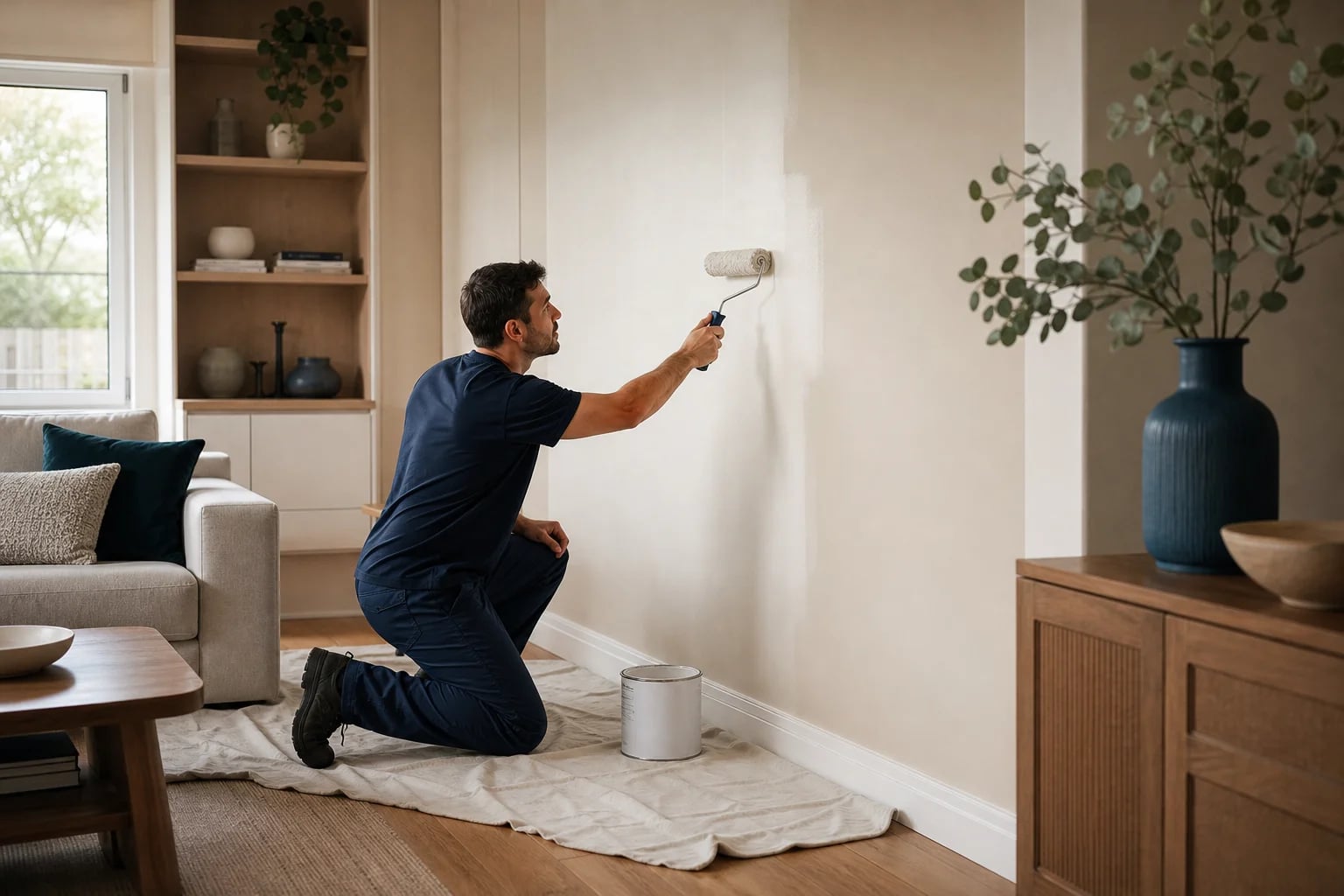
Painting is mostly labor, and most of the labor is preparation: moving and covering furniture, filling holes, sanding, caulking, taping and priming. The paint itself is a small share of the bill. That is why two quotes for the same room can differ so much: one includes a day of prep and two coats, the other a quick roll over whatever is there.
This guide explains how painters and drywall contractors charge, what common jobs tend to cost in broad terms, what moves the estimate, and what a written quote should show. These are typical U.S. ranges, not a price for your home. The painter should explain the estimate, including prep, coats and materials, before any work starts.
The fee types you will see
Per room
The most common interior quote: a standard bedroom at a set price for walls only, with trim and ceiling as add-ons. Assumes average ceiling height, a surface in decent condition and a color change that covers in two coats.
Per square foot
Used for whole-home interiors and for exteriors. Interior quotes use wall area; exterior quotes often use the home footprint with adjustments for stories and siding type.
Hourly or day rate
Common for small or ill-defined jobs: touch-ups, a single accent wall, repairs where the extent is unknown until the old finish comes off. Ask for an estimated number of hours and a cap.
Minimum charge
A single patch or touch-up is quoted as a minimum that covers the trip, setup, drying time between coats and cleanup. Combining several small items into one visit uses it well.
Estimate first
Exteriors, multi-room interiors and anything with water damage, peeling or a pre-1978 home are quoted after a walk-through. A photo quote is a range; the written estimate after a visit is what you sign.
Common jobs and what they usually run
| Job | Typical range | What changes it |
|---|---|---|
| One bedroom, walls only | Roughly $300 to $900 | Depends on size, ceiling height, surface condition and whether the color change needs primer. Furniture moving, ceiling and trim are usually add-ons. |
| Ceiling | Low hundreds of dollars per room | Overhead work is slower and messier. Textured ceilings cost more to paint; removing popcorn texture is a separate, pricier job that may involve asbestos testing in older homes. |
| Trim, doors and baseboards | Priced per linear foot or per door | Detail work that takes longer than walls. Switching from oil-based to water-based paint, or from dark to white, means extra prep and coats. |
| Whole-home interior | Several thousand dollars for a typical home | Priced per square foot of wall area or room by room with a volume discount. Empty homes are cheaper to paint than furnished ones. |
| Exterior repaint | Often several thousand dollars; more for large or tall homes | Washing, scraping, sanding, priming bare spots and caulking are most of the cost. Stucco, brick and multi-story homes with lots of trim sit at the high end. |
| Small drywall patch | Roughly $100 to $300 per visit | Compound needs several coats and drying time, so even a doorknob hole is two or three short visits. Matching texture and blending paint adds to it. |
| Larger drywall repair (water damage, a cut-out section, a cracked ceiling) | Several hundred dollars and up | Removing damaged board, checking framing and insulation, hanging new board, taping, texturing and painting. The leak must be fixed first or the repair will fail. |
| Cabinet painting | Often four figures for a kitchen | Doors and drawers are removed, cleaned, sanded, primed and sprayed. The finish quality depends almost entirely on prep. |
| Wallpaper removal | By the hour or per room; highly variable | Depends on the paper, the adhesive and whether the wall was primed before papering. Damaged drywall underneath is a change order. |
What moves the estimate
- Surface condition. Nail holes and scuffs are quick; cracks, peeling, water stains, old wallpaper and heavy texture add hours of prep.
- Number of coats and color change. A dark-to-light change or a deep accent color can need primer and a third coat.
- What is included: walls only, or walls plus ceiling, trim, doors and closets. Each adds time, and trim is slow.
- Ceiling height and access. Vaulted rooms, stairwells and multi-story exteriors need ladders, planks or lifts and more careful setup.
- Paint grade. Better paints cost more per gallon but cover better and last longer. The painter should name the line being quoted.
- Furniture and contents. Empty rooms are faster; moving and covering a furnished room is billed time.
- Pre-1978 homes. Work that disturbs paint must follow lead-safe practices by a certified firm, which adds containment and cleanup steps.
- Siding and weather. Wood needs more prep than vinyl or fiber cement, and exterior work is seasonal.
Reading the estimate
- A written estimate should list each room or surface, the prep included (filling, sanding, caulking, priming), the number of coats, the paint brand, line and sheen, who supplies paint, and what is excluded.
- Ask how holes, cracks and stains will be handled and whether that prep is in the price or billed as found. Prep is where cheap quotes cut corners.
- For exteriors, ask about washing, scraping, priming bare wood, caulking, and how rotted trim will be handled if found.
- Ask for proof of liability insurance and, where required, a contractor license. For a pre-1978 home, ask for the EPA lead-safe certification.
- Change orders: if the painter finds water damage, failing plaster or lead paint, ask for a written revision before they continue. Cosmetic repair over an active leak is wasted money.
- Ask how touch-ups and leftover paint are handled. Labeled leftover cans make future touch-ups easy; a short labor warranty against peeling is common.
- Confirm the schedule, daily hours, and how rooms will be left each evening if the job spans several days.
Honest ways to spend less
- Empty the room, or at least move everything to the center, before the painters arrive. Billed time drops immediately.
- Choose colors before the quote and stick with them. Changes after the first coat mean extra material and a return visit.
- Paint several rooms at once. Setup, cleanup and travel are spread across more work, and volume pricing applies.
- Stay close to the existing color if the finish is in good shape. One fewer coat on every wall adds up.
- Do the simple prep yourself: remove outlet covers, pictures and curtain hardware, and wash grimy walls. Leave patching and sanding to the painter.
- Fix the cause of water stains before painting. Paying for a repair, then a leak, then the same repair again is the most common painting waste.
Questions people ask
Why is the paint such a small part of the quote?
A gallon covers a lot of wall, and a room takes only a few. The expensive part is skilled time: protecting the room, prepping the surface, cutting in clean lines and returning for coats to dry. That is also why the cheapest quote usually skipped prep.
Should I buy the paint myself?
You can, but most painters get contractor pricing and know which line works with their process. Agree on the brand, line and sheen either way and ask for the leftover cans.
Can a painter fix drywall, or do I need a separate contractor?
Most painters handle patches and small repairs. Large water-damage repairs, ceiling replacement and texture matching are drywall specialties that some painters subcontract. Ask who will do that part and whether it is in the quote.
Does a pre-1978 home really need special handling?
Yes, if the work disturbs painted surfaces. Federal rules require a certified firm to use lead-safe practices, including containment and cleanup, in homes built before 1978. It adds some cost and is not optional.
Sources
- Painting Contractors Association: Industry standards for painting work www.pcapainted.org
- U.S. EPA: Renovation, Repair and Painting program (lead-safe work in pre-1978 homes) www.epa.gov
- Benjamin Moore: Paint calculator (how much paint a room needs) www.benjaminmoore.com
- Sherwin-Williams: How to prep walls for painting www.sherwin-williams.com