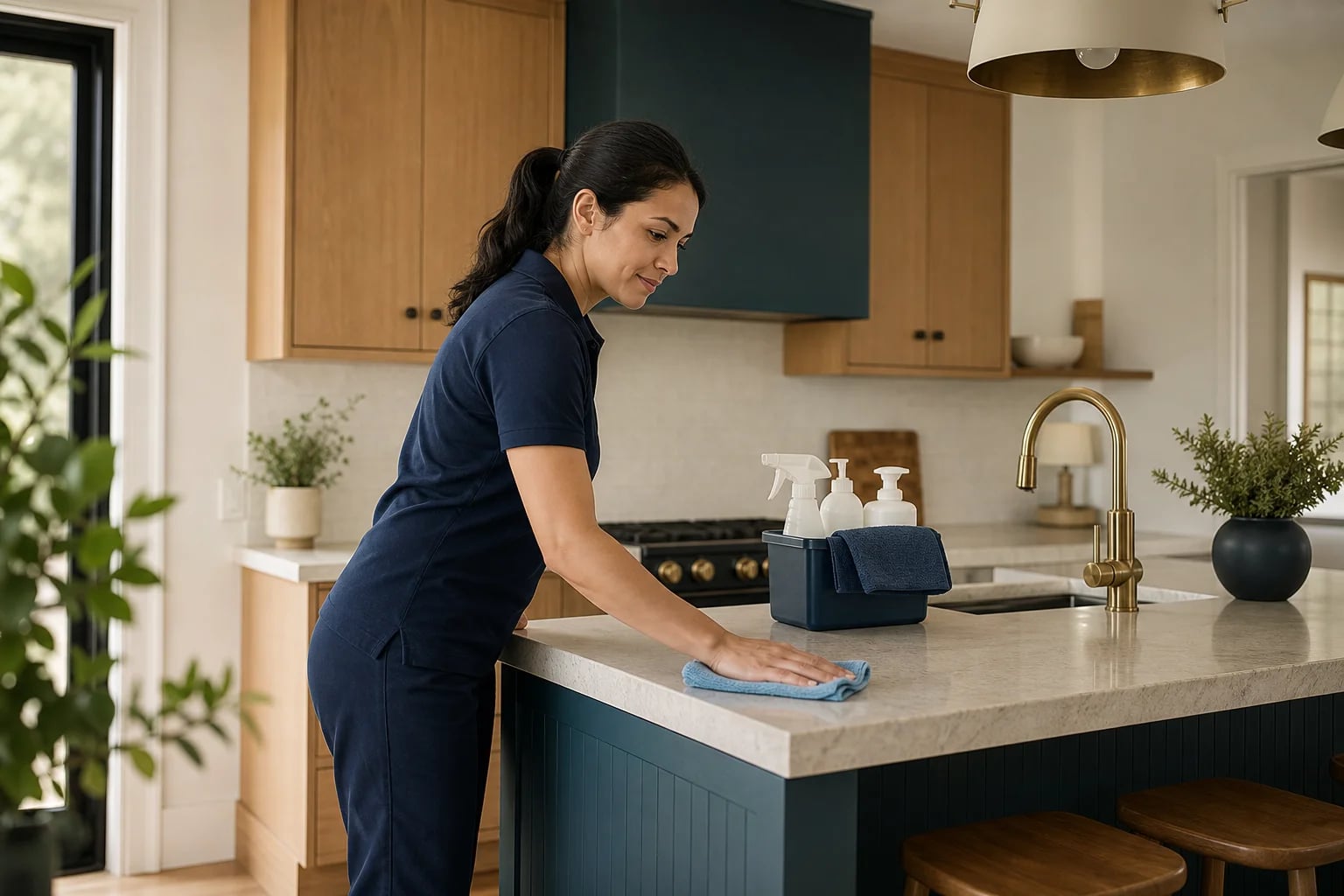
Hiring someone to clean your home is a different decision from hiring a plumber. The work is not regulated the way the trades are, there is no license to look up in most places, and the person will be alone in your house with your things. What you are really checking is whether the business is organized, insured and honest about what it does and does not do.
This guide covers the credentials that exist for residential cleaning, including what "bonded and insured" means in practice, the questions worth asking before the first visit, the red flags, how to compare quotes from a company and an individual fairly, and what to expect on the day.
Licenses, insurance and permits
Licensing: usually not required
Most states do not license house cleaners. What a cleaning business typically needs is a local business registration, which proves it exists on paper and gives you a place to complain. Mold remediation, biohazard cleanup and pesticide application fall under other rules; check your state’s rules if the job is anything beyond ordinary cleaning.
General liability insurance
This is the policy that pays when a cleaner knocks a television off its stand, marks a stone counter with the wrong product or floods a bathroom. Ask for a certificate of insurance showing the business name and the policy dates. An individual cleaner may not carry it, which is a reason to keep the first jobs small and the valuables put away.
Bonding
A janitorial or dishonesty bond is a form of insurance that can reimburse you if an employee of the company steals from your home. Companies say "bonded" often; what matters is whether a theft claim would be covered and how you would file one. Ask directly.
Workers’ compensation
A company that sends employees should carry workers’ compensation so that a fall from a step stool in your home is covered by the employer rather than becoming your liability. Rules for very small businesses vary by state.
Employees versus contractors
Some companies employ their cleaners; others send independent contractors; and if you hire an individual directly and control how the work is done, the IRS may treat you as a household employer with tax obligations of your own. Each arrangement changes who is responsible for insurance, taxes and background checks. Ask which one you are getting.
Background checks and training
There is no state registry for this, so it comes down to company policy. Ask whether cleaners are background-checked, whether the same team comes each time, and how new staff are trained. Membership in an industry group such as ISSA is a sign of a business that takes standards seriously, not a guarantee.
Questions to ask
- Are you insured for damage to my home, and can you send me the certificate?
- Are your cleaners employees or contractors, and are they background-checked?
- Will the same person or team come each time, and what happens when they are sick or away?
- What is included in a standard clean, and what counts as an extra: inside the oven, inside the fridge, windows, baseboards, laundry?
- Will you give me a written estimate before the first visit, based on my actual home rather than a bedroom count?
- Do you bring your own supplies, and can you use different products if someone here has allergies or we have pets?
- How do I raise a problem, and what do you do when something is missed or broken?
- How will your staff get in when I am not home, and how are keys or codes stored?
Red flags
- No written estimate, or a price given over the phone with no questions about the home, the bathrooms or the condition.
- Cash only, or payment in full for a block of future visits before the first one has happened.
- Vague about insurance, or says it is not needed for cleaning.
- Flyers at your door saying the crew was in the neighborhood and can do your house today at a special rate.
- Refuses to put the scope in writing, so every visit becomes a negotiation about what was supposed to be included.
Comparing quotes fairly
- Compare the task list before the price. One quote may include inside the oven and the microwave, another may not. Ask each to list what a standard visit covers.
- Convert everything to a per-visit figure for the same frequency. Weekly, biweekly and monthly rates differ, and the first deep clean is often priced separately.
- Count insurance and bonding as part of the value. A lower rate from someone with no coverage is lower because the risk has moved to you.
- Ask how each one handles a missed spot. A company that will come back free within a day is worth something; a shrug is worth nothing.
- Give a slight edge to the business that asked the most questions about your pets, floors and counters. That quote is the one most likely to be right.
On the day
- Do a short walkthrough with the cleaner or team lead first. Point out the areas that matter most and anything you do not want touched, and confirm the written scope matches what you expect.
- Pick up clutter and put away valuables, documents and medications. The visit is for cleaning, not sorting, and a tidy surface gets a better clean in the same time.
- Mention surfaces that need special care: natural stone, unsealed wood, delicate fixtures. The wrong product can mark them permanently.
- Be reachable. A quick answer about whether to move a rug or run the dishwasher saves a judgment call you may not like.
- Walk through the home at the end, before the crew leaves, and say what was good and what was missed. Then pay as agreed and keep the receipt.
Questions people ask
Should I hire a company or an individual cleaner?
A company usually brings insurance, bonding, backup staff and a formal complaint process; an individual often brings consistency, flexibility and a lower rate. If you hire an individual, ask about insurance, keep valuables secured, and be aware that directing their work may make you a household employer for tax purposes.
Do I need to supply cleaning products?
Most companies bring their own; many individuals do not. If anyone in the home has sensitivities, or you prefer particular products, say so before the estimate. Products carrying the EPA Safer Choice label are one way to ask for lower-hazard options.
How much should I tip?
There is no rule. Some companies include gratuity, others leave it to you, and tipping a solo cleaner is less common than tipping a crew. Ask the company what their staff expect so there is no awkwardness.
What if something goes missing or breaks?
Say so the same day and in writing. A bonded company has a process for theft claims and an insured one for damage. Photographs of valuables make a claim far easier; this is also why the first visits should happen when you are home.