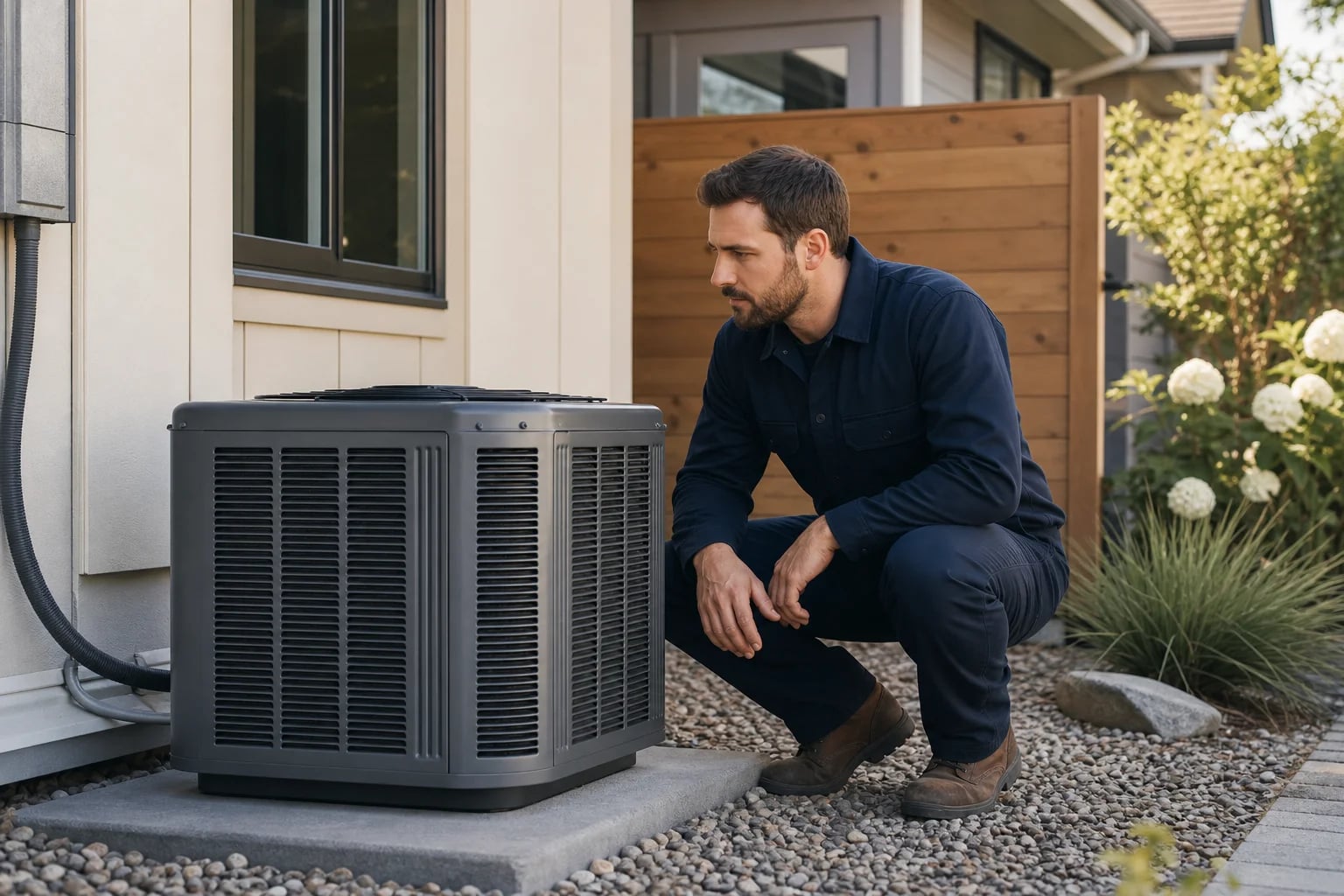
Heating and cooling bills come in two sizes: the small ones, a capacitor or a tune-up, and the large ones, a compressor or a whole new system. The gap is wide, and a repair that sounds small on the phone can become the large one once a technician opens the unit.
This guide explains how HVAC businesses charge, what common repairs usually cost in the United States, what makes one job pricier than another, and what a written estimate should show. All figures are typical ranges rather than quotes. Whoever you hire should explain the estimate, including any diagnostic fee, before touching the system.
The fee types you will see
Diagnostic fee
A charge to come out, test the system and say what is wrong. Often credited toward the repair if you approve it the same visit, but not always. Ask before booking.
Flat-rate repair pricing
Most HVAC businesses price repairs from a book: a capacitor, a contactor, a blower motor each has a set price including labor. You get a firm number before work starts.
Hourly labor plus parts
Used for troubleshooting intermittent faults, ductwork and custom work. Ask for an estimated hour count and a cap.
Maintenance plans
An annual fee for one or two tune-ups, sometimes with a repair discount and priority scheduling. Worth it if you would pay for the tune-ups anyway; read what the plan includes.
Estimate first for replacements
A new system starts with a home visit, a load calculation and a written proposal. That visit is usually free. Compare at least two proposals.
Common jobs and what they usually run
| Job | Typical range | What changes it |
|---|---|---|
| Diagnostic visit | Roughly $75 to $200 | After-hours and weekend calls are higher. Some businesses waive or credit the fee when you approve the repair. |
| Seasonal tune-up | Roughly $80 to $200 per system | A real tune-up cleans coils, checks refrigerant charge and electrical parts, and tests safety controls. A cheap visit that only changes the filter is not worth much. |
| Capacitor or contactor replacement | Roughly $150 to $400 | The most common summer repair. The part is inexpensive; the price is mostly the visit and the diagnosis. |
| Blower or condenser fan motor | Several hundred dollars | Variable-speed and ECM motors cost considerably more than a standard motor. |
| Refrigerant leak repair and recharge | A few hundred to over a thousand dollars | Refrigerant type drives the price; older types are being phased out and cost more. Recharging without fixing the leak is a waste. |
| Furnace igniter, flame sensor or pressure switch | Roughly $150 to $450 | Common winter no-heat repairs. A cracked heat exchanger is a different conversation and usually means replacement. |
| Thermostat replacement | Roughly $150 to $500 installed | A basic model is the low end. A smart thermostat that needs a new common wire costs more to install. |
| Evaporator coil or compressor replacement | Often $1,000 to several thousand | Major repairs on an older system. Ask whether the part is under manufacturer warranty, and weigh the repair against replacing the unit. |
| Full system replacement | Several thousand to well over ten thousand dollars | Size, efficiency rating, heat pump versus furnace and AC, ductwork condition, electrical upgrades and permits all move the number. |
What moves the estimate
- What failed. Electrical parts are cheap and quick; compressors, coils and heat exchangers are not.
- System age and refrigerant type. Older refrigerants cost more per pound, and parts for old systems can be scarce.
- Manufacturer warranty. Many parts carry a long warranty for the original owner if the system was registered, which leaves you paying labor only.
- Access. A rooftop unit, a tight attic air handler or a crawl space adds time to every job.
- Season and timing. The first heat wave and the first freeze are the busiest weeks of the year, and after-hours calls carry a premium.
- Equipment choice on a replacement: efficiency rating, variable-speed versus single-stage, brand tier, and whether ductwork needs work.
- Permits and inspections. Replacements usually need a permit, and some areas require a load calculation or duct test.
Reading the estimate
- Ask for the diagnosis in plain words before any price: what failed, why, and whether anything else is close to failing.
- The estimate should separate the diagnostic fee, labor, parts and any refrigerant by weight, and say whether the diagnostic fee is credited.
- Ask whether the failed part is covered by a manufacturer parts warranty. Have the model and serial number ready from the unit label.
- For a major repair on a system past roughly ten years, ask for a replacement proposal too and compare the two side by side.
- A replacement proposal should show model numbers, capacity, efficiency rating, ductwork and electrical work, the permit, warranty terms and removal of the old equipment.
- Ask how change orders are handled if the technician finds more once work starts. You should approve any added cost before it is done.
- Be cautious of a technician who recommends a full replacement within minutes of arriving or pressures you to decide on the spot. Get a second opinion on any four-figure estimate.
Honest ways to spend less
- Change the filter on schedule. A clogged filter is behind many frozen coils, overheated motors and no-cool calls.
- Book maintenance in spring and fall, not in the first heat wave or cold snap, when businesses are slammed and rates go up.
- Register new equipment with the manufacturer so the longer parts warranty applies. It takes minutes and can save a lot later.
- Before calling, check the thermostat batteries, the breaker, the furnace switch that looks like a light switch, and the filter. Clearing debris from around the outdoor unit is also safe. Do not open panels, touch wiring or add refrigerant; refrigerant handling requires EPA certification.
- When replacing, ask about utility rebates and federal tax credits for high-efficiency equipment and heat pumps.
- Do not pay for duct cleaning on a schedule. The EPA does not recommend routine cleaning; it is worth it only with visible mold, pests or heavy debris.
Questions people ask
Is the diagnostic fee refunded if I approve the repair?
Often it is credited toward the repair, but this varies by business. Ask when you book. If it is not credited, that is fine as long as it was disclosed up front.
Why is refrigerant so expensive?
Older refrigerants are being phased out under federal rules, so supply is limited and the price per pound has climbed. A system that needs regular topping off has a leak, and recharging without a repair only delays the next visit.
Repair or replace?
Lean toward replacement when the system is past its expected life and the repair is a large fraction of a new unit, especially if it uses a phased-out refrigerant. A single inexpensive part on a mid-life system is almost always worth repairing.
Do I need a permit to replace my AC or furnace?
In most jurisdictions, yes. The inspection confirms the electrical, gas, venting and refrigerant work was done to code. A licensed contractor normally pulls it and includes the cost. If a bid skips the permit, ask why.
Sources
- U.S. EPA: Section 608 refrigerant management and technician certification www.epa.gov
- U.S. EPA: Should you have the air ducts in your home cleaned? www.epa.gov
- ENERGY STAR: Air-source heat pumps (sizing, tax credits and buying guidance) www.energystar.gov
- U.S. CPSC: Carbon monoxide information center www.cpsc.gov