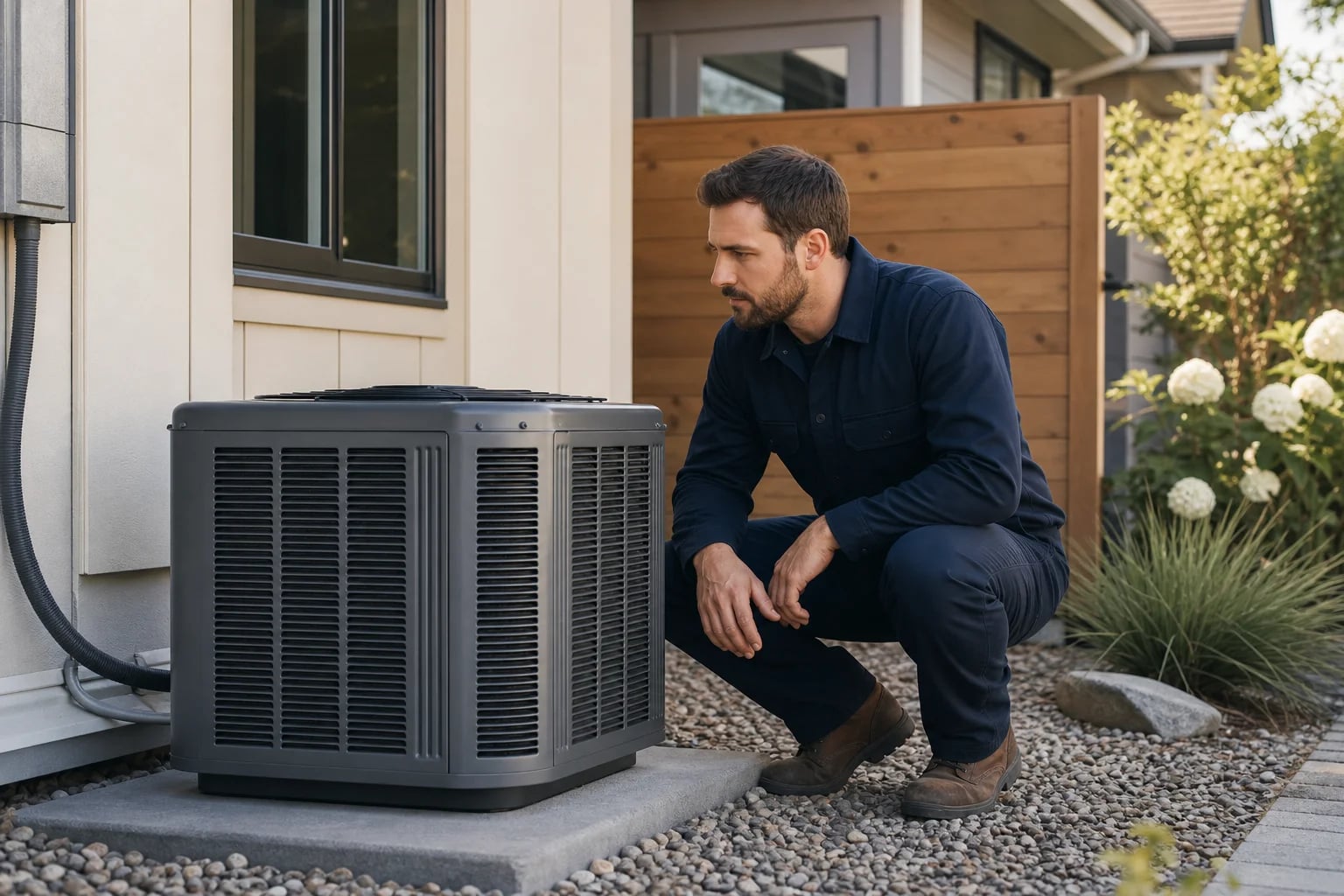
Heating and cooling work is where a bad hire costs the most. A furnace or air conditioner is one of the most expensive pieces of equipment in the house, and a poor repair or a sloppy installation can mean years of high bills and comfort problems.
This guide covers the credentials an HVAC business should be able to show, including the federal refrigerant certification, the questions that separate a careful contractor from a quick one, the warning signs on sales-driven visits, and how to compare estimates for a repair or a new system.
Licensing rules differ by state, and some states handle HVAC licensing at the county or city level. Use the examples here as a starting point and check the rules where you live.
Licenses, insurance and permits
State HVAC or mechanical contractor license
Most states license businesses that install and repair heating and cooling equipment, usually as a mechanical, HVAC or air conditioning contractor. Rules vary. In Florida, for example, air conditioning contractors are licensed through the Construction Industry Licensing Board, and a license can be checked by name or number on the DBPR Verify a Licensee page. Ask for the number and look it up before the appointment.
EPA Section 608 certification
Federal law requires anyone who opens a refrigerant circuit, charges a system or recovers refrigerant to hold an EPA Section 608 certification. It is issued to the person, not the company, and it does not expire. If your air conditioner or heat pump is low on refrigerant, the technician handling it should be able to show the card.
General liability insurance and workers’ compensation
Liability insurance covers damage to your home: a refrigerant leak into the house, a dropped condenser, a foot through the ceiling from the attic. Workers’ compensation covers the technician if they are hurt on your property. Ask for a certificate of insurance and check the dates.
Permits
Replacing a furnace, air conditioner, heat pump or air handler, or altering gas lines or ductwork, normally needs a mechanical permit and an inspection. A repair such as a capacitor or a blower motor usually does not. The contractor pulls the permit under their own license.
Industry certifications
NATE certification is an independent technician exam that many contractors use; ACCA publishes the standards for sizing and installation that careful contractors follow. Neither replaces a state license.
Manufacturer authorization
Brands such as Carrier, Trane and Lennox run dealer programs. Some extended warranties and rebates are only available through an authorized dealer. Ask before a replacement, not after.
Questions to ask
- What is your license number, and is the business or an individual the license holder?
- Who is coming to my house, and do they hold EPA 608 certification if the job involves refrigerant?
- Do you charge a diagnostic fee, and is it credited to the repair?
- Will I get a written estimate before any work starts, with parts and labor listed separately?
- If you recommend replacing the system, how will you size the new one? A load calculation (ACCA Manual J or equivalent) is the right answer; square footage alone is not.
- Will you check the ductwork, airflow and refrigerant charge after installation, and leave me the documentation?
- What warranty covers the labor, and who registers the manufacturer warranty on new equipment?
Red flags
- A quote for a new system over the phone or after a glance at the old one, with no measurement of the house or the ducts.
- A technician who adds refrigerant without finding and fixing the leak, or who cannot say what the system holds.
- Cash-only pricing, or a big discount that disappears if you want a receipt.
- No written estimate, or a price that keeps moving once the work starts.
- Someone at the door who was in the neighborhood and offers a free inspection that ends with a cracked heat exchanger every time.
- Full payment up front for a replacement. A deposit when equipment is ordered is normal; the balance is due when the system is running and inspected.
- Scare tactics: a carbon monoxide warning used to sell a furnace on the spot rather than to shut the unit off and show you the test.
Comparing quotes fairly
- Match the equipment: model numbers, capacity, efficiency rating, and whether the quote includes the indoor coil, thermostat, line set and pad. Two quotes for a three-ton system can be very different jobs.
- Look for what each contractor will do beyond swapping boxes: duct inspection or sealing, airflow testing, refrigerant charge set by measurement, a load calculation.
- Compare warranties separately: the manufacturer parts warranty, any extended parts warranty, and the contractor labor warranty. The labor warranty is the one that depends on the contractor staying in business.
- For a repair, compare the diagnosis as well as the price. If one quote names a failed part and shows the reading and another says it needs a lot of work, the first one is giving you something to check.
- Account for the diagnostic fee, the permit and disposal of the old unit. Some quotes fold them in, some add them later.
On the day
- Clear access to the indoor unit, the outdoor unit, the thermostat and the electrical panel. Attic and crawl space hatches should be reachable.
- Have the model and serial numbers of your current equipment handy, plus any maintenance records and the date of the last filter change.
- Expect a diagnosis, an explanation of the readings, and a written estimate before any repair starts. If something else turns up, the technician should pause and get your approval again.
- For a replacement, expect the crew to recover the old refrigerant rather than vent it, pressure-test and vacuum the new lines, and run the system through a full cycle before leaving.
- Ask for the paperwork: the invoice with the license number, the permit, the warranty registration, and any measurements or test results.
Questions people ask
Does a technician really need an EPA certification to add refrigerant?
Yes. Section 608 of the federal Clean Air Act requires it for anyone who services equipment in a way that could release refrigerant. It is a per-person credential and technicians carry the card.
Is a maintenance plan worth it?
It can be, if the visit includes real work: coil cleaning, checking the refrigerant charge and electrical connections, testing safety controls. Ask for the checklist. A plan that mainly earns a discount on repairs is a loyalty program, not maintenance.
Should I get a second opinion on a replacement recommendation?
For a system that is not very old, yes. Ask a second licensed contractor for a written repair estimate alongside a replacement estimate. A second diagnostic fee is small next to a new system.
What if the inspector fails the installation?
The contractor is responsible for correcting whatever the inspector flagged and arranging a reinspection. That is one reason to make sure the permit is in the contractor’s name and the final payment waits for a passed inspection.
Sources
- ENERGY STAR: 10 tips for hiring a heating and cooling contractor www.energystar.gov
- U.S. EPA: Section 608 technician certification www.epa.gov
- Florida DBPR: Verify a licensee (license search) www.myfloridalicense.com
- North American Technician Excellence (NATE) natex.org