Pests do not appear in spring. They were there all winter, in the wall voids, under the slab, in the mulch bed and in the leaf litter against the foundation. What changes in spring is that they get active, start reproducing and go looking for food and water, and the easiest place to find both is inside your house.
The good news is that most pest prevention is housekeeping and carpentry, not chemistry. The U.S. EPA's own guidance on pest control starts with removing food, water and shelter and sealing the ways in, and only then talks about pesticides. This guide walks through the house from the outside in: what to seal, what to dry out, what to clean up and what to leave to a licensed pest control company.
Seal the ways in
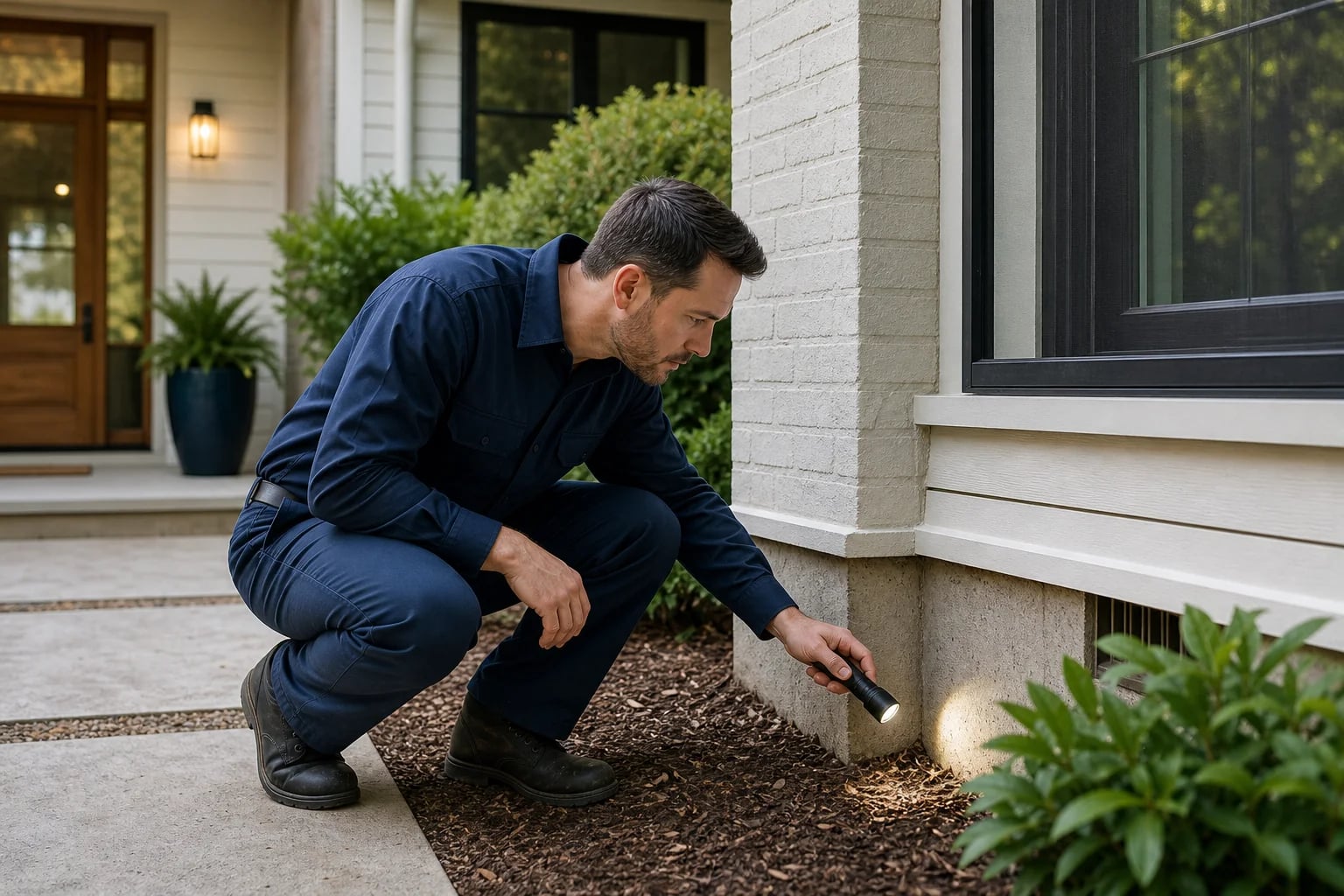
Insects need almost no gap, and mice need less than you would think. The entry points are predictable: where pipes and cables pass through the wall, around the garage door bottom seal, under exterior doors, in torn window screens and in gaps where siding meets the foundation. Spring is the time to walk the outside of the house with a tube of exterior caulk and a notepad.
- Walk the foundation line and seal cracks and the gaps around pipes, cables and the AC line set with exterior caulk or sealant.
- Check the sweep on every exterior door. If you can see daylight under the door, replace the sweep.
- Look at the garage door bottom seal with the door closed. Light at the corners means it needs a new seal, which a garage door company can replace.
- Repair or replace torn window and door screens before you start opening windows.
- Pull mulch and soil back so they do not touch siding or wood trim, and keep it a few inches below the top of the foundation.
Fix the moisture
Nearly every pest that matters in a home needs water: cockroaches, termites, carpenter ants, silverfish, springtails and mosquitoes all follow moisture. The spring walk-through should include every place water collects or leaks, inside and out. A slow drip under a sink does more to attract pests than any crumb on the floor.
- Look under every sink and behind the toilet for damp cabinet floors, and have any drip fixed.
- Make sure downspouts carry water away from the foundation and that the soil slopes away from the house.
- Empty anything in the yard that holds water: plant saucers, buckets, toys, tarps and clogged gutters. The CDC's mosquito guidance is to empty, scrub or cover these items weekly.
- Check the crawl space or basement for standing water, condensation on pipes or a musty smell, and ask a contractor about drainage or a vapor barrier if it is persistent.
Clean up the yard and the edges
The strip of ground touching the house is where most pests stage before coming in. Leaf litter, firewood stacked against the wall, shrubs touching the siding and tree limbs over the roof all give insects and rodents a sheltered route to a gap. The National Pest Management Association's spring advice is to trim vegetation back from the structure, move firewood away from the house and off the ground, and clear debris from the foundation line and gutters.
- Trim shrubs and tree limbs so nothing touches the roof, siding or gutters.
- Move firewood at least 20 feet from the house and stack it off the ground.
- Rake leaves and debris away from the foundation and keep grass and weeds cut along it.
- Store trash and recycling in bins with tight lids, and rinse the bins once in a while.
Inside: the kitchen, pantry and storage
Indoors, spring pest prevention is a deep clean with a purpose. Ants and roaches find the crumbs under the stove and behind the refrigerator, pantry moths arrive in a bag of flour, and clothes moths and carpet beetles live in the stored sweaters you are about to put away. Cleaning those places now removes the food supply before the population builds.
- Pull out the stove and refrigerator and clean underneath and behind them.
- Go through the pantry, discard anything stale, and move flour, cereal, rice and pet food into sealed containers.
- Wash winter clothing before storing it, and store it in sealed bins rather than cardboard.
- Vacuum along baseboards, under furniture and in closets, and empty the vacuum outside.
What a pest control company does, and when to call
Sealing and cleaning handle most spring pests. The ones that need a licensed professional live in the structure or breed faster than you can clean: termites, carpenter ants, German cockroaches, rodents inside the walls and bed bugs. A good company starts with an inspection, identifies the pest and where it is coming from, and uses targeted treatments: baits where the pest travels, exclusion work to close entries, and a termite treatment designed for your soil and construction. The EPA's guidance is to use the least pesticide needed, follow the label exactly, and never use outdoor products indoors. A company that wants to spray the whole house on the first visit without identifying the problem is a red flag.
- Mud tubes on the foundation, soft or hollow-sounding wood, or discarded wings on a windowsill: call about termites the same week.
- Roaches seen in daylight, or more than a few a week: a professional baiting program works where sprays do not.
- Droppings, gnaw marks or noises in the walls or attic: a rodent inspection and exclusion job, not just traps.
Questions people ask
Is a spring preventive treatment worth it if I do not see any pests?
It depends on the home and the region. In warm, humid areas with heavy ant, roach and termite pressure, a quarterly program with an inspection each visit often pays for itself. In milder regions, sealing and cleaning may be enough until something shows up.
Do I need a termite inspection every year?
In termite-prone regions, yes, and many existing termite warranties require it. The inspection also catches moisture problems and wood-destroying fungus that the homeowner would not see.
Can I use store-bought sprays along the baseboards?
You can, but it rarely solves anything and it can make ant problems worse by scattering the colony. Baits placed where ants travel, and sealing their entry, work better. Read and follow the label on anything you use.