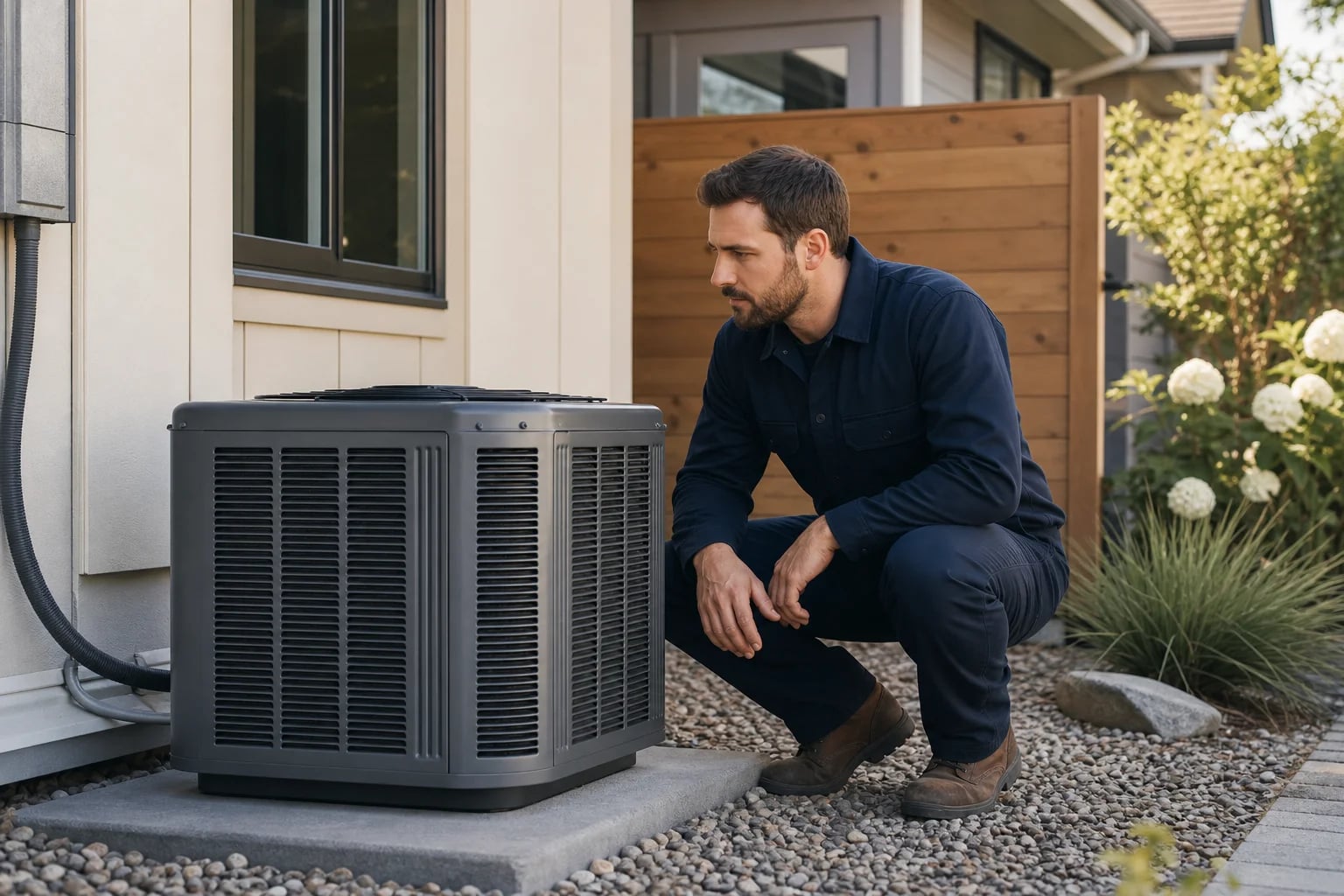
An air conditioner that ran fine last September has spent the winter collecting dust on its coils, growing algae in its drain line and losing a little refrigerant through any joint that was already weeping. The first hot week of the year is when all of that shows up, and it is also the week when every HVAC company in town is booked solid.
A spring tune-up is the fix. ENERGY STAR recommends a pre-season check of the cooling system every spring, and a professional visit before the heat arrives. This article covers the few things you can do yourself, what a technician does during a real tune-up, what to ask for, and the signs that mean you should not wait.
What you can do yourself before the first hot week
The homeowner side of AC maintenance is short, and none of it involves opening a panel. The filter does more than anything else: a clogged filter starves the system of airflow, makes it run longer, and can freeze the indoor coil. ENERGY STAR's guidance is to check the filter monthly during heavy use and change it when it looks dirty, or at least every three months.
Outside, the condenser needs room to breathe. Leaves, grass clippings and shrubs growing against the unit all cut airflow across the coil. Clear the area by hand, and leave the fins and the inside of the unit to the technician.
- Replace or clean the air filter, and write the date on the frame.
- Clear leaves, mulch and plants at least two feet back from the outdoor unit on all sides.
- Look at the condensate drain line where it exits the house. If nothing drips while the AC runs on a humid day, mention it to the technician.
- Walk every room and make sure supply and return vents are open and not blocked by furniture or rugs.
- Run the system for ten minutes on a mild day and note anything unusual: a grinding or squealing noise, a musty smell, air that is not noticeably cool at the vents.
What a technician does on a real tune-up
A tune-up is not a quick look and a filter swap. ENERGY STAR's maintenance checklist for a cooling system includes cleaning the evaporator and condenser coils, checking the refrigerant charge, clearing and treating the condensate drain, tightening electrical connections, measuring voltage and current on motors, lubricating moving parts, checking the thermostat, and confirming the system starts, runs and shuts off correctly.
Refrigerant is the part that is strictly off limits to homeowners. Under the Clean Air Act, only EPA Section 608 certified technicians may handle refrigerant, and a system that is low on charge has a leak somewhere that needs to be found, not just topped off. A good technician measures the charge and tells you if it is low and where they suspect the leak is.
- Clean the outdoor coil with the power off and the fins straightened as needed.
- Inspect and clean the indoor coil and blower assembly, which collect the dust that gets past the filter.
- Flush the condensate drain and treat it so algae does not clog it in July and back water up into the air handler.
- Test the capacitor and contactor, the two parts that most often fail on the first hot day.
- Check refrigerant pressures and temperatures and report whether the charge is correct.
What to ask for and what the report should show
Ask for the readings, not just a thumbs up. A tune-up report should list the refrigerant pressures, the temperature split across the coil, the capacitor readings against their rated values, and anything the technician recommends with a reason. If a part is "weak," ask what the measured value was and what the rating is. That is the difference between a worthwhile replacement and an upsell.
If the company offers a maintenance plan, read what it includes. Two visits a year (cooling in spring, heating in fall) with priority scheduling is a reasonable plan. Plans that mostly sell discounts on repairs are less useful.
When to book, and signs you should not wait
Book in March or April in warm climates, and by May anywhere else. Contractors are slow in the shoulder seasons and swamped once the first heat wave hits. If the system showed any of the following last year, book a diagnostic rather than a tune-up and describe the symptom when you call.
- Ice on the refrigerant lines or the indoor coil, or water around the air handler.
- The outdoor unit hums but the fan does not spin, or it starts and stops every few minutes.
- The breaker for the AC tripped more than once last season.
- Rooms that never cooled evenly even with the filter clean and the vents open.
- A burning smell at startup or a loud bang when the compressor kicks on.
Older systems: tune-up or replacement talk?
A tune-up is still worth doing on an older system, but it is also the right time to ask about its remaining life. Repeated refrigerant leaks, a compressor that draws high amperage, and a unit that uses a refrigerant no longer in production are all signs that the money may be better spent on replacement. Ask the technician to put the system's age, condition and any major concerns in writing so you can plan rather than decide in an emergency.
Questions people ask
Is a tune-up worth it if the AC seems fine?
Usually, yes. The parts that fail on the first hot day, such as capacitors and contactors, often test weak weeks before they quit. Clean coils and a correct charge also lower running costs. It is the cheapest HVAC visit you will buy all year.
Can I clean the outdoor coil with a hose?
Clearing debris by hand around the unit is fine. Spraying the coil, straightening fins or removing the top grille means working around electrical components and should be left to the technician with the power off at the disconnect.
What if the technician says the refrigerant is low?
Ask where the leak is. Refrigerant does not get used up, so low charge means a leak. Topping off without a leak search only buys time, and the technician must be EPA certified to handle it.
Sources
- ENERGY STAR: Heating and cooling maintenance checklist www.energystar.gov
- ENERGY STAR: How to keep your HVAC system working efficiently www.energystar.gov
- U.S. EPA: Stationary refrigeration and air conditioning (Section 608 technician certification) www.epa.gov
- Florida Power & Light: A/C tips (Ask the Expert) www.fpl.com