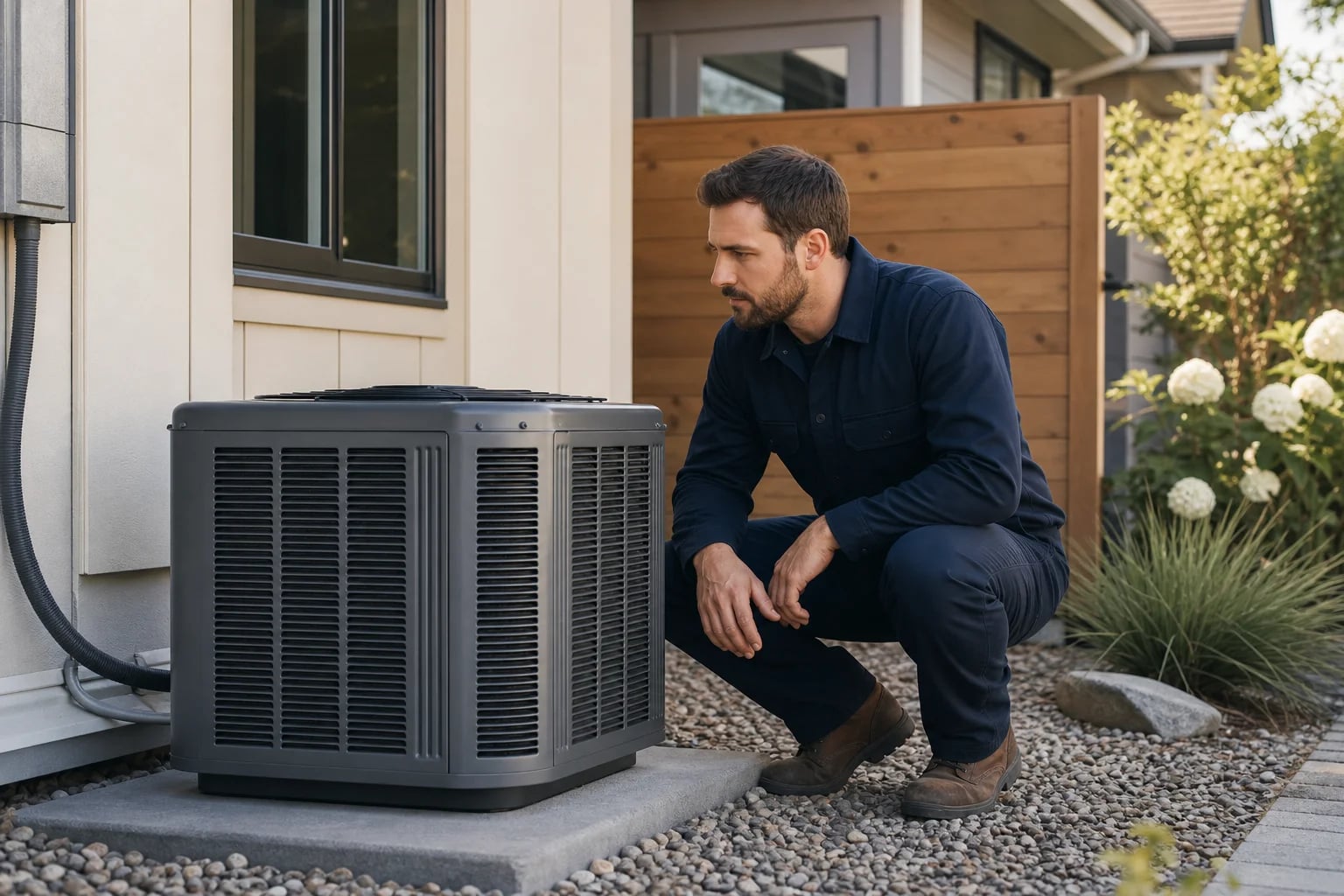
The first cold night of the year is when heating systems fail, because it is the first time in months they have been asked to do anything. In mild climates a heat pump that has only cooled since March switches to heat mode on a 40 degree night and nobody knows whether the reversing valve or the backup heat strips still work. In colder places it is the furnace that has sat idle, with a dusty burner, a dirty flame sensor and a filter nobody changed.
ENERGY STAR recommends a professional check of the heating system every fall, before the season. This guide covers what you can do yourself without touching gas, wiring or the inside of the unit, what the technician does, and which symptoms should move the call to the top of your list.
What you can check yourself
The homeowner checks are the same for a furnace and a heat pump, and none of them require tools. Start with the filter, because a clogged filter is the most common cause of a furnace tripping on high limit or a heat pump icing up. Then make sure air can move: registers open, returns clear, nothing stacked against the air handler.
For a heat pump, the outdoor unit works all winter, so it needs the same clearance it needed in summer. For a furnace, the area around it should be clear of storage, paint, solvents and anything that could block combustion air.
- Replace the filter and set a reminder for monthly checks through the heating season.
- Clear leaves and debris around a heat pump's outdoor unit and make sure nothing drips onto it from a gutter above, which forms ice in winter.
- Switch the thermostat to heat and set it a few degrees above room temperature. Warm air should arrive within a few minutes. Note any smell beyond the brief dusty smell of the first run, and any unusual noise.
- Replace the batteries in smoke and carbon monoxide alarms. CPSC recommends a CO alarm on every level and outside sleeping areas in any home with fuel-burning equipment or an attached garage.
What a fall tune-up includes for a furnace
A furnace tune-up is a combustion safety check first and a cleaning second. ENERGY STAR's checklist for heating systems includes checking gas connections and gas pressure, inspecting the burner and the flame, and checking the heat exchanger. A cracked heat exchanger can leak carbon monoxide into the house, and finding it is the most important thing the technician does. Everything on this list involves gas and electrical components and is strictly a professional job.
- Inspect the heat exchanger for cracks or corrosion and test for flue gas spillage.
- Clean the burners and the flame sensor, and check the igniter.
- Check gas pressure and gas connections, and inspect the flue for rust, disconnected joints and signs of backdrafting.
- Test the blower motor and capacitor, clean the blower wheel, and check the safety limit switches.
What a fall tune-up includes for a heat pump
A heat pump has no combustion, so the fall visit is about the parts that only matter in heat mode: the reversing valve, the defrost cycle and the backup electric heat strips. In a mild climate the system may run in heat mode only a few dozen nights a year, which makes this check more important, not less, because a fault can go unnoticed for most of a winter while the heat strips run up the bill.
- Check the reversing valve shifts cleanly between cooling and heating.
- Test the defrost control and the outdoor sensor so the coil does not ice over on damp cold nights.
- Test the auxiliary heat strips and their sequencer, and measure their amperage draw.
- Check refrigerant charge and the outdoor coil condition (an EPA-certified technician only).
- Confirm the thermostat is set up for a heat pump so it does not call for expensive backup heat when it should not.
Heat pumps in mild climates: a few habits that matter
Heat pumps work differently from furnaces, and a couple of furnace habits cost money with a heat pump. ENERGY STAR's advice is to keep the thermostat in "heat" rather than "auto" during the heating season so the system does not swing between modes on a warm afternoon, and to avoid large setbacks: a big jump in the set point calls the backup heat strips, which cost far more to run than the heat pump itself. Set the temperature you want and leave it, or use small adjustments.
Expect the air from the vents to feel cooler than furnace air; a heat pump delivers warm, not hot, air for longer run times. Air that is actually cold, or a system that runs constantly without the house warming up, is not normal.
Warning signs that should not wait for a tune-up
Most heating problems can wait a few days for a normal appointment. These cannot. If you smell gas or a CO alarm sounds, leave the house and call the gas utility or emergency services from outside before you call anyone else.
- A gas smell anywhere in the house, or a CO alarm sounding.
- Soot, scorch marks or rust streaks around the furnace or the flue, or a yellow, flickering burner flame rather than a steady blue one.
- The furnace starts and shuts off repeatedly within a minute or two.
- A heat pump's outdoor unit encased in ice that does not clear, or the breaker tripping when heat is called.
Questions people ask
Does a heat pump in Florida or the Gulf South really need a fall check?
Yes, and arguably more than a furnace up north. The heat-mode parts get used so rarely that a failure can go unnoticed for weeks while the backup heat strips carry the load and the bill climbs. A short fall visit tests exactly those parts.
What does the dusty smell on the first run mean?
Dust that settled on the heat exchanger or heat strips over the summer burns off in the first few minutes. It should clear quickly. A smell that persists, or a plastic or electrical smell, means shut it off and call.
How much setback is too much for a heat pump?
More than a few degrees usually triggers the backup heat strips during recovery, which erases the savings. Modest adjustments, or a thermostat designed for heat pumps that ramps slowly, work better.
Sources
- ENERGY STAR: Heating and cooling maintenance checklist www.energystar.gov
- ENERGY STAR: Air-source heat pumps (efficient use tips) www.energystar.gov
- U.S. CPSC: Carbon monoxide information center www.cpsc.gov
- NFPA: Safety with heating equipment www.nfpa.org